
Exercises
Put your UX user experience fundamentals to the test with questions on essential research and design methods. Explore the purpose of user interviews, usability testing, personas, journey maps, diary studies, A/B testing, card sorting, and statistical analysis. This quiz also covers how to identify patterns in research data, observe user behavior, and create effective testing conditions. Ideal for aspiring UX designers, product teams, students, and anyone building a stronger foundation in user-centered design.
Answer the questions below and check the explanation for each answer.
0/10 answered
Auto audio on: the next questions will be read aloud when you click Continue.
The primary goal of user interviews is to gather qualitative insights into user needs, experiences, and behaviors. Unlike surveys or analytics, user interviews provide in-depth understanding and context around user interactions, motivations, and pain points, which are crucial for creating user-centered designs.
Usability testing involves users performing specific tasks while observers take notes. This method is used to evaluate a product by testing it on users, allowing observers to collect data on user interactions, issues, and areas for improvement directly.
Personas are fictional characters used in qualitative research to represent different user types. They help researchers understand user needs, behaviors, and goals, allowing for a deeper insight into the user experience. By creating personas, researchers can communicate and empathize with target audiences, thereby refining their strategies and design processes to better meet user needs.
A journey map's purpose is to visualize the emotions and tasks a user goes through to accomplish a goal. It helps understand the user's experience and identify pain points and opportunities for improvement.
Diary studies are best for gathering data about user behaviors over an extended period. They allow participants to document their actions and experiences in real-time, providing insights into long-term habits and patterns that might not be evident in short-term studies such as A/B testing or eye tracking.
A/B testing involves testing two different user interfaces with two groups of users. It is a method of comparing two versions of a webpage or application against each other to determine which one performs better. This process helps in optimizing the user experience based on data-driven decisions.
Affinity diagramming is a method used to organize data and information into groups based on their natural relationships. It helps to identify patterns and relationships in data by visually clustering similar items together, making it easier to see the overarching trends and connections.
In usability testing, it's critical to ensure that participants represent the actual user base. This helps gather relevant feedback and insights directly applicable to the target audience, enhancing the product's overall usability and effectiveness.
Card sorting is primarily used for understanding user mental models in organizing information. It helps designers and researchers comprehend how users categorize and label information, which is essential for creating intuitive and user-friendly navigation structures.
The Quantitative research method typically involves the use of statistical analysis. It focuses on numerical data to identify patterns, relationships, or to test hypotheses. In contrast, qualitative research is more about understanding experiences and meanings and doesn’t generally rely on statistical techniques.

Free CourseUser Interface Design
5

(4)

12h04m

21 exercises

Free CoursePrinciple UI/UX
4.9
(39)
6h39m
20 exercises

Free CourseWeb and Desktop app UI design in Figma
4.9
(8)
1h16m

Free CourseWeb design
4.9
(7)
4h17m
18 exercises

Free CourseAdobe XD Tutorials
4.8
(23)
7h23m
16 exercises

Free CourseUX design for mobile
4.8
(94)
1h37m
24 exercises

Free CourseUX/UI design course
4.7

(31)
2h34m
20 exercises

Free CourseUX user experience design
4.6
(11)
17h36m
16 exercises
Thousands of online courses in video, ebooks and audiobooks.
To test your knowledge during online courses
Generated directly from your cell phone's photo gallery and sent to your email

Download our app via QR Code or the links below:.


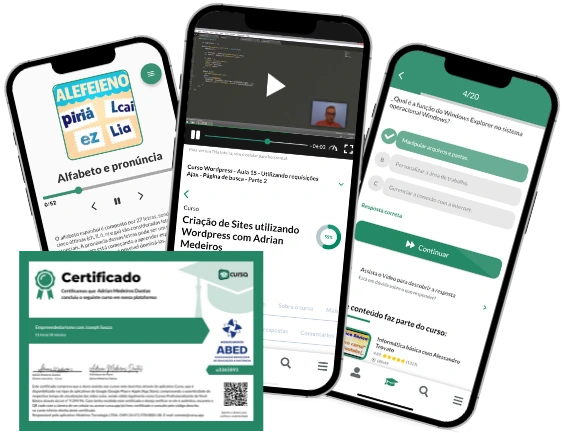
Carry knowledge in your pocket.
Download the Cursa app.
There are hundreds of free courses available, with a free certificate of completion that is saved in your mobile image gallery.
Download the app to access the Course Completion Certificate for Free.


+ 10 million
students

Free and Valid
Certificate

60 thousand free
exercises

4.8/5 rating in
app stores

Free courses in
video and ebooks