
Exercises
Put your Figma UI/UX design skills to the test with this quiz covering essential features for creating polished, collaborative digital products. Explore questions about real-time teamwork, frames, prototype sharing, Auto Layout, reusable components, interactive hover states, design consistency tools, and version history. Whether you are new to Figma or refining your workflow, this quiz helps you assess your understanding of the platform’s core tools and best practices for efficient interface design.
Answer the questions below and check the explanation for each answer.
0/8 answered
Auto audio on: the next questions will be read aloud when you click Continue.
Figma offers Live co-editing as a unique feature that supports team collaboration. This allows multiple designers to work on a project simultaneously, seeing each other's changes in real-time, which enhances communication and speeds up the design process.
Frames in Figma are primarily used to structure the layout and create UI components. They act as containers to organize designs, define their sizes, and establish a hierarchy. Frames hold elements together, allowing designers to manage and manipulate components effectively. They play a crucial role in creating responsive and flexible designs by helping designers maintain consistency and control over the layout.
Figma allows you to share your design prototypes easily using the Share button, which creates a shareable link. This enables stakeholders to view the design online, making collaboration simple and efficient.
Auto Layout in Figma is a powerful tool designed to help UI elements adapt as you resize them and maintain consistent padding and spacing across your design. It does not automatically arrange layers based on a grid or generate random designs. Instead, it provides a flexible structure where the designer can define the rules for spacing, alignment, and wrapping, enabling responsive design adjustments efficiently.
The primary benefit of using Components in Figma is to reuse UI elements across your design files efficiently. Components allow designers to create a master element which can be reused and updated consistently throughout the entire design project, saving time and ensuring consistency in the design.
In Figma, you can create a hovering effect by using the Prototype feature. You do this by setting an interaction that changes the button's state when the mouse hovers over it. Figma provides interaction events like hover, click, and more, which allow you to create dynamic effects without the need for custom CSS.
The Design System Libraries in Figma are used to ensure visual consistency across designs. They allow designers to create reusable components and styles that can be applied throughout multiple projects, ensuring uniformity and consistency in design elements across various parts of a product or multiple projects.
In Figma, the Version History feature allows users to view previous versions of a design project. This feature enables designers to track changes over time and revert to earlier versions if needed. It is a powerful tool for managing design iterations and ensuring that important changes are documented and accessible.
Free CourseUser Interface Design
5

(4)

12h04m

21 exercises
Free CoursePrinciple UI/UX
4.9
(39)
6h39m
20 exercises
Free CourseWeb and Desktop app UI design in Figma
4.9
(8)
1h16m
Free CourseWeb design
4.9
(7)
4h17m
18 exercises
Free CourseAdobe XD Tutorials
4.8
(23)
7h23m
16 exercises

Free CourseUX design for mobile
4.8
(94)
1h37m
24 exercises

Free CourseUX/UI design course
4.7

(31)
2h34m
20 exercises

Free CourseUX user experience design
4.6
(11)
17h36m
16 exercises
Thousands of online courses in video, ebooks and audiobooks.
To test your knowledge during online courses
Generated directly from your cell phone's photo gallery and sent to your email

Download our app via QR Code or the links below:.


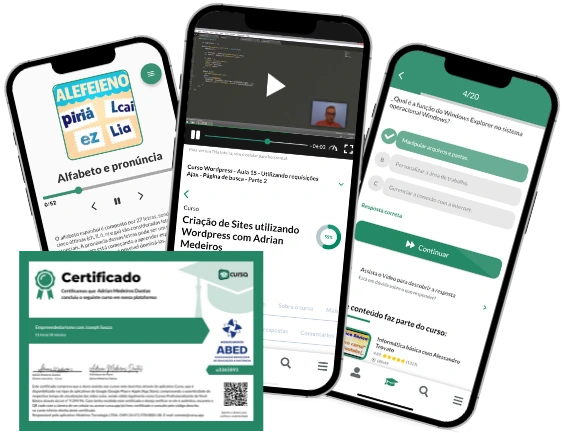
Carry knowledge in your pocket.
Download the Cursa app.
There are hundreds of free courses available, with a free certificate of completion that is saved in your mobile image gallery.
Download the app to access the Course Completion Certificate for Free.


+ 10 million
students

Free and Valid
Certificate

60 thousand free
exercises

4.8/5 rating in
app stores

Free courses in
video and ebooks