Exercises
Explore how social institutions, identities, resources, and environments shape health and illness. This quiz covers social determinants of health, Parsons' sick role, medicalization, stigma, fundamental cause theory, structural competency, intersectionality, and the epidemiological transition. It also assesses your ability to interpret neighborhood-level health data without making unsupported individual-level conclusions.
Answer the questions below and check the explanation for each answer.
0/11 answered
Auto audio on: the next questions will be read aloud when you click Continue.
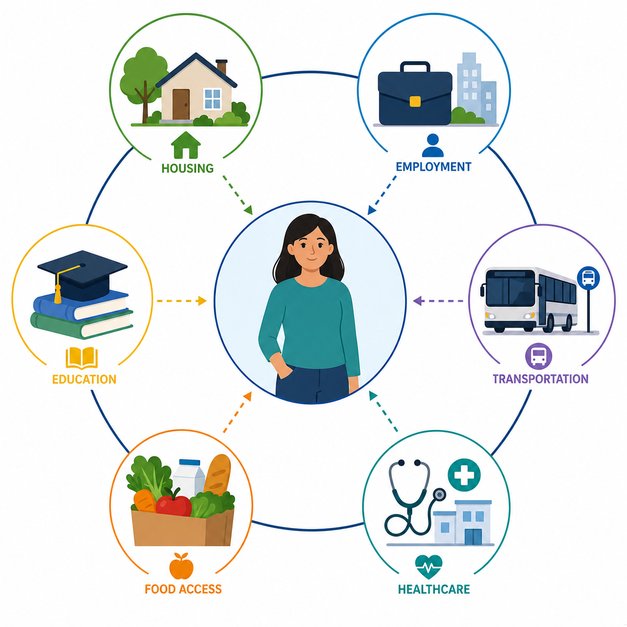
Stable housing is a social determinant of health because living conditions affect exposure to hazards, stress, healthcare access, and other health-related resources.
Parsons argued that sick people may be excused from normal duties, but they are expected to want recovery, seek competent care, and cooperate with treatment.
Medicalization occurs when a condition or behavior previously understood in nonmedical terms becomes defined and managed as a medical problem.
Fundamental cause theory emphasizes flexible resources. People with more money, knowledge, power, and connections can use new forms of prevention and treatment as they emerge.
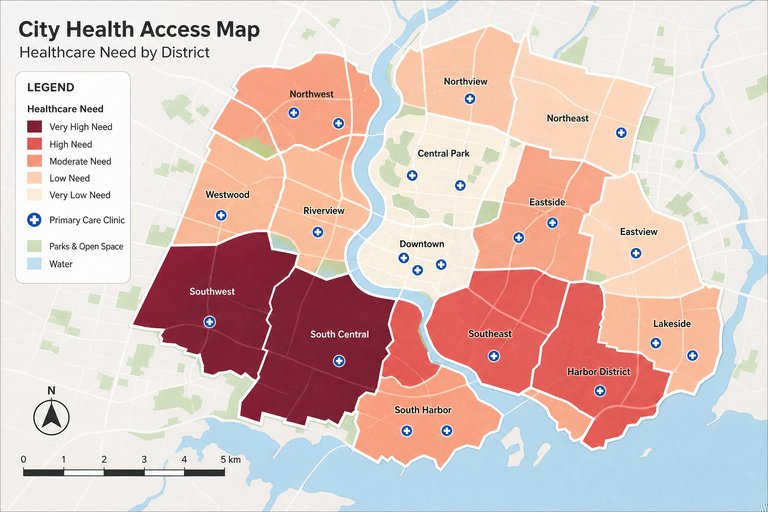
The inverse care law states that access to good healthcare often varies inversely with the population's need, especially where care is strongly shaped by market forces.
Illness is the lived, subjective experience of feeling unwell. Disease generally refers to a biomedical condition, while sickness concerns its recognized social status.
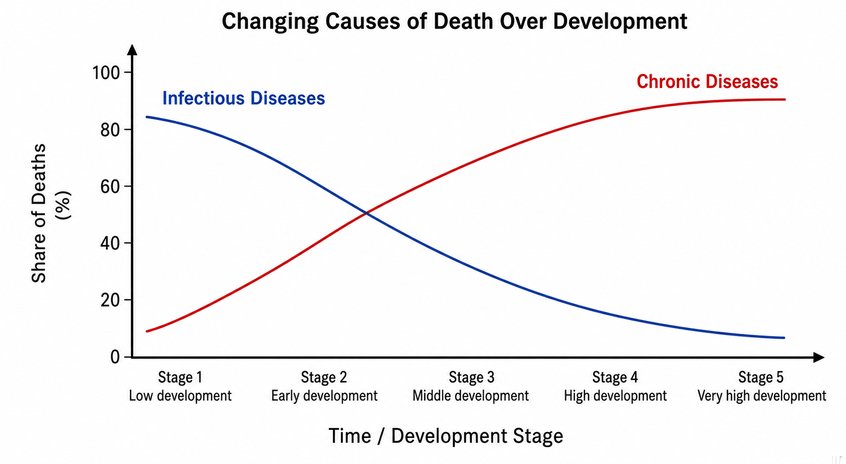
The epidemiological transition is a long-term change in dominant patterns of disease and death, commonly from infectious diseases toward chronic conditions.
Goffman described stigma as a socially discrediting attribute. Its effects depend on social meanings and interactions, not simply on the attribute itself.
Structural competency connects clinical presentations to upstream forces such as housing policy, labor conditions, racism, healthcare systems, and unequal resource distribution.
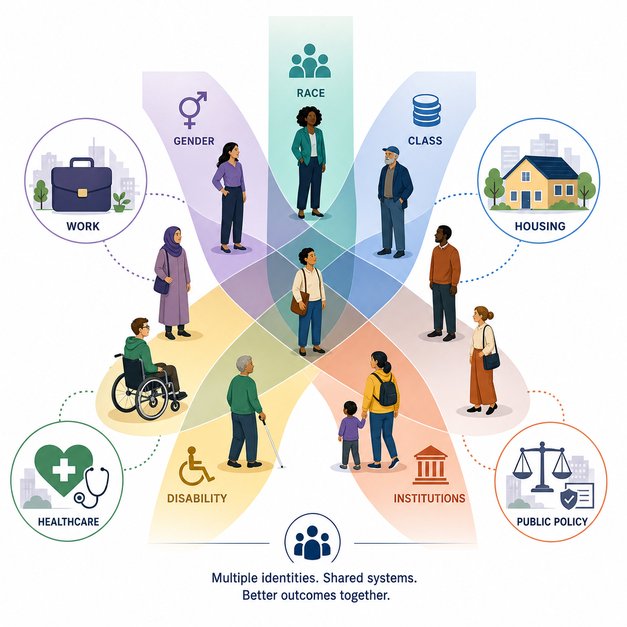
Intersectionality examines how systems of power are interconnected. Their combined effects are not necessarily captured by studying race, gender, or class separately.
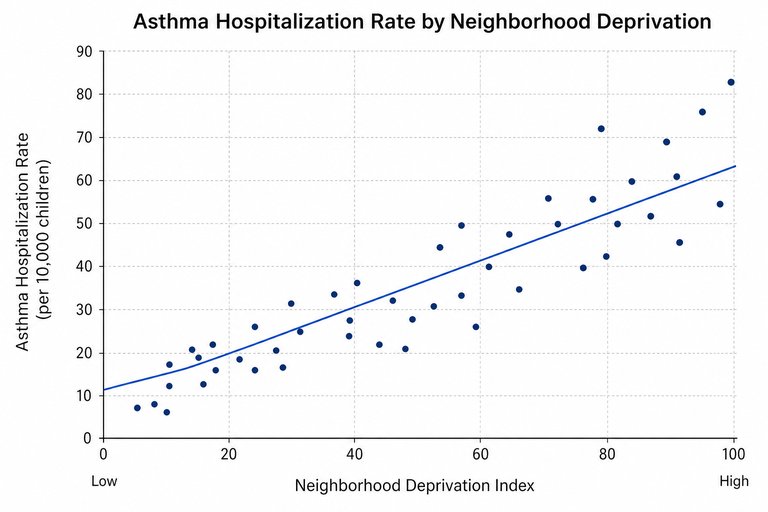
The graph supports an area-level association. Inferring that the same relationship necessarily holds for every individual risks the ecological fallacy.
Thousands of online courses in video, ebooks and audiobooks.
To test your knowledge during online courses
Generated directly from your cell phone's photo gallery and sent to your email

Download our app via QR Code or the links below:.


Carry knowledge in your pocket.
Download the Cursa app.
There are hundreds of free courses available, with a free certificate of completion that is saved in your mobile image gallery.
Download the app to access the Course Completion Certificate for Free.


+ 10 million
students

Free and Valid
Certificate

60 thousand free
exercises

4.8/5 rating in
app stores

Free courses in
video and ebooks