
Exercises
Develop practical knowledge of piano pedaling through questions on the sustain, sostenuto, and una corda pedals. This quiz also covers syncopated pedaling, half-pedaling, flutter pedaling, pedal notation, sympathetic resonance, acoustic mechanisms, and solutions for unclear or muddy sound. The questions combine pedal identification, musical interpretation, mechanical understanding, and stylistic judgment for more controlled and expressive playing.
Answer the questions below and check the explanation for each answer.
0/16 answered
Auto audio on: the next questions will be read aloud when you click Continue.
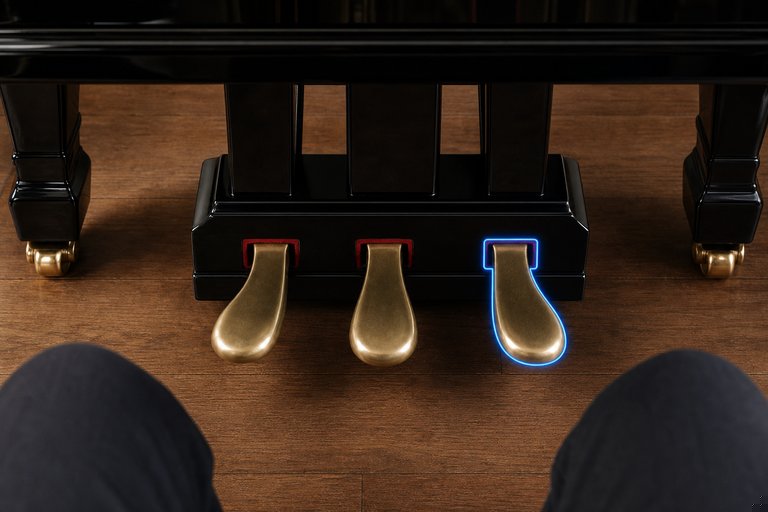
The rightmost pedal is the damper pedal, often called the sustain pedal. It lifts the dampers so strings can continue vibrating after their keys are released.
The damper pedal lifts the dampers from the strings. This permits played notes to continue sounding and also encourages sympathetic resonance from other strings.
On a grand piano, the una corda pedal shifts the action sideways. In much of the keyboard, each hammer strikes fewer strings or a different part of the hammer felt, changing tone and volume.
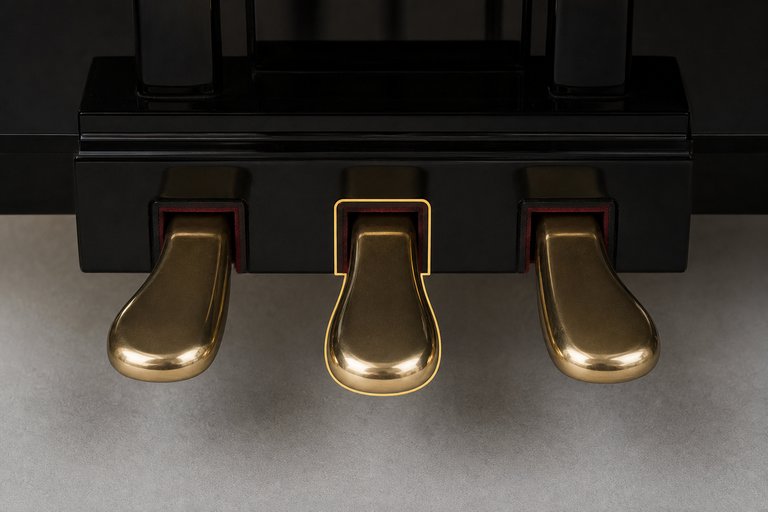
The grand piano's middle pedal is usually the sostenuto pedal. It holds selected dampers that were already raised, while later notes remain unaffected.
The keys begin the new harmony before the pedal changes. The quick release clears the old sound, and the immediate depression catches the new harmony without creating a gap.
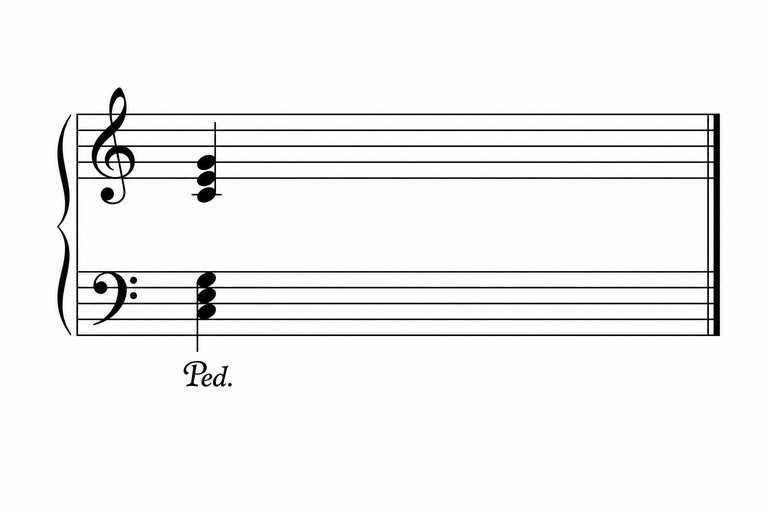
The traditional Ped. marking instructs the pianist to depress the damper pedal. A later release sign or pedal line indicates when it should be lifted or changed.
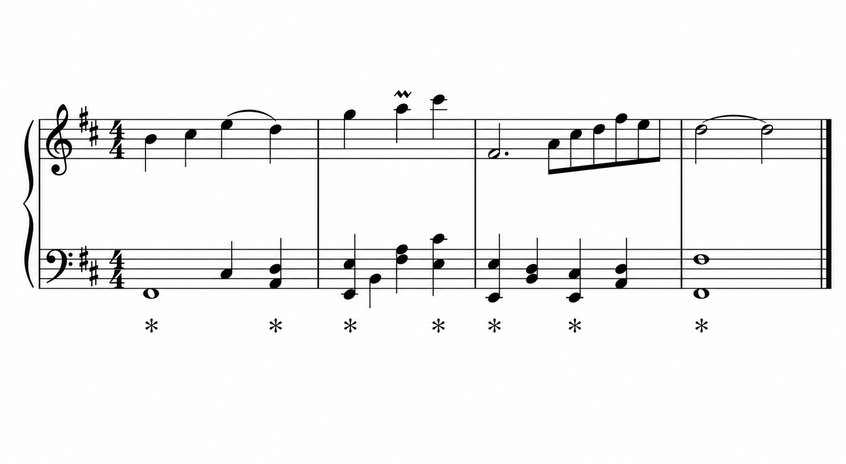
The star or asterisk traditionally marks the point where the damper pedal should be released. Modern scores may instead use continuous pedal lines and release brackets.
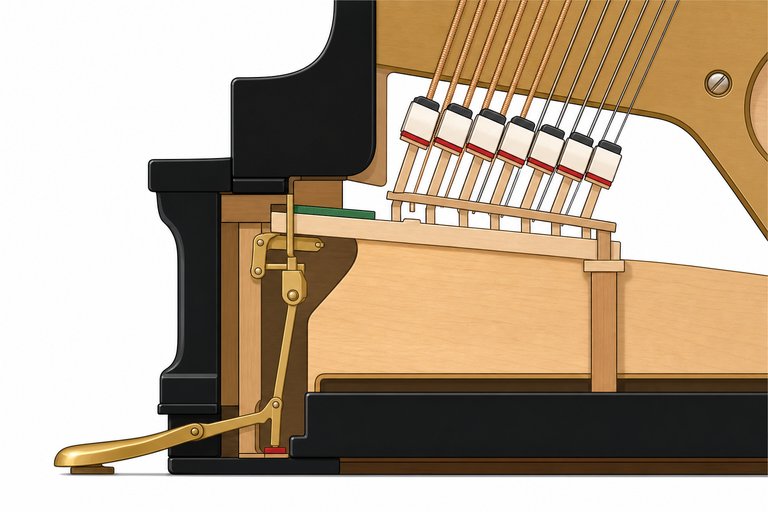
With half-pedaling, the pedal is depressed only partway and the dampers are not lifted to their maximum height. This provides controlled resonance with greater clarity than full pedal.
Flutter pedaling uses quick, shallow lifts and redepressions of the damper pedal. It reduces accumulated blur while preserving some resonance and continuity.
Promptly depressing the damper pedal after releasing a key can catch some residual string vibration. The resulting sound is weaker than pedaling before key release, so timing is crucial.
With the dampers raised, unstruck strings can respond to frequencies produced by played notes. This sympathetic resonance enriches the instrument's tone.
Most upright soft pedals move the hammers closer to the strings, reducing the distance available for acceleration. Unlike a grand una corda pedal, they generally do not shift the action sideways.
Transparent textures usually benefit from restrained pedaling and precise changes. Pedal depth and timing should support articulation without obscuring harmonic movement.
Finger pedaling means sustaining chosen notes with the fingers beyond their written value while other notes continue. It offers selective control that the damper pedal cannot provide.
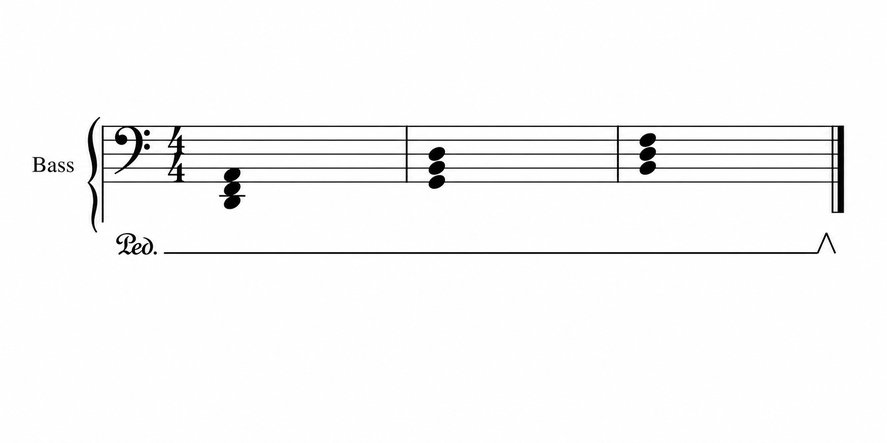
Low strings sustain strongly and produce many resonant overtones. Holding one pedal through several harmonic changes causes incompatible bass tones to overlap, so cleaner or shallower changes are needed.
The desired keys must first be held so their dampers are raised. Depressing the sostenuto pedal then captures those dampers, allowing the keys to be released while later notes remain normally damped.

Free CoursePiano theory course
5

(4)

2h58m

29 exercises

Free CourseHow to play Piano for beginners
5
(1)
7h13m
27 exercises

Free CoursePiano Level 1
5
(1)
11h24m
31 exercises

Free CourseBeginner Piano Lessons
5
(1)
2h38m
20 exercises

Free CourseIntermediate Piano
5
(1)
2h15m
6 exercises

Free CourseLearn Piano for Beginners to Advanced
5
(1)
15h43m
37 exercises

Free CoursePiano
4.9
(73)
10h44m
51 exercises
Free CourseLearn Chords
4.5

(37)
45m
12 exercises
Thousands of online courses in video, ebooks and audiobooks.
To test your knowledge during online courses
Generated directly from your cell phone's photo gallery and sent to your email

Download our app via QR Code or the links below:.


Carry knowledge in your pocket.
Download the Cursa app.
There are hundreds of free courses available, with a free certificate of completion that is saved in your mobile image gallery.
Download the app to access the Course Completion Certificate for Free.


+ 10 million
students

Free and Valid
Certificate

60 thousand free
exercises

4.8/5 rating in
app stores

Free courses in
video and ebooks