
Exercises
Assess your understanding of object-oriented programming (OOP) in Python. This quiz covers creating classes and instances, core OOP principles, encapsulation, inheritance, subclasses and base classes, and Python special methods such as __init__ and __del__. You will also test your knowledge of using isinstance() and identifying a class's base classes with built-in attributes. Ideal for beginners learning Python classes or anyone reviewing essential OOP concepts.
Answer the questions below and check the explanation for each answer.
0/10 answered
Auto audio on: the next questions will be read aloud when you click Continue.
In Python, the class keyword is used to create a new class. It defines a new user-defined type that encapsulates data for creating objects and functions to manipulate that data.
Object-Oriented Programming (OOP) is characterized by principles such as Encapsulation and Inheritance, which are essential for creating modular and reusable code. Multiprocessing, on the other hand, is not a principle of OOP; it refers to the ability of a system to support more than one processor, or the ability to run several processes simultaneously. Therefore, option 3 is correct as it does not pertain to OOP principles.
Encapsulation is a fundamental concept in object-oriented programming. It involves bundling the data and the methods that operate on the data into a single unit, usually a class, and restricting access to certain components. This protects the internal state of the object and prevents external interference and misuse of the object's methods and data.
In Python, the method __init__ is called when an object is created. This method initializes the new object and sets up its initial state. It acts like a constructor in other programming languages.
In programming languages like Java or C#, to create a new instance of a class, you use the new keyword followed by the class name and parentheses. Therefore, new Car() is the correct way to instantiate a new Car object.
In Object-Oriented Programming, when a class 'B' is derived from class 'A', it means that class 'B' inherits properties and methods from class 'A'. The class that is derived is known as the subclass. Here, class 'B' is the subclass, while class 'A' is referred to as the superclass.
The special method that is called when an object is deleted in Python is the __del__ method. It acts as a destructor to clean up resources before an object is destroyed. Option 1 is correct.
In Python, you can check if an object is an instance of a class using the isinstance() function. The correct syntax is isinstance(myobj, MyClass). This function returns True if myobj is an instance of MyClass or a subclass thereof, and False otherwise.
The __bases__ attribute of a class contains a tuple of the base classes. It shows the classes from which the class in question directly inherits. This is useful for understanding the class hierarchy and finding out about inheritance relationships between classes in Python.
The process of deriving a new class from a base class is called class inheritance. Inheritance allows a new class, known as a subclass, to acquire the properties and behaviors of another class, called the base or superclass. It is a key feature of object-oriented programming, enabling code reusability and hierarchy representation.
Free CourseLearn Python
5

(3)

13h00m

17 exercises
Free CourseJava Programming
5
(4)
9h15m
48 exercises

Free CourseRuby on Rails
5
(7)
9h39m
34 exercises

Free CourseCreate Desktop App
5
(4)
5h33m
30 exercises
Free CoursePython Ultimate Course: Learn Python from Scratch
5
(2)
12h31m
42 exercises
Free CourseJava
4.8
(56)
22h17m
28 exercises

Free CourseC# Sharp for beginner
4.8
(37)
3h55m
15 exercises
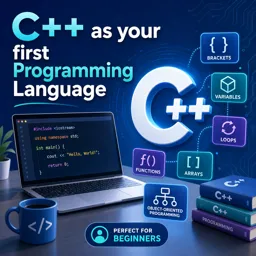
Free CourseC++ as your first Programming Language
4.8
(108)
5h12m
23 exercises
Thousands of online courses in video, ebooks and audiobooks.
To test your knowledge during online courses
Generated directly from your cell phone's photo gallery and sent to your email

Download our app via QR Code or the links below:.


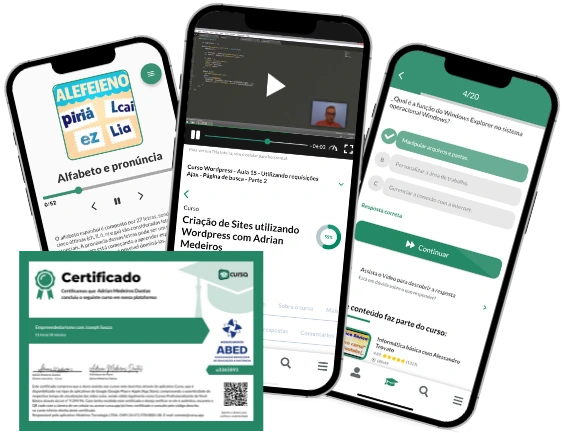
Carry knowledge in your pocket.
Download the Cursa app.
There are hundreds of free courses available, with a free certificate of completion that is saved in your mobile image gallery.
Download the app to access the Course Completion Certificate for Free.


+ 10 million
students

Free and Valid
Certificate

60 thousand free
exercises

4.8/5 rating in
app stores

Free courses in
video and ebooks