
Exercises
Ready to explore the Korean alphabet? This beginner-friendly Hangul basics quiz tests essential knowledge of Korean writing, from the name and origins of Hangul to its consonants, vowels, and syllable-block structure. Answer questions about King Sejong, the purpose behind Hangul’s creation, writing order, silent consonants, and 받침 (final consonants). You will also review how Korean characters combine to form blocks and identify key features of this logical writing system. Whether you are starting Korean language study or refreshing your foundations, this quiz is a useful way to check your understanding of Hangul.
Answer the questions below and check the explanation for each answer.
0/10 answered
Auto audio on: the next questions will be read aloud when you click Continue.
The Korean alphabet is called Hangul. It was created in the 15th century by King Sejong the Great and his scholars to increase literacy among the common people. Unlike kanji (used in Japanese) and hiragana (a Japanese script), Hangul is uniquely Korean.
The Korean alphabet, known as Hangul, consists of 14 basic consonants and 10 basic vowels. These letters serve as the fundamental building blocks for forming syllables and words in the Korean language. Option 1 correctly represents this composition.
King Sejong the Great is credited with the creation of Hangul, the Korean script, in the 15th century. His goal was to improve literacy among the Korean populace by providing a simple and accessible writing system.
Hangul is the alphabet used for writing the Korean language. It was created by King Sejong the Great and his scholars in the 15th century to improve literacy among common people. Unlike complex systems like Chinese characters, Hangul is logical and easy to learn, as it has been scientifically designed with a clear and simple structure, making it accessible to everyone, not just the elite.
Hangul consonants and vowels are part of the Korean writing system. The Hangul letters ㅏ and ㅑ are vowels, while ㅊ is a consonant. Therefore, option 3, ㅊ, is the correct answer as it is not a Hangul vowel.
Hangul blocks are constructed by arranging letters in a specific order. The correct sequence is top to bottom, then left to right. This pattern reflects the visual structure of Hangul, where syllables are built by placing consonants and vowels above or below each other, and arranging them horizontally.
The Hangul consonant ㅇ (ieung) is silent when it appears at the beginning of a word or syllable. It serves as a placeholder to allow the vowel to begin the syllable.
Hangul was created in the 15th century during the reign of King Sejong the Great of Korea. Its primary purpose was to promote literacy among common people who found the complex Chinese characters difficult to learn. This phonetic alphabet made reading and writing more accessible to everyone in Korea.
The Korean word 한글(hangeul) consists of two syllables: 한 and 글. The first syllable 한 consists of 1 consonant (ㅎ) and 1 vowel (ㅏ) followed by another consonant (ㄴ), and the second syllable 글 consists of 1 consonant (ㄱ), 1 vowel (ㅡ), and a closing consonant (ㄹ). Therefore, each syllable has 2 consonants and 1 vowel.
In Korean Hangul, when two consonants are placed at the bottom of a syllable block, it is called a Batchim. It refers to the consonant(s) that close a syllable, typically found at the end of a syllable block.

Free CourseKorean Vocabulary
5

(2)

13h13m

19 exercises

Free CourseKorean for Beginners
4.9
(29)
21h54m
16 exercises

Free CourseKorean Full course
4.7

(28)
4h21m
6 exercises

Free CourseBeginner korean course
4.6
(142)
6h01m
23 exercises
Free CourseLearn Hangul and Korean Grammar for Beginners (Step-by-Step)
4.6
(5)
6h44m
50 exercises

Free CourseKorean MasterClass
4.5
(2)
11h27m
9 exercises
Free CourseKorean basic vocabulary
4.3
(3)
150h55m
Free CourseKorean listening comprehension for beginners
4
(1)
1h15m
3 exercises
Thousands of online courses in video, ebooks and audiobooks.
To test your knowledge during online courses
Generated directly from your cell phone's photo gallery and sent to your email

Download our app via QR Code or the links below:.


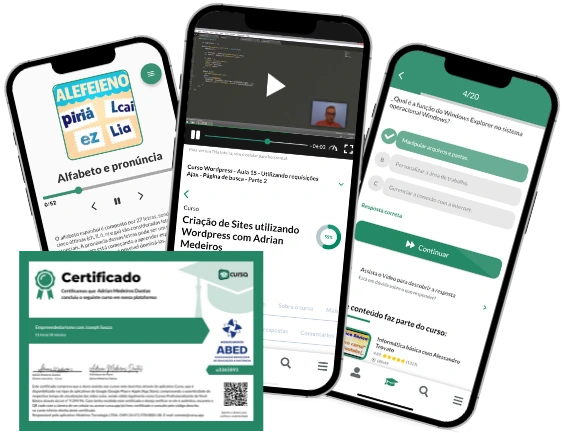
Carry knowledge in your pocket.
Download the Cursa app.
There are hundreds of free courses available, with a free certificate of completion that is saved in your mobile image gallery.
Download the app to access the Course Completion Certificate for Free.


+ 10 million
students

Free and Valid
Certificate

60 thousand free
exercises

4.8/5 rating in
app stores

Free courses in
video and ebooks