
Exercises
Put your options trading knowledge to the test with this quiz covering essential concepts for traders and investors. Answer questions about call and put options, option premiums, strike prices, expiration dates, intrinsic value, and the meaning of being in the money. Explore how factors such as time and market conditions can affect an option's premium, learn what theta measures, and identify the protective put strategy of owning stock while buying a put option. Whether you are new to options or reviewing the fundamentals, this quiz offers a practical way to assess your understanding of options trading terminology and strategies.
Answer the questions below and check the explanation for each answer.
0/11 answered
Auto audio on: the next questions will be read aloud when you click Continue.
Options trading offers flexibility and leverage. Unlike other financial instruments, options allow investors to leverage their positions and use strategic techniques to capitalize on price movements with limited investment.
A call option gives the holder the right to buy an asset at a specified price within a certain time frame. It is used when anticipating an increase in the asset's price.
A put option gives the holder the right to sell an asset at a specified price before the option expires, commonly used when expecting a decrease in the asset's value.
The option premium is the price traders pay to purchase an option. It represents the income received by the seller of the option and is influenced by various factors like volatility and time.
The strike price is the predetermined price at which an option holder can buy (call) or sell (put) the underlying asset. It is a crucial determinant in options trading.
An option is 'in the money' if exercising it would lead to a beneficial transaction. For calls, the asset price is above the strike price; for puts, it is below.
A protective put strategy involves buying a put option while holding the underlying stock. It acts as insurance against a drop in stock value, limiting downside risk.
The expiration date is the last day the option holder can exercise their option. After this date, the option becomes void and worthless if not exercised.
High volatility increases the option's premium due to the greater potential for significant price movements, which can lead to higher potential profits or losses.
Theta represents the rate of decline in an option's value due to the passage of time. It measures the option's time decay, crucial in deciding trading strategies.
Intrinsic value is the real, tangible value of an option. For calls, it is the asset price minus the strike price; for puts, it is the strike price minus the asset price.

Free CourseCFA Level 1 Investments (Digital Assets, Hedge Funds, Real Estate, Private Equity)
5

(1)

4h40m

7 exercises
Free CourseInvesting Basics: Stocks, Bonds, ETFs, Risk and Taxes
5
(1)
1h44m
12 exercises

Free CourseInvesting in Stocks Course
5
(2)
6h39m
45 exercises

Free CourseInvesting for beginners
5
(21)
54m
6 exercises

Free CourseTrading for beginners
4.9
(12)
2h26m
5 exercises

Free CourseCryptocurrencies and Blockchains
4.9
(7)
4h42m
35 exercises

Free CourseBasics of Stock Market course
4.8
(37)
31h39m
23 exercises
Free CourseInvesting like Warren Buffett
4.8
(261)
3h29m
13 exercises
Thousands of online courses in video, ebooks and audiobooks.
To test your knowledge during online courses
Generated directly from your cell phone's photo gallery and sent to your email

Download our app via QR Code or the links below:.


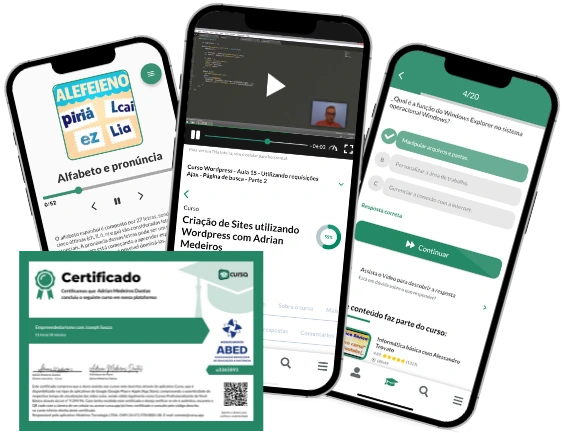
Carry knowledge in your pocket.
Download the Cursa app.
There are hundreds of free courses available, with a free certificate of completion that is saved in your mobile image gallery.
Download the app to access the Course Completion Certificate for Free.


+ 10 million
students

Free and Valid
Certificate

60 thousand free
exercises

4.8/5 rating in
app stores

Free courses in
video and ebooks