
Exercises
Explore how bonds are valued and how changes in interest rates, maturity, credit quality, and embedded features affect their prices. This quiz covers coupon payments, yield measures, premium and discount bonds, duration, convexity, yield curves, reinvestment risk, credit spreads, callable bonds, and bond ladders. The questions combine calculations, visual interpretation, and practical investment scenarios.
Answer the questions below and check the explanation for each answer.
0/18 answered
Auto audio on: the next questions will be read aloud when you click Continue.
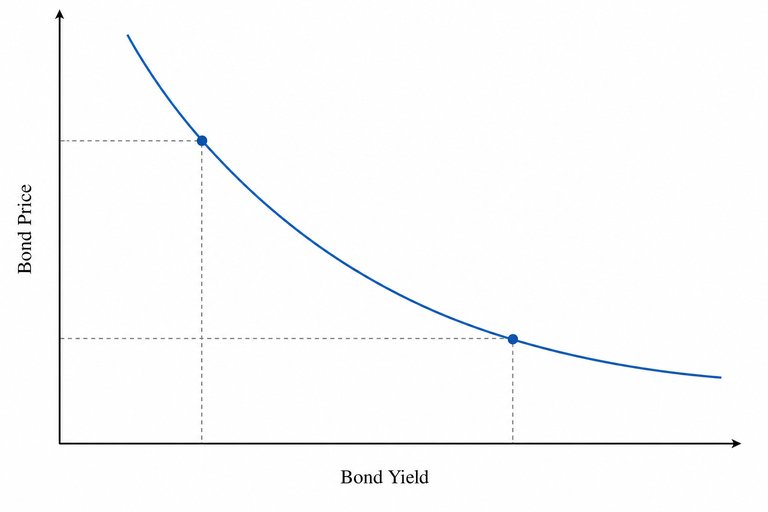
Bond prices and market yields generally move in opposite directions. A higher discount rate reduces the present value of the bond's fixed future payments.
The annual coupon equals face value multiplied by the coupon rate: $1,000 × 6% = $60.
Yield to maturity is the discount rate that makes the present value of all promised coupons and principal equal to the bond's current price.
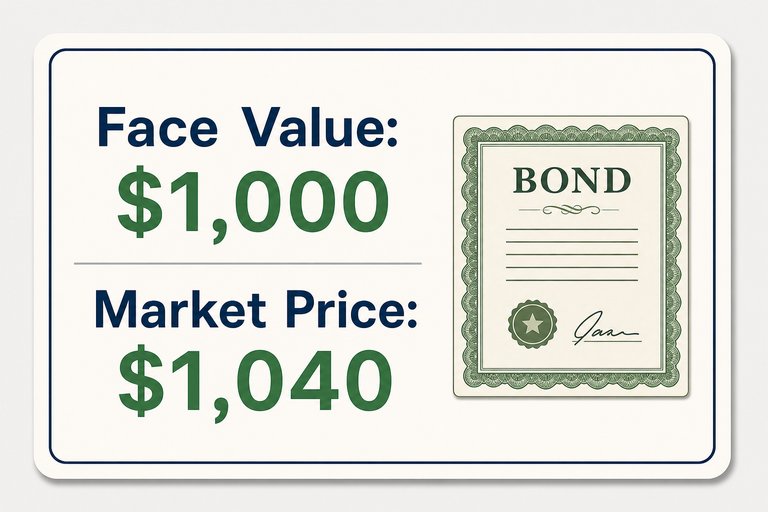
A bond trades at a premium when its market price exceeds its face value. Here, $1,040 is greater than $1,000.
Current yield equals annual coupon income divided by market price: $60 ÷ $1,200 = 5%.
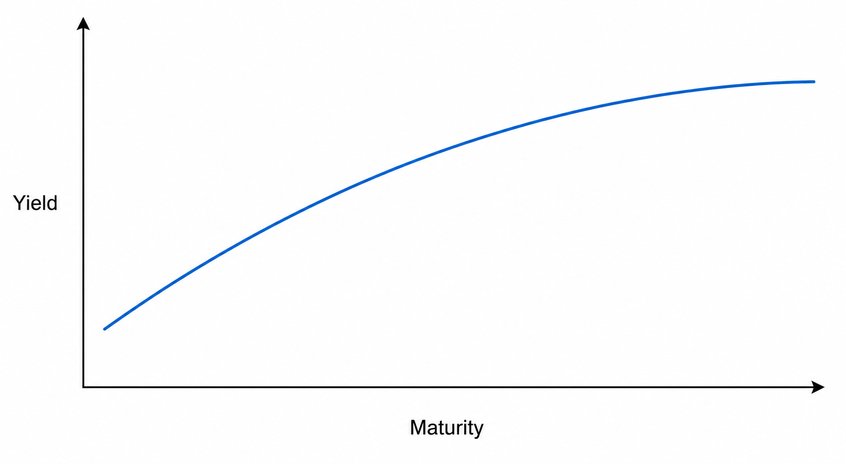
A normal yield curve slopes upward because longer-maturity bonds generally offer higher yields than shorter-maturity bonds.
Macaulay duration is the weighted average time required to receive a bond's cash flows, with present values used as the weights.
The duration estimate is −5.2 × 0.005 = −0.026, or approximately a 2.6% price decrease.
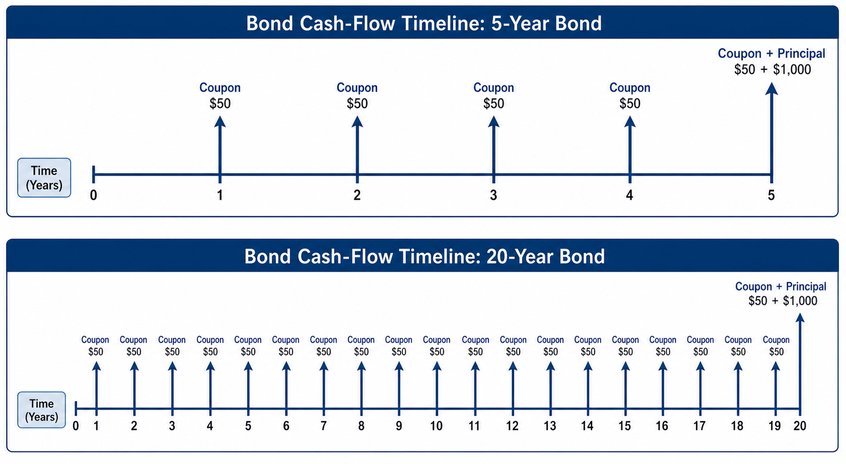
With other factors equal, longer-maturity bonds have greater duration and price sensitivity because their cash flows are received farther in the future.
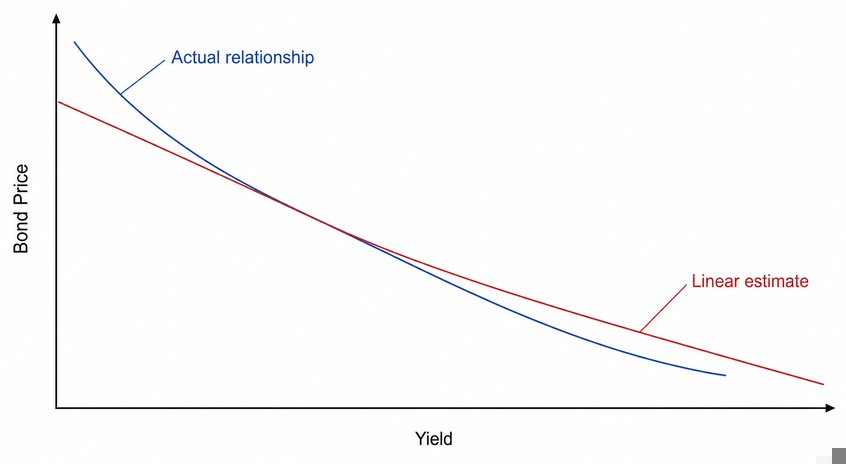
Positive convexity places the actual price-yield curve above its duration tangent. For a yield increase, the actual loss is generally smaller than the linear estimate.
Reinvestment risk arises because interim coupon payments may be reinvested at rates below the yield originally expected.
A wider credit spread raises the corporate bond's required yield relative to Treasuries. Higher required yields reduce the bond's present value.
BBB− is the lowest S&P investment-grade rating. Ratings of BB+ and below are generally classified as speculative grade.
When rates fall, an issuer may call a high-coupon bond and refinance the debt at a lower interest cost. This creates call and reinvestment risk for investors.
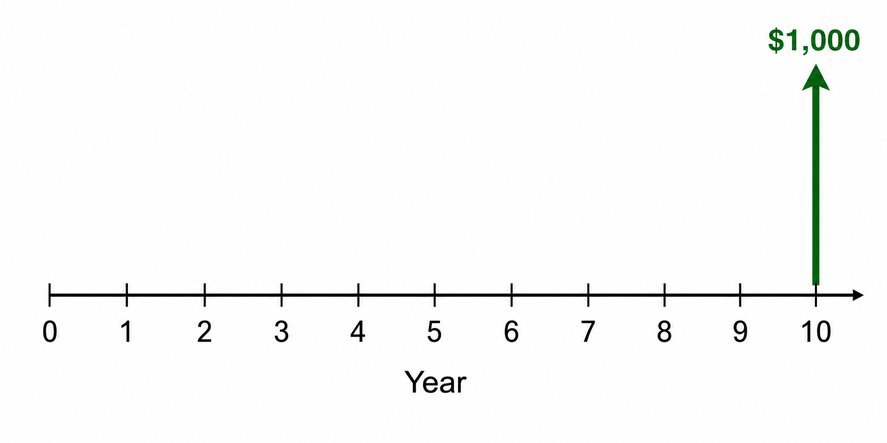
A zero-coupon bond makes only one payment at maturity, so the weighted average time to receive its cash flow equals its maturity.
The dirty price is the total settlement price paid by the buyer. It equals the quoted clean price plus interest accrued since the last coupon date.
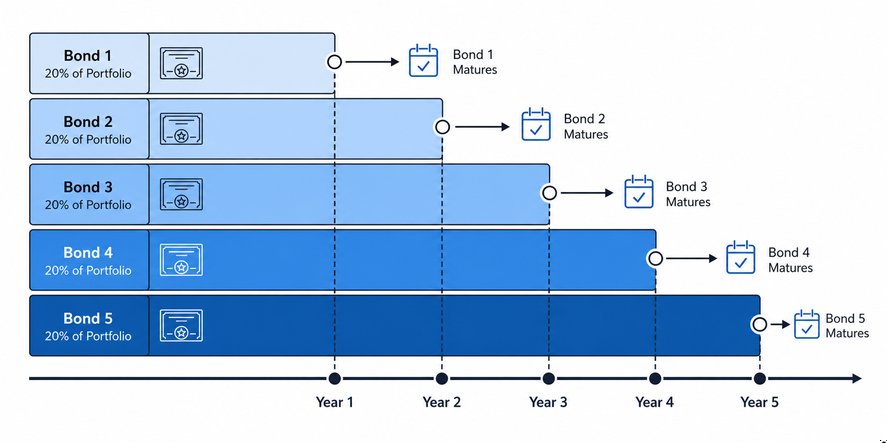
A bond ladder distributes holdings across regularly spaced maturity dates. Maturing principal can provide liquidity or be reinvested at current rates.
The approximate real return equals the nominal return minus inflation: 7% − 3% = 4%.

Free CourseCFA Level 1 Investments (Digital Assets, Hedge Funds, Real Estate, Private Equity)
5

(1)

4h40m

7 exercises
Free CourseInvesting Basics: Stocks, Bonds, ETFs, Risk and Taxes
5
(1)
1h44m
12 exercises

Free CourseInvesting in Stocks Course
5
(2)
6h39m
45 exercises
Free CourseInvesting for beginners
5
(21)
54m
6 exercises

Free CourseTrading for beginners
4.9
(12)
2h26m
5 exercises

Free CourseCryptocurrencies and Blockchains
4.9
(7)
4h42m
35 exercises

Free CourseBasics of Stock Market course
4.8
(37)
31h39m
23 exercises
Free CourseInvesting like Warren Buffett
4.8
(261)
3h29m
13 exercises
Thousands of online courses in video, ebooks and audiobooks.
To test your knowledge during online courses
Generated directly from your cell phone's photo gallery and sent to your email

Download our app via QR Code or the links below:.


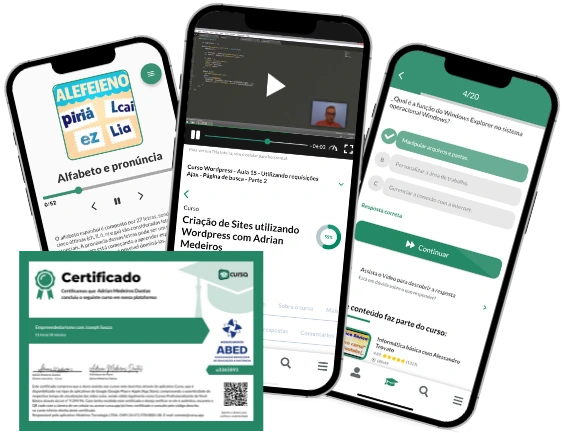
Carry knowledge in your pocket.
Download the Cursa app.
There are hundreds of free courses available, with a free certificate of completion that is saved in your mobile image gallery.
Download the app to access the Course Completion Certificate for Free.


+ 10 million
students

Free and Valid
Certificate

60 thousand free
exercises

4.8/5 rating in
app stores

Free courses in
video and ebooks