
Exercises
Assess your practical understanding of Kubernetes Ingress for exposing web applications. This quiz covers Ingress controllers, host- and path-based routing, path types, TLS secrets, default backends, readiness, namespaces, forwarded headers, WebSockets, status reporting, and controller-specific features. Questions range from foundational concepts to troubleshooting common routing and availability problems in cloud-hosted Kubernetes environments.
Answer the questions below and check the explanation for each answer.
0/16 answered
Auto audio on: the next questions will be read aloud when you click Continue.
An Ingress defines rules that route external HTTP or HTTPS requests to Kubernetes Services based on properties such as hostnames and URL paths.

An Ingress controller watches Kubernetes resources and implements their routing rules using a proxy or load balancer. An Ingress resource alone does not process traffic.
The spec.ingressClassName field references an IngressClass associated with a particular controller implementation.
The Exact path type matches the URL path exactly and performs case-sensitive comparison. Prefix matches by path elements instead.

When multiple paths match, Kubernetes gives priority to the longest matching path. Therefore, /api/v1 is selected.
An Ingress TLS Secret normally contains the certificate chain in tls.crt and the corresponding private key in tls.key.
The default backend handles traffic that does not match another Ingress rule. Its exact configuration can depend on the Ingress controller.

TLS is terminated where the HTTPS connection is decrypted. In this flow, the Ingress proxy decrypts the request and forwards ordinary HTTP to the backend.
An Ingress is declarative configuration. A compatible, running Ingress controller is required to observe it and configure the actual proxy or load balancer.

Pods that fail readiness are normally removed from the Service's ready endpoints. New traffic should therefore be sent only to the ready Pods.
A standard Ingress backend references a Service in the same namespace. Cross-namespace routing requires a different mechanism or controller-specific design.

Host-based routing examines the HTTP Host header and selects a backend according to the hostname configured in an Ingress rule.
X-Forwarded-For commonly carries the originating client IP through one or more proxies. Applications must trust and parse it only from known proxy infrastructure.
A WebSocket handshake uses the Upgrade header and an appropriate Connection header to request a protocol switch from HTTP.

The routing rule can match correctly while delivery still fails because the Service has no ready endpoints. Controllers commonly report this as an unavailable upstream, often with a 503 response.
Advanced behavior configured through annotations often depends on a specific controller. Migrating controllers may require changing or replacing those annotations.
Free CourseCompTIA Network N10-009 Complete Training and Exam Prep Course
5

(1)

12h54m

43 exercises
Free CourseCCNA 200-301 Full Course: Cisco Networking Fundamentals, Labs and Exam Prep
5
(2)
32h34m
46 exercises

Free CourseComputer Networking
5
(4)
4h01m
40 exercises

Free CourseNetworking Fundamentals
5
(2)
3h25m
15 exercises

Free CourseFoundations of IT support
5
(6)
4h48m
11 exercises

Free CourseWindows server 2012
5
(26)
9h15m
29 exercises

Free CourseActive Directory
5
(22)
14h51m
36 exercises

Free CourseCloud computing - beginner to advance
4.9
(17)
51h10m
5 exercises
Thousands of online courses in video, ebooks and audiobooks.
To test your knowledge during online courses
Generated directly from your cell phone's photo gallery and sent to your email

Download our app via QR Code or the links below:.


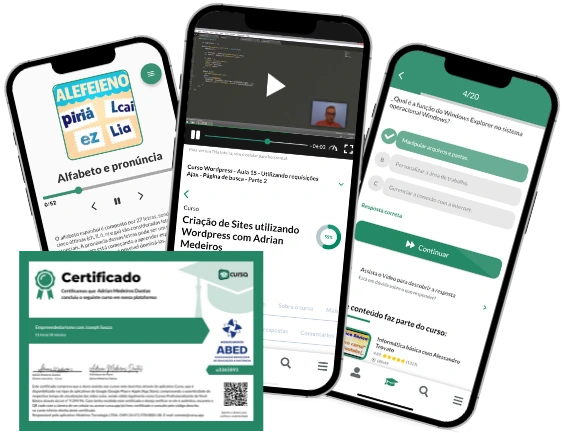
Carry knowledge in your pocket.
Download the Cursa app.
There are hundreds of free courses available, with a free certificate of completion that is saved in your mobile image gallery.
Download the app to access the Course Completion Certificate for Free.


+ 10 million
students

Free and Valid
Certificate

60 thousand free
exercises

4.8/5 rating in
app stores

Free courses in
video and ebooks