
Exercises
This quiz assesses practical knowledge of pressure testing and evacuating refrigeration and air-conditioning systems before charging. Topics include safe nitrogen use, deep-vacuum measurement, valve-core removal, vacuum-decay testing, moisture removal, pump maintenance, and leak detection. The questions combine foundational safety principles with diagnostic interpretation and commissioning practices.
Answer the questions below and check the explanation for each answer.
0/10 answered
Auto audio on: the next questions will be read aloud when you click Continue.
Evacuation removes moisture and noncondensable gases. These contaminants can cause high operating pressures, corrosion, ice formation, and chemical damage after refrigerant is added.
Dry nitrogen is inert and contains very little moisture. A regulator is essential because cylinder pressure is much higher than the safe test pressure of refrigeration equipment.
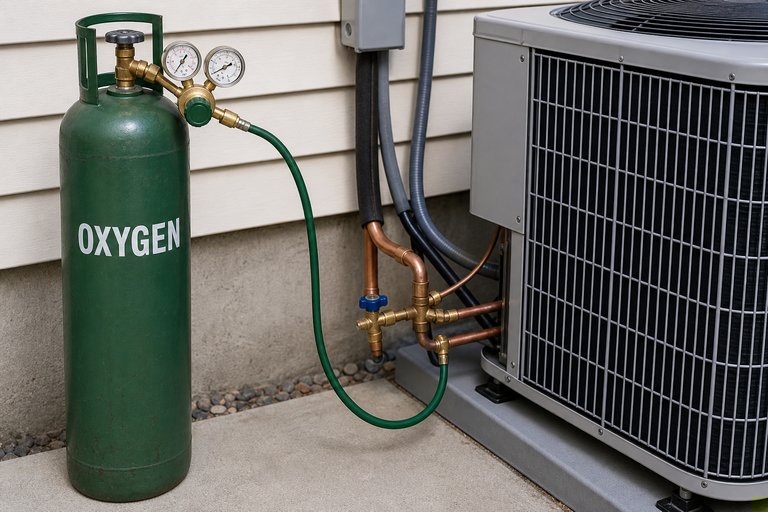
Never pressure-test with oxygen. Pressurized oxygen can react violently with refrigeration oil and other combustible materials, creating a serious fire or explosion hazard.
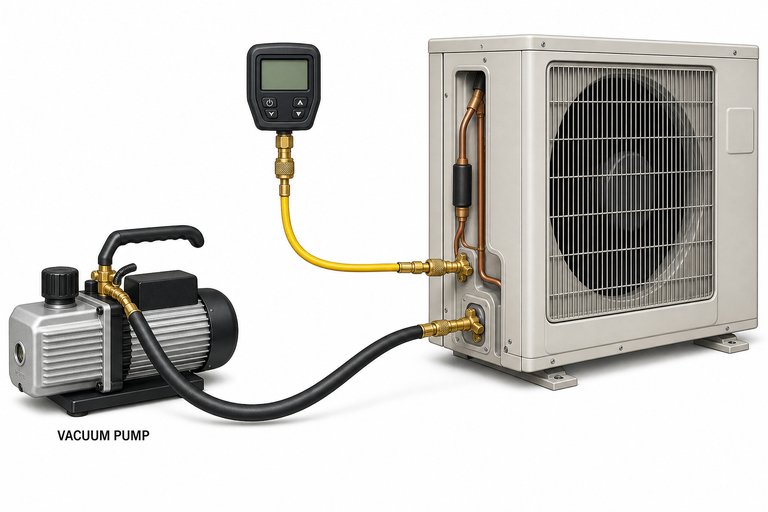
A gauge placed away from the pump gives a more representative measurement of the actual system vacuum. A gauge at the pump can display a deeper vacuum than exists across restricted hoses and fittings.
Valve cores create narrow restrictions. Removing them with appropriate core tools improves flow conductance, allowing vapor and noncondensable gases to reach the vacuum pump more quickly.
An electronic micron gauge measures the very low absolute pressures encountered during evacuation. A standard compound gauge is not precise enough to confirm proper dehydration.
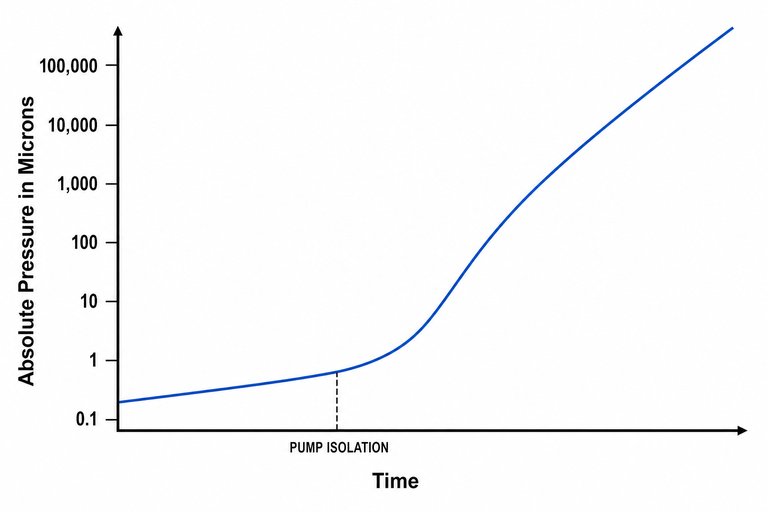
A rapid, continuing pressure rise usually indicates that gas is entering through a leak or open connection. Moisture-related rise may slow and level off as vapor release decreases.
In triple evacuation, dry nitrogen is introduced between evacuation stages. It helps dilute residual moisture vapor and improves its removal during the next vacuum cycle.
Vacuum pump oil absorbs moisture and contaminants. Contaminated oil has a higher vapor pressure, which limits the pump's ability to reach and maintain a deep vacuum.
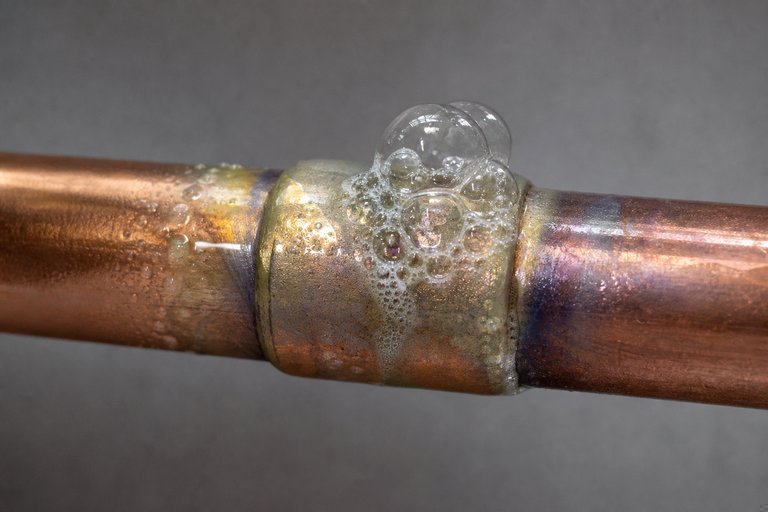
Steadily forming or growing bubbles show that pressurized gas is escaping through the joint. The leak must be repaired and the system retested before evacuation and charging.
Free CourseRefrigeration and Air conditioning
5

(4)

9h11m

6 exercises
Free CourseRefrigeration and air-conditioning
5
(1)
17h58m
30 exercises
Free CourseFundamentals of HVAC
5
(2)
58m
6 exercises
Free CourseHVAC training
5
(3)
4h01m
8 exercises
Free CourseRefrigeration and Air Conditioning Technician
4.8

(4)
1h18m
Free CourseIntroduction to market HVAC and Refrigeration
4.7
(3)
1h04m
6 exercises
Free CourseAir Conditioning Training
4.7
(6)
10h15m
14 exercises
Free CourseLearn HVAC HVACR Heating Ventalation Air Conditioning
4.3
(7)
34h21m
43 exercises
Thousands of online courses in video, ebooks and audiobooks.
To test your knowledge during online courses
Generated directly from your cell phone's photo gallery and sent to your email

Download our app via QR Code or the links below:.



Carry knowledge in your pocket.
Download the Cursa app.
There are hundreds of free courses available, with a free certificate of completion that is saved in your mobile image gallery.
Download the app to access the Course Completion Certificate for Free.


+ 10 million
students

Free and Valid
Certificate

60 thousand free
exercises

4.8/5 rating in
app stores

Free courses in
video and ebooks