
Exercises
Build confidence in computer networking fundamentals with this beginner-friendly quiz. Test your understanding of IP and TCP terminology, routers and packet forwarding, Internet addressing, subnet masks, and the purpose of common network devices. You will also review the OSI model, short-range wireless communication, network packets, and star topology. Whether you are preparing for an IT course, starting a networking career, or refreshing essential concepts, this quiz offers a quick way to assess your knowledge of how modern networks communicate and transfer data.
Answer the questions below and check the explanation for each answer.
0/10 answered
Auto audio on: the next questions will be read aloud when you click Continue.
IP in computer networking stands for Internet Protocol. It is a fundamental protocol that enables different computer systems to communicate over the internet by defining rules for data packet exchange.
A Switch is a network device that connects devices together and forwards data between them within a local area network (LAN). It operates at the data link layer and uses MAC addresses to direct traffic to the correct destination.
An IP Address is used by routers to direct data packets on the Internet. It serves as a unique identifier for each device on a network, allowing data to be routed to the correct destination across the network and the Internet.
The Transport Layer (Layer 4) of the OSI model is responsible for ensuring error-free data transmission. It manages data transfer between end systems, error detection and recovery, and flow control. The Physical Layer and Application Layer do not handle these duties.
The acronym TCP in TCP/IP stands for Transmission Control Protocol. It is one of the main protocols of the Internet protocol suite and provides reliable, ordered, and error-checked delivery of data between applications running on hosts communicating via an IP network.
A packet in networking refers to a unit of data that is transmitted over a network. When data is transferred over the internet, it is broken down into smaller chunks called packets, which are then sent to the recipient and reassembled. This method facilitates efficient data transfer and error detection.
Bluetooth is a wireless communication technology that is commonly used to exchange data over short distances. It is designed for low power consumption and typically connects devices within a range up to 100 meters. While both NFC and Infrared can also be used for short-range communications, Bluetooth is the most versatile and widely used for connecting a variety of devices like headphones, smartphones, and computers.
A router’s main purpose is To manage the network's resources. It directs data packets between computers and networks, ensuring that data sent from one device reaches the correct destination within or outside the network.
A subnet mask is used to divide an IP network into smaller parts, known as subnets. This helps optimize network performance and management by segmenting network traffic and reducing congestion.
In a Star Topology, all computers are connected to a single hub or switch. This central device acts as a conduit for data transmission, making it a hub-and-spoke arrangement. If the central hub fails, the entire network goes down, but individual failures won't impact the others.
Free CourseIBM IT Support course
5

(4)

18h43m

6 exercises
Free CourseIT fundamentals
4.9
(12)
5h33m
22 exercises
Free CourseComputer basics course
4.9
(20)
55m
8 exercises
Free CourseIntroduction to Computer Science
4.8
(40)
17h05m
9 exercises
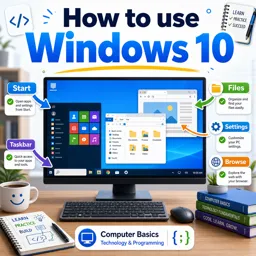
Free CourseHow to use Windows 10
4.8

(4)
3h51m
45 exercises
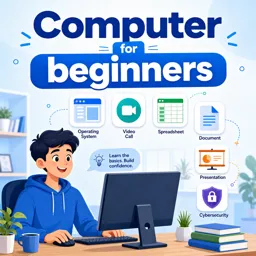
Free CourseComputer for beginners
4.4
(8)
7h03m
6 exercises
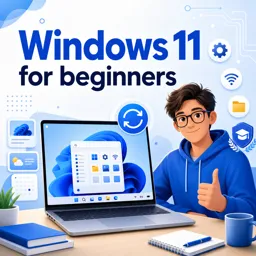
Free CourseWindows 11 for beginners
4
(1)
3h51m
29 exercises
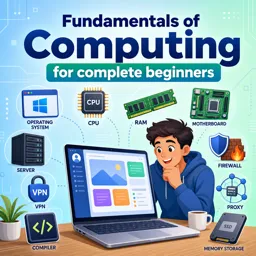
Free CourseFundamentals of Computing for complete beginners
New
46m
13 exercises
Thousands of online courses in video, ebooks and audiobooks.
To test your knowledge during online courses
Generated directly from your cell phone's photo gallery and sent to your email

Download our app via QR Code or the links below:.


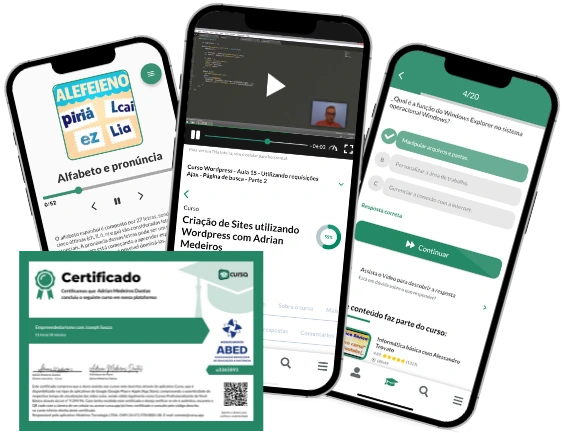
Carry knowledge in your pocket.
Download the Cursa app.
There are hundreds of free courses available, with a free certificate of completion that is saved in your mobile image gallery.
Download the app to access the Course Completion Certificate for Free.


+ 10 million
students

Free and Valid
Certificate

60 thousand free
exercises

4.8/5 rating in
app stores

Free courses in
video and ebooks