Hardware is the physical equipment, such as the CPU, keyboard, and drive. Software is the programs and instructions that run on that equipment.

Duration of the online course: 5 hours and 33 minutes
4.9

(9)
Build job-ready IT skills fast with this free course: hardware, Windows basics, networks, security, and troubleshooting—plus a certificate to prove it.
Strengthen your digital confidence with a practical introduction to the core ideas behind modern computing. This free online course is designed for beginners and career changers who want to understand how computers, operating systems, and networks work in real life. Instead of assuming prior experience, it starts with the foundations: what computing devices do, how hardware and software work together, and how to set up and use a workstation responsibly from day one.
As you progress, you will learn how an operating system manages applications, files, permissions, and everyday tasks, while also building the mindset required to keep a machine stable and organized. You will explore essential concepts such as data types, binary representation, and storage units so technical terms start to feel familiar rather than intimidating. By connecting these fundamentals to common software applications, the course helps you make sense of what happens behind the scenes when you install programs, respond to system prompts, and manage basic settings safely.
The course also bridges fundamentals with the broader IT ecosystem. You will gain clarity on how databases store information, why device interfaces and drivers matter, and what roles key system components such as the GPU play in performance. File systems and storage technologies are explained in a way that helps you choose the right tools, understand differences between HDDs and SSDs, and work more efficiently with files and shared resources.
Networking and security are treated as essential everyday skills, not advanced topics. You will build a clear picture of how devices connect, what enables access to the internet, how shared storage like NAS is used, and how to browse securely—especially on public or shared computers. Finally, you will develop security awareness that translates directly to the workplace: access controls, best practices for hardening devices, behavioral security, and the purpose of policies such as acceptable use guidelines. With quick checks and practice throughout, you will finish with a solid baseline for entry-level IT work, further technical study, or simply smarter, safer computing.

5 hours and 33 minutes of online video course

Digital certificate of course completion (Free)

Exercises to train your knowledge

100% free, from content to certificate
What is the difference between hardware and software in a computer?
Hardware is the physical equipment, such as the CPU, keyboard, and drive. Software is the programs and instructions that run on that equipment.
What does an operating system do?
An operating system manages hardware resources, files, applications, and user interaction, allowing programs and devices to work together.
What is the main difference between an HDD and an SSD?
An HDD stores data on spinning magnetic disks, while an SSD uses flash memory. SSDs are generally faster, quieter, and more durable.
Ready to get started?Download the app and get started today.
Install the app now
to access the course
Over 5,000 free courses
Programming, English, Digital Marketing and much more! Learn whatever you want, for free.

Study plan with AI
Our app's Artificial Intelligence can create a study schedule for the course you choose.

From zero to professional success
Improve your resume with our free Certificate and then use our Artificial Intelligence to find your dream job.
You can also use the QR Code or the links below.



Free CourseIBM IT Support course
5
(4)

18h43m

6 exercises
Free CourseComputer basics course
4.9
(20)
55m
8 exercises
Free CourseIntroduction to Computer Science
4.8
(40)
17h05m
9 exercises
Free CourseHow to use Windows 10
4.8

(4)
3h51m
45 exercises
Free CourseComputer for beginners
4.4
(8)
7h03m
6 exercises
Free CourseWindows 11 for beginners
4
(1)
3h51m
29 exercises
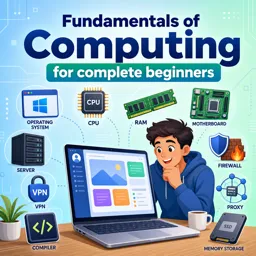
Free CourseFundamentals of Computing for complete beginners
New
46m
13 exercises
Carry knowledge in your pocket.
Download the Cursa app.
There are hundreds of free courses available, with a free certificate of completion that is saved in your mobile image gallery.
Download the app to access the Course Completion Certificate for Free.


+ 10 million
students

Free and Valid
Certificate

60 thousand free
exercises

4.8/5 rating in
app stores

Free courses in
video and ebooks