
Exercises
Challenge your understanding of asynchronous programming in Node.js. This quiz covers core concepts such as promises, async and await, delaying execution, error handling, the EventEmitter class, asynchronous file system methods, and event loop phases. Explore what happens when awaiting promises and non-Promise values, learn how to run asynchronous tasks in sequence, and identify common Node.js patterns for reliable non-blocking code. Whether you are learning backend JavaScript or reviewing for a Node.js interview, these questions will help you assess your grasp of Node.js asynchronous workflows.
Answer the questions below and check the explanation for each answer.
0/10 answered
Auto audio on: the next questions will be read aloud when you click Continue.
The native Node.js method to handle asynchronous operations is the Promise. Promises provide a way to work with asynchronous code in a more readable and maintainable manner, allowing operations to be chained together and errors to be handled more effectively.
In Node.js, the setTimeout() function is used to pause execution for a specified period of time before continuing. It allows you to delay the execution of a callback function by a specified number of milliseconds. process.nextTick() schedules a callback for the next iteration of the event loop, and setInterval() repeatedly calls a callback function at specified intervals.
In Node.js, to prevent a promise from ever being rejected, you should use the .catch() method. This method is used to handle errors or rejections for promises, ensuring that any errors are caught and managed, thus preventing the promise from being rejected.
In Node.js, fs.readFile(), fs.writeFile(), and fs.unlink() are known methods for handling files asynchronously, usually by providing a callback. However, fs.readFileAsync() is not a standard method in the 'fs' module for handling files asynchronously.
The async keyword in Node.js is used to indicate that a function returns a promise and can use the await keyword to pause execution until the promise is resolved, allowing for easier management of asynchronous code by writing it in a synchronous style.
The Node.js event loop consists of phases such as Timers and Callbacks. However, Promises are not a phase in the event loop. Promises are handled in the microtask queue, which is processed after the currently executed code and before the event loop continues to the next phase.
The await keyword is used in async functions to pause the execution until a promise is settled, which means that it is either resolved or rejected. The function execution continues when the promise is settled, returning the resolved value if the promise is fulfilled or throwing an error if it's rejected.
EventEmitter is a core class provided by Node.js that allows you to create and handle custom events. It is an essential part of the event-driven architecture that Node.js employs, enabling communication between different parts of an application. Option 3 correctly represents the primary function of the EventEmitter class, which is to create and handle custom events.
When you 'await' on a non-Promise value in JavaScript, Node.js (and any JavaScript environment supporting async/await) will automatically wrap the value in a resolved promise. This means executing await on any non-Promise value simply results in that value, just as if you awaited a promise that immediately resolves with that value.
To ensure that multiple asynchronous operations are executed in sequence, you can use the async/await keywords in a loop. This approach simplifies the control flow and makes the code easier to read and maintain by allowing you to write asynchronous code as if it were synchronous.
Free CourseBackend REST API
5

(9)

5h24m

25 exercises
Free CourseNodeJS complete
5
(1)
1h30m
12 exercises
Free CourseAPIs
5
(5)
4h32m
20 exercises
Free CourseFlask
5
(1)
8h50m
14 exercises

Free CourseDjango for Everybody
5
(1)
18h32m
Free CoursePython Django Full Stack Developer
5
(2)
14h23m
27 exercises
Free CourseMaster Vue JS API
5
(-4)
6h14m
6 exercises
Free CoursePython Fast API
4.8
(5)
1h34m
14 exercises
Thousands of online courses in video, ebooks and audiobooks.
To test your knowledge during online courses
Generated directly from your cell phone's photo gallery and sent to your email

Download our app via QR Code or the links below:.


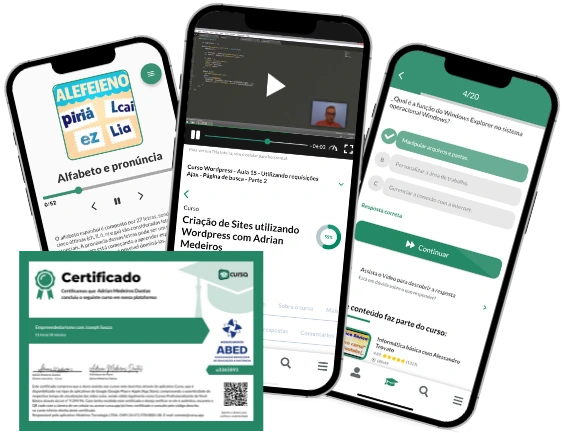
Carry knowledge in your pocket.
Download the Cursa app.
There are hundreds of free courses available, with a free certificate of completion that is saved in your mobile image gallery.
Download the app to access the Course Completion Certificate for Free.


+ 10 million
students

Free and Valid
Certificate

60 thousand free
exercises

4.8/5 rating in
app stores

Free courses in
video and ebooks