Every online store, freelancer and small business has a sales process, whether they have mapped it out or not. A sales funnel is simply a way of picturing that journey: how a stranger becomes aware of you, grows interested, decides to buy and, ideally, comes back again. Once you can see the steps clearly, you can improve them one at a time. This article explains the main stages of a funnel, what to do at each one and how to measure progress.
What is a sales funnel?
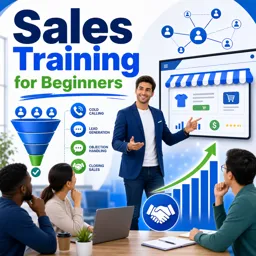
A sales funnel is a model of the path a potential customer follows from first contact to purchase. It is called a funnel because the group narrows at each stage: many people notice your business, fewer show real interest, and fewer still become buyers. This narrowing is normal. The goal is not to stop it but to understand it, so you can reduce unnecessary losses and focus your effort where it matters most.
The funnel is a simplification, and real customers do not always move in a straight line. Someone might read three blog posts, forget about you for a month and then buy after seeing an email. Still, the model gives teams a shared language and a practical checklist.
The main stages
Different authors use slightly different labels, but most funnels follow four or five stages. The table below shows a common version and the question the customer is asking at each step.
| Stage | Customer’s question | Typical content or action |
|---|---|---|
| Awareness | “What is this and do I have a problem?” | Blog posts, social media, videos, search results |
| Interest | “How could this help me?” | Guides, newsletters, webinars, free resources |
| Consideration | “Is this better than the alternatives?” | Comparisons, reviews, demos, case studies |
| Purchase | “Can I trust this and is it easy to buy?” | Clear pricing, simple checkout, guarantees |
| Loyalty | “Was it worth it? Should I return?” | Follow-up emails, support, loyalty offers |
Stage 1: Awareness
At the top of the funnel, people may not know your brand, and some do not yet realise they have a problem you can solve. The job here is to be useful and visible. Educational content, search-friendly articles, short videos and helpful social posts are common tools. Avoid pushing a hard sale at this point. A person who has just met you is more likely to leave than to buy.
Stage 2: Interest
Once someone shows curiosity, for example by reading several pages or following your account, you want to keep the conversation going. A common tactic is to offer something valuable in exchange for an email address, such as a checklist, a template or a short course. This turns an anonymous visitor into a lead you can talk to directly. Make the offer relevant to your product, so the people who sign up are genuinely the ones you want to serve.
Stage 3: Consideration
Here the customer is comparing options. They want proof, not slogans. Honest comparisons, customer stories, clear descriptions of what is included and answers to common questions all help. Showing real examples of how others use your product reduces uncertainty. This is also a good moment to offer a demo, a trial or a sample, which lets the person experience the value before paying.
Stage 4: Purchase
Many sales are lost at the final step because of friction. Long forms, surprise shipping costs, limited payment options and confusing pages all push people away. Review the buying process from the customer’s side and remove anything that is not necessary. Make prices and delivery terms clear, display contact details, and explain your return or refund policy in plain language. Trust signals matter most at this stage.
Stage 5: Loyalty and referrals
The funnel does not end at the sale. Existing customers are usually easier to sell to than new ones, and satisfied customers can recommend you to others. Send a thank-you message, check that the product works as expected, offer support and invite feedback. A short follow-up sequence can also suggest related products or services in a way that feels helpful rather than pushy.
Simple metrics to track
You do not need complex software to start measuring your funnel. A few basic numbers are enough to show where people drop off:
- Traffic: how many people reach your site, profile or store.
- Conversion rate: the share of people who take the next step, such as signing up or buying. It is calculated by dividing the number of people who completed an action by the number who had the chance, then multiplying by 100.
- Cost per lead and cost per customer: how much you spend, on average, to win each lead or sale.
- Average order value: how much a typical customer spends per purchase.
- Repeat purchase rate: the share of customers who buy more than once.
Compare the numbers from one stage to the next. If many visitors read your articles but few sign up for your newsletter, the problem is probably in your offer or your sign-up form, not in your traffic. Fix one weak point at a time and measure again.
Common mistakes to avoid
The first mistake is focusing only on the bottom of the funnel, pushing discounts while ignoring the people who have not yet heard of you. The second is treating every visitor the same way, when a first-time reader and a returning customer need different messages. The third is never testing. Small changes to a headline, a button or an email subject line can be compared over time to learn what works for your audience.
Conclusion
A sales funnel turns a vague idea of “getting more customers” into a clear set of steps you can improve. Start by writing down the stages in your own business, note what customers see at each one and track a few simple numbers. Over time, small improvements add up. If you want to go deeper into selling online, customer journeys and e-commerce fundamentals, take a look at the related sales and e-commerce courses available on Cursa.