
This tutorial could not be loaded.
Loading tutorial...
Interactive tutorial
Design, diagnose, and evaluate advanced RAG systems using an engineering-documentation case study. Make evidence-based decisions about indexing, hybrid retrieval, reranking, grounded generation, evaluation, security, and operational trade-offs. Exercises use supplied documents, traces, and small Python examples without requiring external services.
 Step 1 of 12
4 min
Define the Evidence Contract
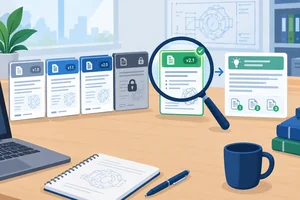
Define an evidence contract and diagnose where a RAG evidence pipeline fails in a versioned engineering-documentation case.
Step 1 of 12
4 min
Define the Evidence Contract
Define an evidence contract and diagnose where a RAG evidence pipeline fails in a versioned engineering-documentation case.
 Step 2 of 12
5 min
Build Evidence-Preserving Document Representations
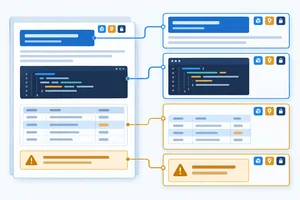
Design document chunks and metadata that preserve evidence, scope, attribution, and access constraints.
Step 2 of 12
5 min
Build Evidence-Preserving Document Representations
Design document chunks and metadata that preserve evidence, scope, attribution, and access constraints.
 Step 3 of 12
5 min
Diagnose Dense Retrieval
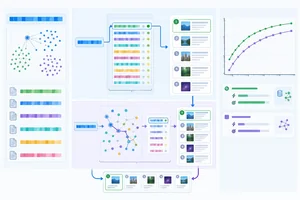
Diagnose dense retrieval by validating representation compatibility, scoring conventions, and exact-versus-approximate search comparisons.
Step 3 of 12
5 min
Diagnose Dense Retrieval
Diagnose dense retrieval by validating representation compatibility, scoring conventions, and exact-versus-approximate search comparisons.
 Step 4 of 12
5 min
Combine Hybrid Retrieval with Correct Filtering
Fuse lexical and dense candidate lists with reciprocal rank fusion while enforcing trusted authorization filters and preserving stable evidence identifiers.
Step 4 of 12
5 min
Combine Hybrid Retrieval with Correct Filtering
Fuse lexical and dense candidate lists with reciprocal rank fusion while enforcing trusted authorization filters and preserving stable evidence identifiers.
 Step 5 of 12
5 min
Rerank and Assemble a Useful Context
Use a bounded reranking stage and deliberate context assembly to retain the rule, exceptions, and citation links that make evidence useful.
Step 5 of 12
5 min
Rerank and Assemble a Useful Context
Use a bounded reranking stage and deliberate context assembly to retain the rule, exceptions, and citation links that make evidence useful.
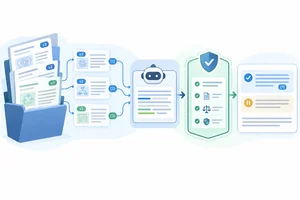 Step 6 of 12
5 min
Specify Grounded Answers and Abstention
Define a grounded-answer policy that separates authority from evidence, cites supported claims, handles version scope and conflict, and abstains when the evidence cannot justify an answer.
Step 6 of 12
5 min
Specify Grounded Answers and Abstention
Define a grounded-answer policy that separates authority from evidence, cites supported claims, handles version scope and conflict, and abstains when the evidence cannot justify an answer.
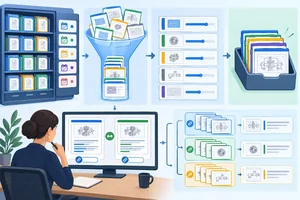 Step 7 of 12
6 min
Measure Retrieval with a Versioned Test Set
Calculate stable-evidence retrieval metrics and use stage-level comparisons to identify where evidence disappears.
Step 7 of 12
6 min
Measure Retrieval with a Versioned Test Set
Calculate stable-evidence retrieval metrics and use stage-level comparisons to identify where evidence disappears.
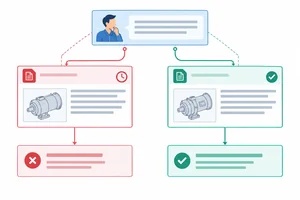 Step 8 of 12
6 min
Evaluate Answers Separately from Retrieval
Evaluate generated RAG answers independently of retrieval ranking by labeling claim support, calculating citation and abstention metrics, and using an oracle-context probe to localize failures.
Step 8 of 12
6 min
Evaluate Answers Separately from Retrieval
Evaluate generated RAG answers independently of retrieval ranking by labeling claim support, calculating citation and abstention metrics, and using an oracle-context probe to localize failures.
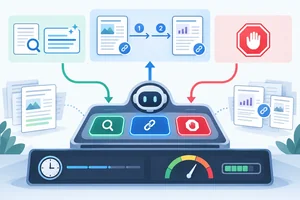 Step 9 of 12
5 min
Add Adaptive Retrieval for Diagnosed Failures
Choose bounded adaptive retrieval only when failure analysis supports it, then evaluate it fairly against the simpler baseline.
Step 9 of 12
5 min
Add Adaptive Retrieval for Diagnosed Failures
Choose bounded adaptive retrieval only when failure analysis supports it, then evaluate it fairly against the simpler baseline.
 Step 10 of 12
5 min
Protect the Evidence and Trust Boundaries
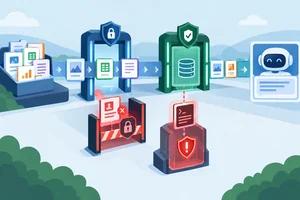
Audit RAG data flows for indirect prompt injection, unauthorized evidence exposure, and secondary leakage using layered controls.
Step 10 of 12
5 min
Protect the Evidence and Trust Boundaries
Audit RAG data flows for indirect prompt injection, unauthorized evidence exposure, and secondary leakage using layered controls.
 Step 11 of 12
6 min
Operate and Improve the System Safely
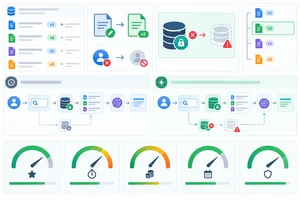
Operate a RAG system with version-aware freshness, safe migrations, explicit budgets, and bounded release controls.
Step 11 of 12
6 min
Operate and Improve the System Safely
Operate a RAG system with version-aware freshness, safe migrations, explicit budgets, and bounded release controls.
 Step 12 of 12
7 min
Complete an Evidence-Based RAG Design Review
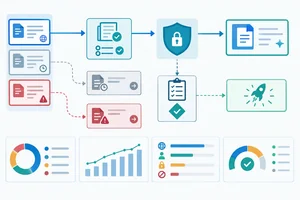
Use a final AtlasDB engineering-documentation case to audit evidence, controls, metrics, and a bounded release decision.
Step 12 of 12
7 min
Complete an Evidence-Based RAG Design Review
Use a final AtlasDB engineering-documentation case to audit evidence, controls, metrics, and a bounded release decision.

Free CourseDeep Learning With PyTorch
5

(6)

3h39m

19 exercises

Free CourseMachine Learning tutorial
5
(2)
10h20m
6 exercises
Free CourseGoogle Prompting Essentials
4.8
(5)
3h24m
10 exercises

Free CourseData Science
4.8

(4)
5h58m
38 exercises

Free CourseArtificial intelligence
4.7
(69)
12h40m
7 exercises

Free CourseFundamentals of Artificial Intelligence
4.6
(11)
25h26m
34 exercises

Free CourseGenerative AI
4.6
(5)
1h43m
11 exercises

Free CourseArtificial Intelligence Masterclass: Search, Logic, Machine Learning and Deep Learning
4.6
(9)
31h57m
57 exercises
Thousands of online courses in video, ebooks and audiobooks.
To test your knowledge during online courses
Generated directly from your cell phone's photo gallery and sent to your email

Download our app via QR Code or the links below:.


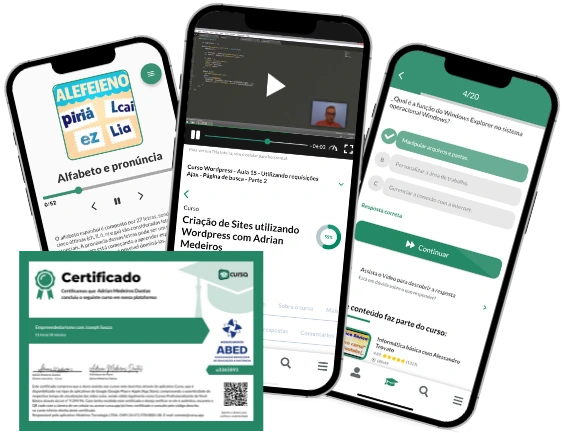
Carry knowledge in your pocket.
Download the Cursa app.
There are hundreds of free courses available, with a free certificate of completion that is saved in your mobile image gallery.
Download the app to access the Course Completion Certificate for Free.


+ 10 million
students

Free and Valid
Certificate

60 thousand free
exercises

4.8/5 rating in
app stores

Free courses in
video and ebooks