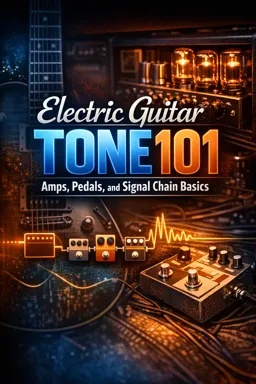

A free ebook on electric guitar tone, covering amps, pedals, gain staging, signal chain order, noise control, and core clean to lead sounds.
Free ebook content
-

Electric Guitar Tone Foundations: The Guitar as the First Tone Shaper
+ Exercise: When your amp or drive pedal is set near breakup, what is the most accurate description of what rolling back the guitar volume knob typically does?
-
Amp Controls for Electric Guitar Tone: Gain, EQ, Presence, and Master Volume
+ Exercise: You want a clean tone that is fairly loud, with clear attack and minimal hiss. Which control approach best matches that goal on most amps?
-
Clean, Edge-of-Breakup, and Overdrive: Building Core Electric Guitar Sounds
+ Exercise: Which setup best matches an edge-of-breakup rhythm tone that can shift from clean-ish to gritty using only picking strength and the guitar’s volume knob?


-
Pedal Types and What They Do: Compressor, Overdrive, Distortion, and Fuzz
+ Exercise: When a fuzz pedal’s guitar-volume cleanup doesn’t work and the sound becomes thin, what is the most appropriate first adjustment to try?
-
Modulation and Filter Pedals for Electric Guitar Tone: Chorus and Wah
+ Exercise: You engage a chorus pedal and your fast picking starts to feel blurred, as if the note attacks are smeared. What adjustment is recommended first to restore articulation?
-
Time-Based Effects for Guitar: Delay and Reverb with Clear Settings
+ Exercise: To keep an ambient hall reverb sounding big while preserving pick attack clarity, which adjustment is most directly recommended?
-
Signal Chain Basics for Electric Guitar: Practical Pedal Order That Works
+ Exercise: If your amp’s preamp provides most of the distortion and you want delay repeats to stay clear and controlled, where should you place the delay pedal?
-
Gain Staging for Guitar Rigs: Levels, Headroom, and Stacking Drives
+ Exercise: When stacking a drive pedal and a boost pedal, which placement most commonly creates a solo volume lift while keeping the same gain texture (assuming the next stage has enough headroom)?
-
Noise Management for Electric Guitar Tone: Hum, Hiss, and Practical Fixes
+ Exercise: When troubleshooting unwanted noise in an electric guitar rig, what is the most effective first step to identify where the noise is entering the signal chain?
-
Dialing Foundational Electric Guitar Tones: Clean, Crunch, and Lead for Jamming
+ Exercise: When dialing tones for a jam, which adjustment approach best matches the recommended priority list for fixing a boomy, overly washed-out sound?
About the free ebook
Electric Guitar Tone 101: Amps, Pedals, and Signal Chain Basics
Build better electric guitar sounds by understanding how your instrument, amplifier, and effects pedals interact. This free ebook explains the practical choices behind clear cleans, responsive crunch tones, and focused lead sounds.
Shape tone from the source
Your guitar is the first stage of the signal path. Pickup selection, volume and tone controls, picking attack, and playing dynamics all affect the sound before it reaches an amp or pedal. Learn how small adjustments can make a rig brighter, warmer, cleaner, or more aggressive.
Make amp controls work together
Gain, EQ, presence, and master volume are connected controls rather than isolated knobs. The ebook shows how to set usable clean headroom, find edge-of-breakup response, and create overdrive without harshness or muddy low end.
Choose and place effects with purpose
Understand the role of compressors, overdrives, distortion, fuzz, chorus, wah, delay, and reverb. Discover practical pedal-order principles that help effects react predictably, retain note clarity, and support the sound you want.
Control levels and unwanted noise
Good gain staging keeps a guitar rig expressive while avoiding excessive hiss, hum, and clipping. Learn how drive pedals stack, how signal levels affect headroom, and which simple checks can resolve common noise problems.
Build reliable sounds for playing
Use the concepts in this ebook to dial in flexible clean, crunch, and lead tones for jamming, rehearsal, or home practice. Great tone starts with listening, making one change at a time, and balancing every part of the signal chain.
What is the best pedal order for an electric guitar signal chain?
A practical starting order is tuner, wah, compressor, drive pedals, modulation, delay, and reverb, then the amp.
How do I set an amp for edge-of-breakup guitar tone?
Raise the amp gain until hard picking adds light grit, then use the guitar volume control to clean the sound up.
Why does stacking overdrive pedals create unwanted noise?
Each gain stage amplifies signal and noise. Use moderate gain settings, matched output levels, and clean power where possible.
This ebook includes:

10 content chapters

Digital certificate of course completion (Free)

Exercises to train your knowledge

100% free, from content to certificate
Ready to get started?

 recommended
In the app you will also find...

Over 5,000 free courses
Programming, English, Digital Marketing and much more! Learn whatever you want, for free.

Study plan with AI
Our app's Artificial Intelligence can create a study schedule for the course you choose.

From zero to professional success
Improve your resume with our free Certificate and then use our Artificial Intelligence to find your dream job.
You can also use the QR Code or the links below.