

A free ebook on safe, nurturing child care, covering supervision, hygiene, sleep, feeding, routines, behavior support, and emergencies.
Free ebook content
-

Child Care Basics: The Caregiver’s Role and Professional Boundaries
+ Exercise: Which caregiver response best reflects professional boundaries when a child starts sharing something that might involve safety?
-
Child Care Basics: Creating a Safe Physical Environment
+ Exercise: During a transition (like opening a door or moving between rooms), which approach best supports safety while maintaining supervision?
-
Child Care Basics: Supervision That Prevents Accidents
+ Exercise: During a transition (for example, moving from the classroom to the playground), which approach best reflects active supervision to reduce accident risk?
-
Child Care Basics: Hygiene, Cleaning, and Infection Prevention
+ Exercise: A caregiver sprays disinfectant on a diaper-changing surface and notices it dries in 30 seconds, but the label says “keep it wet for 1 minute.” What is the best next step?
-
Child Care Basics: Safe Sleep and Rest Practices
+ Exercise: Which action best supports safe sleep for an infant during naps in a child care setting?
-
Child Care Basics: Nutrition, Feeding, and Food Safety
+ Exercise: Which statement best describes responsive feeding during meals and snacks?


-
Child Care Basics: Understanding Child Development to Guide Care
+ Exercise: A toddler is grabbing toys and pushing during transitions. Which caregiver response best matches realistic expectations for toddler impulse control and supports skill-building?
-
Child Care Basics: Building Trust and Secure Relationships
+ Exercise: A toddler repeatedly says “No!” to simple requests. According to responsive caregiving, what is the best caregiver response to build trust while keeping the limit?
-
Child Care Basics: Positive Guidance and Everyday Behavior Support
+ Exercise: A child keeps throwing sand after you remind them “Sand stays low.” Which response best matches the guidance for using logical consequences without power struggles?
-
Child Care Basics: Planning Simple Routines and Smooth Transitions
+ Exercise: Which approach best supports smooth, low-stress transitions while keeping routines predictable?
-
Child Care Basics: Communication with Families and Care Teams
+ Exercise: A caregiver needs to message a family about a recurring behavior concern. Which approach best matches respectful, professional communication guidelines?
-
Child Care Basics: Documentation, Policies, and Ethical Care Practices
+ Exercise: Which note best follows objective documentation practices for a child care incident?
-
Child Care Basics: Emergency Preparedness and Incident Response
+ Exercise: During a suspected choking incident at snack time, which response best matches the recommended first decision and action steps?
About the free ebook
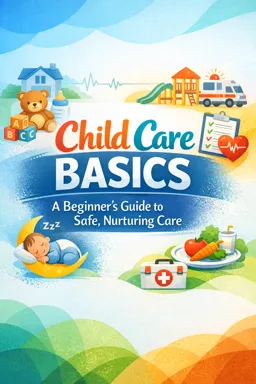
Child Care Basics: A Beginner’s Guide to Safe, Nurturing Care
This free ebook introduces the everyday knowledge needed to provide responsible, attentive child care in homes, programs, and community settings. It focuses on creating conditions where children can feel protected, respected, comforted, and ready to learn through ordinary routines.
Care that protects wellbeing
Safe care depends on more than responding after a problem occurs. Learn how thoughtful room setup, active supervision, hygiene routines, safe sleep practices, and food-handling habits can reduce avoidable risks. The ebook also explains why caregivers should follow applicable local regulations, organizational policies, family instructions, and health guidance.
Nurturing relationships and responsive support
Children benefit when adults notice their cues, communicate calmly, and offer predictable care. Explore age-appropriate development, secure relationships, positive guidance, and simple routines that help children manage transitions. Respectful, consistent responses can support a child’s confidence while maintaining clear and appropriate professional boundaries.
Clear communication and ethical practice
Reliable care includes sharing relevant information with families and care teams, recording observations and incidents accurately, protecting privacy, and understanding when concerns must be reported through proper channels. The ebook encourages caregivers to use documentation and policies as practical tools for accountability and continuity of care.
Prepared for the unexpected
Emergencies require calm action, preparation, and a clear understanding of procedures. Review the purpose of emergency plans, incident response, and prompt communication so you can contribute to a safer care environment. This guide is educational and does not replace required training, medical advice, or emergency instructions.
What you will gain
- A practical safety-first mindset for daily child care.
- Ideas for supportive routines, guidance, and communication.
- Awareness of documentation, ethics, and emergency readiness.
What are the key elements of a safe child care environment?
Hazard checks, age-appropriate equipment, active supervision, hygiene routines, safe storage, and clear emergency procedures.
What does active supervision in child care mean?
It means staying alert, positioning yourself to see and hear children, anticipating risks, and responding promptly.
Why is documentation important in child care?
Accurate records support communication, continuity of care, incident follow-up, policy compliance, and child safety.
This ebook includes:

13 content chapters

Digital certificate of course completion (Free)

Exercises to train your knowledge

100% free, from content to certificate
Ready to get started?

 recommended
In the app you will also find...

Over 5,000 free courses
Programming, English, Digital Marketing and much more! Learn whatever you want, for free.

Study plan with AI
Our app's Artificial Intelligence can create a study schedule for the course you choose.

From zero to professional success
Improve your resume with our free Certificate and then use our Artificial Intelligence to find your dream job.
You can also use the QR Code or the links below.