
Exercises
Put your woodworking skills to the test with this quiz on essential joinery techniques. Explore the methods used to connect boards, build strong frames, attach tabletops while allowing seasonal wood movement, and support heavy cabinet shelves. Questions cover edge joining, mortise-and-tenon construction, blind joints, dovetails, dado joints, frame-and-panel assembly, and biscuit joinery. Whether you are a beginner learning shop fundamentals or an experienced woodworker reviewing traditional techniques, this quiz helps you recognize the purpose, strength, and best applications of common wood joints.
Answer the questions below and check the explanation for each answer.
0/9 answered
Auto audio on: the next questions will be read aloud when you click Continue.
An edge joint is a method designed specifically to join two boards along their edges to create a wider surface. This is widely used in woodworking when you need to expand the width of a board by connecting multiple boards side by side.
The dovetail joint is often used for corner connections of frame pieces as it provides excellent resistance to racking due to its interlocking design. This makes it very strong and ideal for withstanding the various forces applied to a frame.
The Tabletop Z-clip is specifically designed to attach tabletops to aprons while allowing for the natural expansion and contraction of wood due to humidity changes. The Z-clip allows movement between the tabletop and apron, preventing damage.
The mortise and tenon joint is a classic joinery technique in which a square or rectangular post, known as the tenon, fits into a similarly shaped hole, the mortise. It is widely used in woodworking for its strength and simplicity.
In joinery, a blind joint refers to a type of connection where the joint is not visible from the outside. This technique is often used for aesthetic purposes, providing a clean and seamless appearance to the completed piece.
The joint that utilizes a series of pins and tails to create a strong connection is the dovetail joint. This type of joint is commonly used in woodworking, especially in connecting the sides of a drawer to the front. The interlocking design of the pins and tails makes it exceptionally strong and resistant to being pulled apart.
The dado joint is best suited for joining shelves to cabinet sides when the shelves will bear significant weight. This is because the dado joint involves cutting a groove into the cabinet side where the shelf fits, providing excellent support and stability by distributing the weight along the surface of the groove.
In frame and panel construction, the coping and sticking joinery method is commonly used to secure the panel within the frame. This technique involves creating interlocking profiles on the frame pieces that hold the panel in place while allowing for expansion and contraction, ensuring that the panel stays secure without risk of cracking or warping.
A biscuit joint is created by cutting slots in two pieces of wood and joining them with an oval-shaped piece of plywood or compressed wood, known as a biscuit. The biscuit fits into the slots and expands when glue is applied, providing alignment and reinforcement for the joint.

Free CourseBasic Skills in Woodworking
5

(1)

4h47m

23 exercises

Free CourseWoodworking for beginners
5
(1)
2h48m
15 exercises

Free CourseModeling Furniture in Sketchup
5
(1)
1h07m
2 exercises

Free CourseWoodworking Masterclass
5
(1)
4h47m
11 exercises

Free CourseWoodworking for beginners
5
(54)
6h39m
22 exercises

Free CourseCarpentry tips
1
(1)
3h08m
22 exercises

Free CourseHow to be a Woodworker
New
5h12m
35 exercises
Free CourseDIY tutorial
New
5h28m
25 exercises
Thousands of online courses in video, ebooks and audiobooks.
To test your knowledge during online courses
Generated directly from your cell phone's photo gallery and sent to your email

Download our app via QR Code or the links below:.


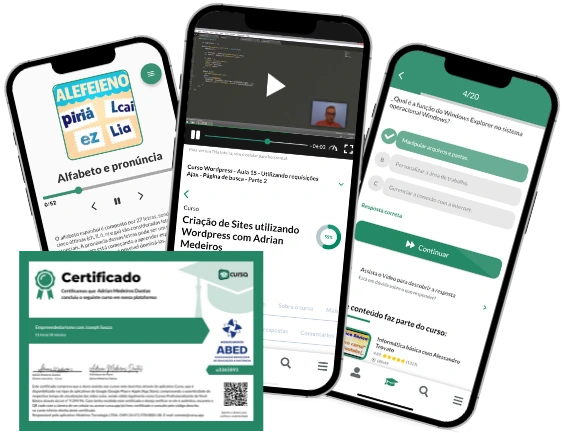
Carry knowledge in your pocket.
Download the Cursa app.
There are hundreds of free courses available, with a free certificate of completion that is saved in your mobile image gallery.
Download the app to access the Course Completion Certificate for Free.


+ 10 million
students

Free and Valid
Certificate

60 thousand free
exercises

4.8/5 rating in
app stores

Free courses in
video and ebooks