
Exercises
Explore the fundamentals of improvisational theater with this introductory quiz. Test your understanding of core improv principles such as accepting and building on ideas, collaborating with an ensemble, avoiding blocking, and creating scenes from audience suggestions. You’ll also review common improv show formats, the goals of long-form scenes, and exercises that help performers develop spontaneity, listening, communication, confidence, and creative problem-solving. Whether you are a new actor, theater student, or curious audience member, this quiz offers a practical introduction to the skills and vocabulary that make improvisation work.
Answer the questions below and check the explanation for each answer.
0/10 answered
Auto audio on: the next questions will be read aloud when you click Continue.
The primary rule in improvisational theater is to always say 'yes, and', which means accepting what your scene partner has created and building upon it.
Improvisational theater enhances an actor's creativity and adaptability, allowing them to respond to unexpected situations and adapt quickly to changes on stage.
An ensemble in improv creates a cohesive group dynamic where all members work collaboratively, supporting and building on each other's ideas.
Short-form games are a common format in improv shows, featuring quick, interactive games that require on-the-spot creativity.
Improvisation focuses on adaptability and spontaneity, not on script memorization, as performances are typically unscripted and made up in the moment.
In improv, 'blocking' refers to rejecting or denying a partner's idea, which is discouraged as it can halt the progress of the scene.
An improvised scene focuses mainly on character relationships and interactions, rather than adhering to a predefined plot or using elaborate costumes.
In improv, a 'suggestion' comes from the audience, providing a prompt or idea that the actors use to create a scene on the spot.
The primary goal of 'long-form' improv is to develop complex characters and storylines, allowing for deeper exploration and narrative continuity.
The 'Mirror' exercise is beneficial in improv, as it helps actors develop quick-thinking skills and encourages them to match and respond to a partner's movements and speech.

Free CourseDramatic Portraiture and Lighting Class
5

(5)

2h39m

6 exercises
Free CourseTheatrical production
5
(3)
1h47m
19 exercises

Free CourseUsing Drones to create content
5
(1)
2h07m
4 exercises
Free CourseTheater 101 fundamentals
4.6

(5)
46m
20 exercises
Free CourseIntroduction to Theater and Drama Arts
3.7
(3)
27h08m
25 exercises

Free CourseDrone Filmmaking Beginners Guide
New
1h32m
6 exercises

Free CourseCreating a Short Film
New
2h58m
5 exercises

Free CourseUnderwater Filming
New
3h11m
15 exercises
Thousands of online courses in video, ebooks and audiobooks.
To test your knowledge during online courses
Generated directly from your cell phone's photo gallery and sent to your email

Download our app via QR Code or the links below:.


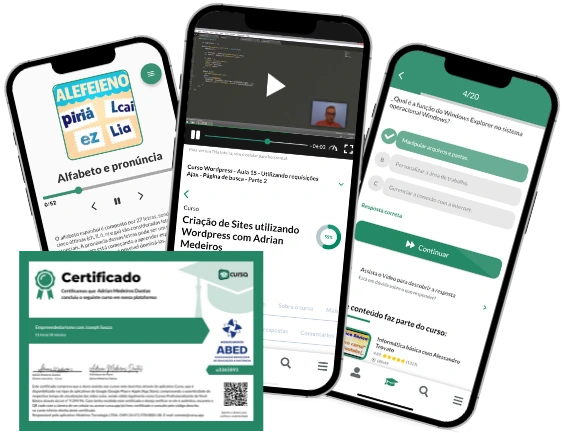
Carry knowledge in your pocket.
Download the Cursa app.
There are hundreds of free courses available, with a free certificate of completion that is saved in your mobile image gallery.
Download the app to access the Course Completion Certificate for Free.


+ 10 million
students

Free and Valid
Certificate

60 thousand free
exercises

4.8/5 rating in
app stores

Free courses in
video and ebooks