
Exercises
This quiz assesses essential infection-control practices for professional facial services. Topics include hand hygiene, cleaning and disinfection, product dispensing, tool storage, laundry handling, blood-exposure procedures, personal protective equipment, and prevention of cross-contamination. The questions combine practical scenarios with visual identification tasks to help learners maintain a clean, organized, and safer facial treatment environment.
Answer the questions below and check the explanation for each answer.
0/13 answered
Auto audio on: the next questions will be read aloud when you click Continue.
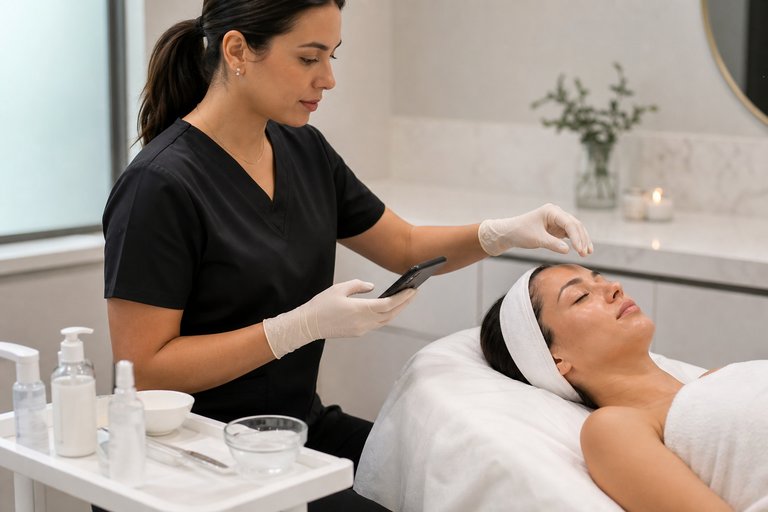
Touching a contaminated object and then returning to the client can transfer microorganisms. Gloves must be changed and hand hygiene performed when moving from a contaminated task back to a clean task.
Disinfection is less reliable when debris or product residue remains on an implement. The item must first be cleaned, rinsed when appropriate, and then disinfected according to the product label.
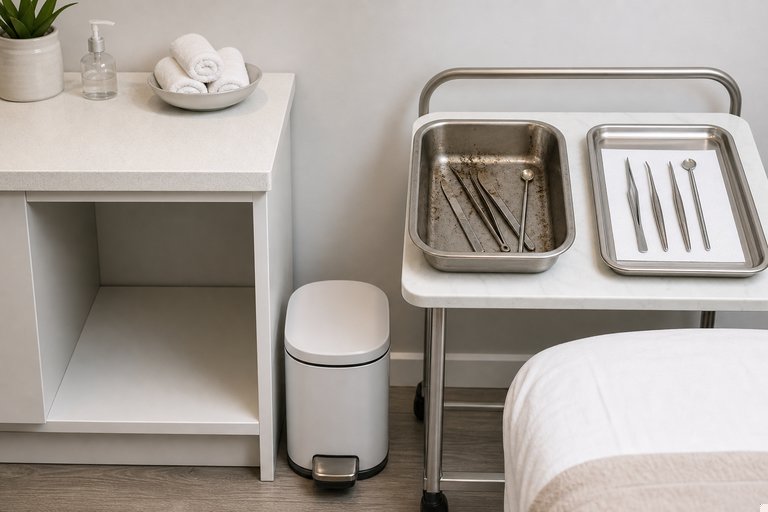
Disinfected implements should be kept in a clean, dry, covered container or storage area. Separating clean items from used items helps prevent recontamination.
A disinfectant must remain wet for the full contact time stated on its label to achieve its tested level of effectiveness. Cleaning is still required before disinfection when soil is present.
A disposable cotton swab is a single-use item. It cannot be reliably disinfected and must never be returned to a product container after contact with a client.
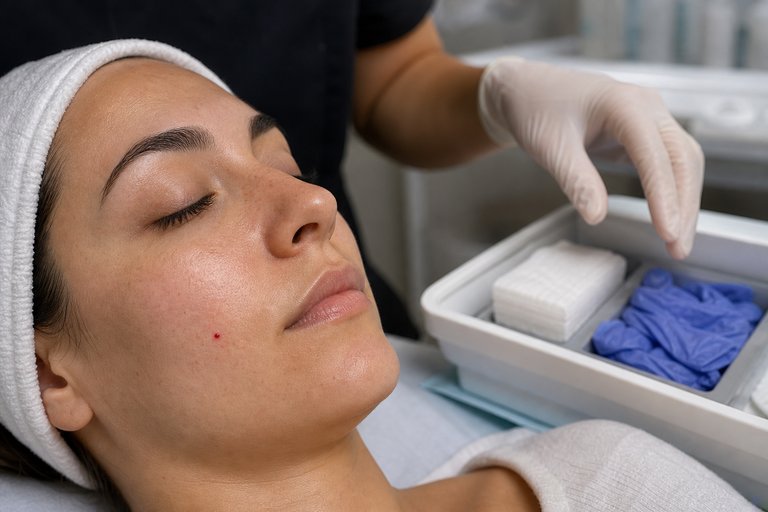
The service should be stopped so the exposure can be managed safely. The esthetician should follow the facility's blood-exposure procedure, use appropriate barriers, and dispose of contaminated materials correctly.
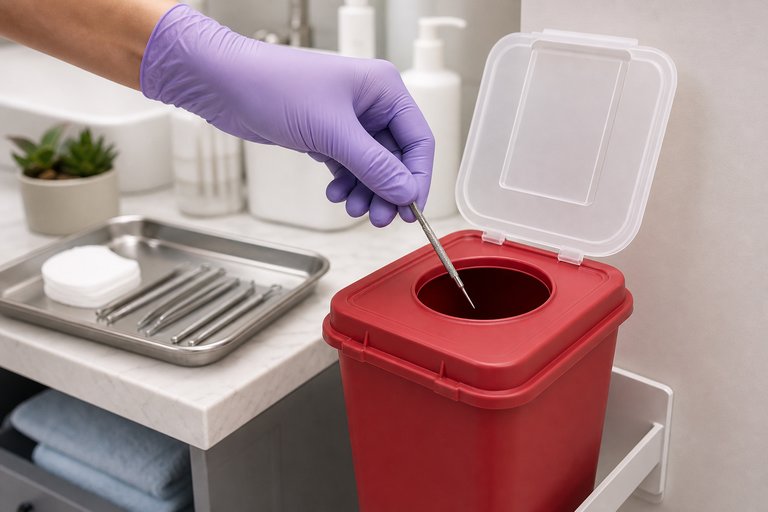
A used lancet is a sharp and must be discarded immediately in an approved sharps container. This reduces needlestick injuries and prevents improper handling.
Used linens should be handled as little as possible and placed directly in a designated laundry container. Shaking them can disperse skin debris and microorganisms into the environment.
A clean spatula helps prevent contamination of the bulk product. Once the spatula or product has contacted the client, it must not be placed back into the jar.
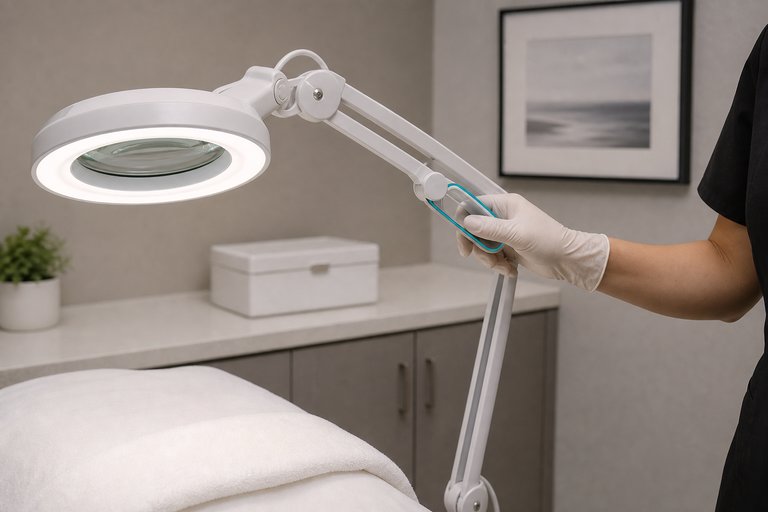
The magnifying lamp handle is frequently touched during a facial and can transfer contamination between hands, gloves, and clients. High-touch surfaces must be included in between-client disinfection.
Gloves are an additional barrier, not a replacement for hand hygiene. Hands should be cleaned at appropriate times, including before donning gloves and after removing them.
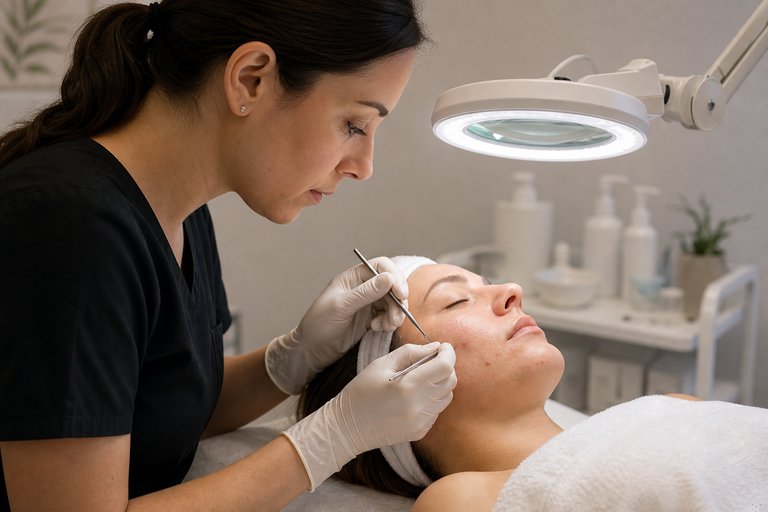
When droplets or splashes may reach the eyes or face, suitable eye or face protection provides an important barrier. Personal protective equipment should match the anticipated exposure.
Properly processed implements should be dried and protected in clean, covered storage. Moisture, open exposure, and contact with used materials can lead to recontamination.
Free CourseFacial Skin Care
5

(6)

13h58m

35 exercises

Free CourseSkin Care 101
4.8
(6)
3h30m
16 exercises
Free CourseFacial Skin Care
4.8
(5)
33m
3 exercises

Free CourseEssential Basics of Skincare
4.7

(10)
16m
4 exercises
Free CourseProfessional Skin Care treatment
4.7
(6)
21m
2 exercises

Free CourseSkincare tutorials
4.6
(9)
1h04m
20 exercises

Free CourseAn effective skin care routine
4.5
(16)
28m

Free CourseWaxing classes
3.2
(5)
40m
7 exercises
Thousands of online courses in video, ebooks and audiobooks.
To test your knowledge during online courses
Generated directly from your cell phone's photo gallery and sent to your email

Download our app via QR Code or the links below:.


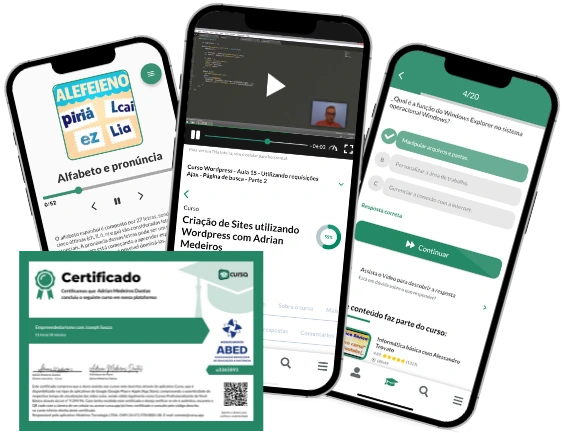
Carry knowledge in your pocket.
Download the Cursa app.
There are hundreds of free courses available, with a free certificate of completion that is saved in your mobile image gallery.
Download the app to access the Course Completion Certificate for Free.


+ 10 million
students

Free and Valid
Certificate

60 thousand free
exercises

4.8/5 rating in
app stores

Free courses in
video and ebooks