
Exercises
Develop practical transposition skills for B-flat clarinet, soprano and tenor saxophones, alto saxophone, and baritone saxophone. This quiz covers written versus concert pitch, transposing intervals, octave placement, key signatures, ensemble unisons, and short melodic passages. Questions progress from basic instrument classification to realistic score-reading and notation tasks.
Answer the questions below and check the explanation for each answer.
0/18 answered
Auto audio on: the next questions will be read aloud when you click Continue.
The standard B-flat clarinet and soprano saxophone are both B-flat instruments. Their sounding pitch is a major second below the written pitch.
Alto saxophone is an E-flat instrument. A written note sounds a major sixth below its written pitch.
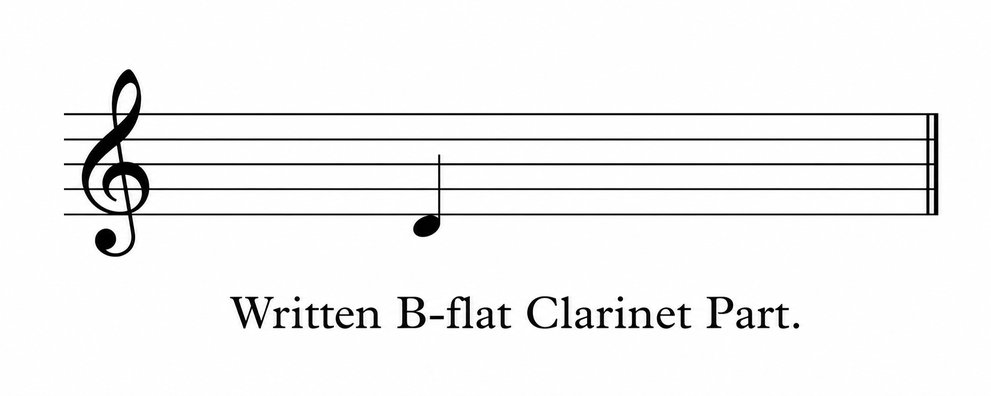
A B-flat clarinet sounds a major second below written pitch. Therefore, written D4 produces concert C4.
An alto saxophone part is written a major sixth above concert pitch. A major sixth above F4 is D5.
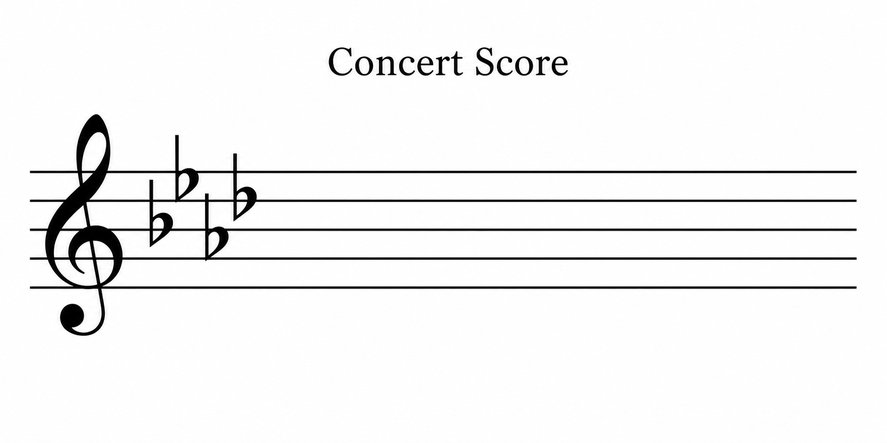
A B-flat part is written a major second above concert pitch. Transposing E-flat major upward by a major second gives F major.
An E-flat alto saxophone part is written a major sixth above concert pitch. A major sixth above B-flat major is G major.
Tenor saxophone is a B-flat instrument with an additional octave displacement. It sounds a major ninth, one octave plus a major second, below written pitch.
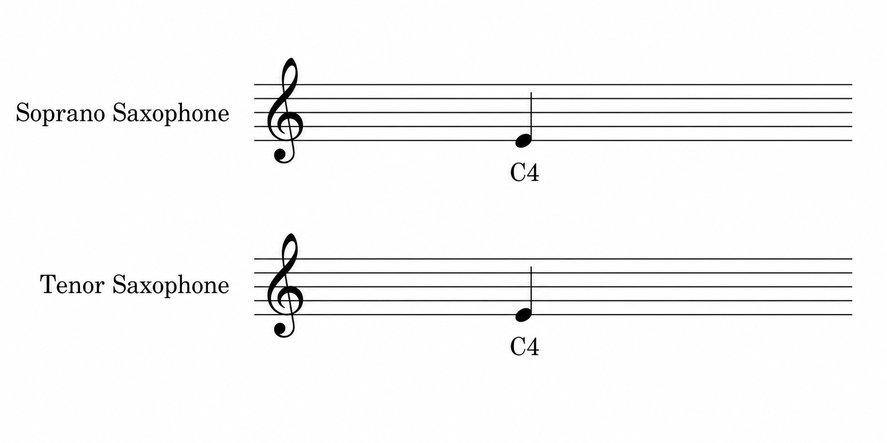
Both are B-flat instruments, but tenor saxophone has an extra octave displacement. With the same written note, tenor sounds exactly one octave below soprano.
Baritone saxophone sounds a major thirteenth below written pitch, equivalent to a major sixth plus an octave. Written C4 therefore sounds as concert E-flat 2.
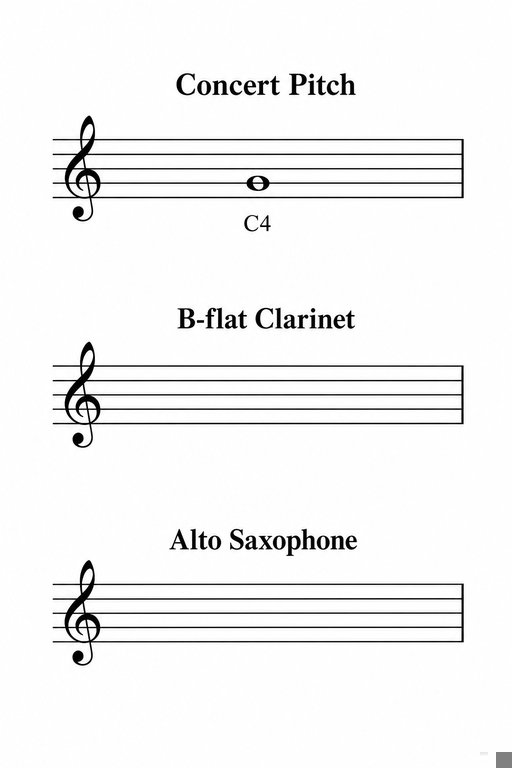
Concert C4 is written as D4 for B-flat clarinet and A4 for E-flat alto saxophone. Both written notes produce the same concert pitch.
B-flat clarinet sounds a major second below the written note. A major second below written A4 is concert G4.
Alto saxophone sounds a major sixth below written pitch. Descending a major sixth from E5 gives concert G4.
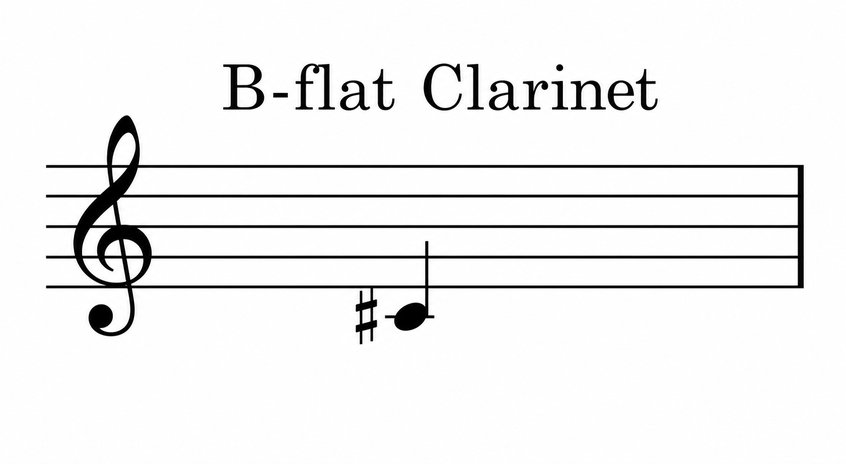
Transposing written F-sharp down a major second gives concert E. The accidental must be included when calculating the interval.
Transposed notation lets players associate familiar written notes with consistent fingerings. It also allows many musicians to switch between related instruments more easily.
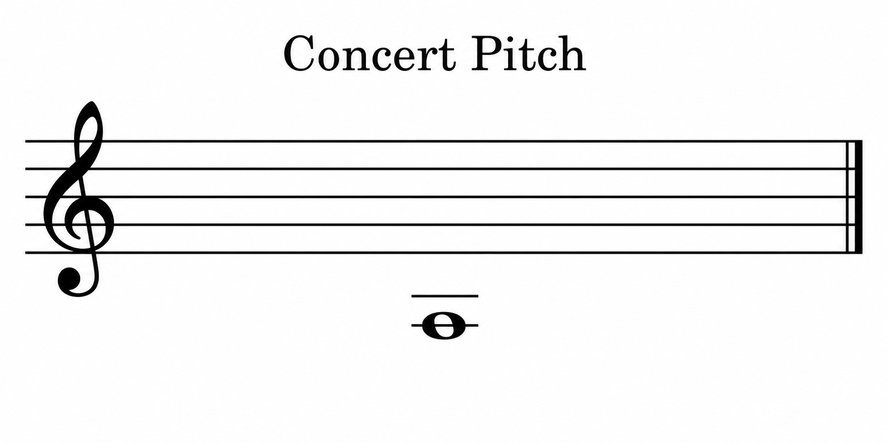
A tenor saxophone part is written a major ninth above concert pitch. A major ninth above G3 is A4.
Both are E-flat instruments, but baritone saxophone includes an additional octave displacement. It sounds one octave below alto when both read the same written note.
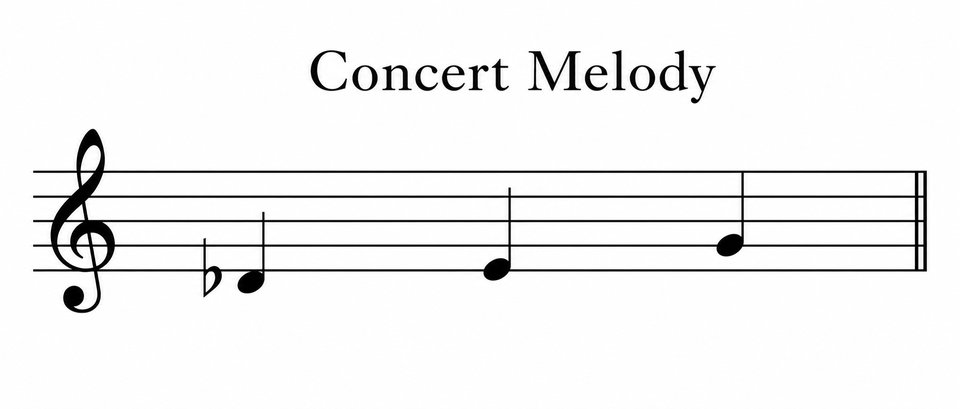
Each note in a B-flat clarinet part is written a major second above concert pitch. E-flat, F, G therefore become F, G, A.
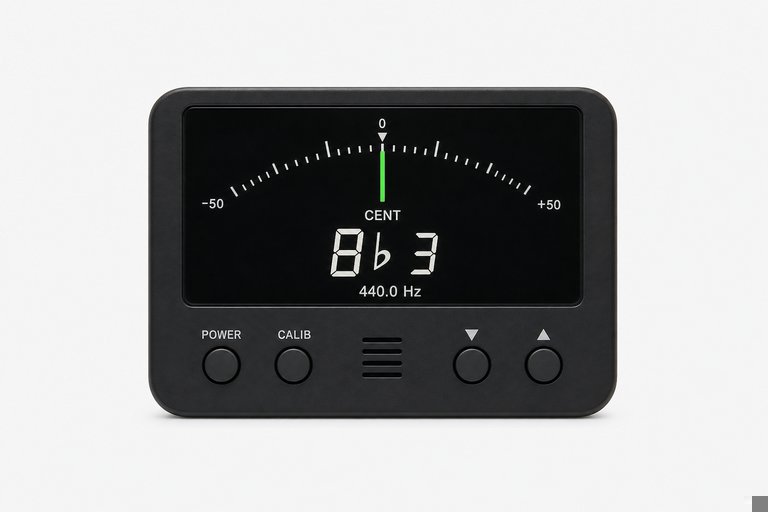
Concert B-flat 3 is written as C4 for B-flat clarinet. For E-flat alto saxophone, it is written a major sixth higher as G4.

Free CourseSaxophone to beginners - stage 1 -
4.9

(7)

1h27m

14 exercises
Free CourseSaxophone to beginners - stage 2 -
4.2
(6)
1h14m
10 exercises

Free CourseBeginner Saxophone quickstart
4
(1)
1h07m
7 exercises

Free CourseSaxophone course to Beginners
New
47m
5 exercises

Free CourseJazz Saxophone for Beginners
New
57m
10 exercises

Free CourseClarinet for beginners
New
2h45m
17 exercises

Free CourseSaxophone for beginners
New
1h32m
23 exercises
Free CourseBeginner Clarinet Lessons: Assembly, Embouchure, Fingerings and First Notes
New
55m
8 exercises
Thousands of online courses in video, ebooks and audiobooks.
To test your knowledge during online courses
Generated directly from your cell phone's photo gallery and sent to your email

Download our app via QR Code or the links below:.



Carry knowledge in your pocket.
Download the Cursa app.
There are hundreds of free courses available, with a free certificate of completion that is saved in your mobile image gallery.
Download the app to access the Course Completion Certificate for Free.


+ 10 million
students

Free and Valid
Certificate

60 thousand free
exercises

4.8/5 rating in
app stores

Free courses in
video and ebooks