
Exercises
Challenge your understanding of central nervous system pharmacology in this interactive simulation quiz. Review key medication classes, mechanisms of action, therapeutic uses, neurotransmitter pathways, and common adverse effects. Questions cover benzodiazepines, opioid overdose reversal, tricyclic antidepressants, SSRIs, dopamine agonists for Parkinson's disease, lithium for bipolar disorder, amphetamines, antipsychotics, first-line treatments for generalized anxiety disorder, and cholinergic therapies for Alzheimer's disease. Ideal for healthcare, nursing, pharmacy, and medical students seeking to strengthen their psychopharmacology and CNS medication knowledge.
Answer the questions below and check the explanation for each answer.
0/10 answered
Auto audio on: the next questions will be read aloud when you click Continue.
Benzodiazepines enhance the effect of GABA, a major inhibitory neurotransmitter in the brain, leading to sedative, anxiolytic, and muscle relaxant properties.
Naloxone is an opioid antagonist used to reverse the symptoms of opioid overdose by binding to opioid receptors with higher affinity than opioids.
Tricyclic antidepressants often exhibit anticholinergic effects, such as dry mouth, constipation, and urinary retention, due to inhibition of muscarinic acetylcholine receptors.
SSRIs primarily target the serotonin transporter, leading to increased serotonin levels in the synaptic cleft, which enhances mood and anxiety regulation.
Pramipexole is a dopamine agonist used in Parkinson's disease to directly stimulate dopamine receptors, aiding in symptom management.
Lithium is most well-known for its ability to stabilize mood, reducing the severity and frequency of mania and depression in bipolar disorder.
Amphetamines increase the release of dopamine and to a lesser extent norepinephrine, leading to their stimulating and euphoric effects.
Antipsychotic medications are primarily used to treat schizophrenia and other psychotic disorders, by regulating neurotransmitter pathways in the brain.
SSRIs are often the first-line treatment for generalized anxiety disorder, due to their efficacy and favorable side effect profile compared to other options.
Medications like donepezil enhance the function of the acetylcholine neurotransmitter system, compensating for the loss of cholinergic activity in Alzheimer's disease.

Free CourseIntroduction to Clinical Pharmacology and Therapeutics
4.9

(18)

1h22m

8 exercises

Free CoursePharmacology complete
4.9
(15)
42h15m
39 exercises

Free CourseIntroduction to Pharmacology
4.9
(7)
8h21m
26 exercises

Free CoursePharmacology
4.8
(5)
5h57m
17 exercises

Free CoursePharmacology complete
4.7

(9)
7h37m
36 exercises

Free CourseIntroduction to Pharmacology
4.5
(4)
38m
5 exercises

Free CoursePharmacology Course INBDE ADAT
4.5
(4)
3h56m
10 exercises

Free CourseIntroduction to Pharmacology for fundamentals
4
(2)
1h42m
10 exercises
Thousands of online courses in video, ebooks and audiobooks.
To test your knowledge during online courses
Generated directly from your cell phone's photo gallery and sent to your email

Download our app via QR Code or the links below:.


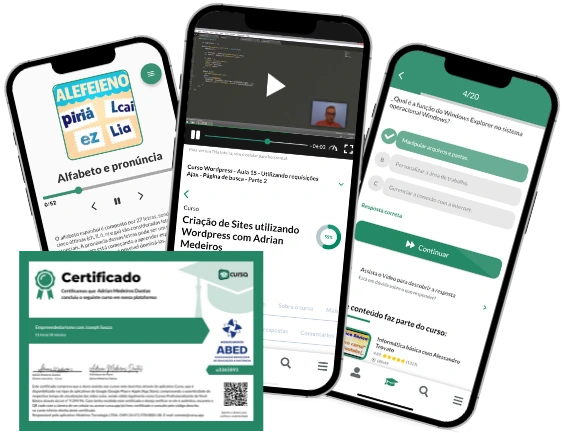
Carry knowledge in your pocket.
Download the Cursa app.
There are hundreds of free courses available, with a free certificate of completion that is saved in your mobile image gallery.
Download the app to access the Course Completion Certificate for Free.


+ 10 million
students

Free and Valid
Certificate

60 thousand free
exercises

4.8/5 rating in
app stores

Free courses in
video and ebooks