Exercises
Put your digital journalism knowledge to the test with this skills assessment. Explore the foundations of online reporting, including multimedia storytelling, social media, blogs, podcasts, citizen journalism, SEO, data visualizations, viral content, clickbait, and audience engagement. Discover how digital tools and platforms have changed the way journalists create, publish, distribute, and optimize news compared with traditional print journalism. Whether you are a student, aspiring reporter, content creator, or media professional, this quiz offers a useful check of essential digital journalism concepts and practices.
Answer the questions below and check the explanation for each answer.
0/14 answered
Auto audio on: the next questions will be read aloud when you click Continue.
Digital journalism refers to news reporting and distribution through various digital platforms, such as websites, mobile apps, and social media. It enables real-time news updates and interactive content.
Digital journalism allows for real-time news updates which are crucial in delivering the latest information promptly and engaging with the audience.
Digital journalism provides the advantage of reaching a global audience instantly, enabling widespread dissemination of news without geographical limitations.
A content management system (CMS) is essential for digital journalists as it helps in uploading, organizing, and managing content effectively on digital platforms.
Social media has significantly increased the speed at which news is disseminated, allowing digital journalists to publish and share news stories rapidly with a broad audience.
A podcast is an audio or video series that is available for streaming or download online, allowing listeners to consume content at their convenience.
Citizen journalism involves the general public in news reporting, often using digital tools to contribute information, photos, or videos of events to the media landscape.
SEO (Search Engine Optimization) is crucial in digital journalism to improve the visibility and reach of articles, ensuring they appear higher in search engine results and attract more readers.
Multimedia storytelling in digital journalism involves using a combination of text, video, audio, and sometimes interactive elements to create engaging and comprehensive news content.
In digital journalism, a blog is a personal or thematic journal or commentary hosted online, often allowing journalists to express opinions and engage directly with audiences.
Data visualizations in digital journalism provide clarity and insight by translating complex information into easily understandable visuals, enhancing the reader's comprehension and engagement.
'Viral content' refers to digital journalism pieces that are widely shared and spread quickly across the internet, reaching a large audience in a short span of time.
In digital journalism, audience engagement is often achieved through interactive elements like polls and comment sections, allowing readers to participate and interact with the content.
'Clickbait' refers to sensationalized or misleading headlines designed to attract clicks and increase website traffic, often at the expense of content accuracy or quality.
Thousands of online courses in video, ebooks and audiobooks.
To test your knowledge during online courses
Generated directly from your cell phone's photo gallery and sent to your email

Download our app via QR Code or the links below:.


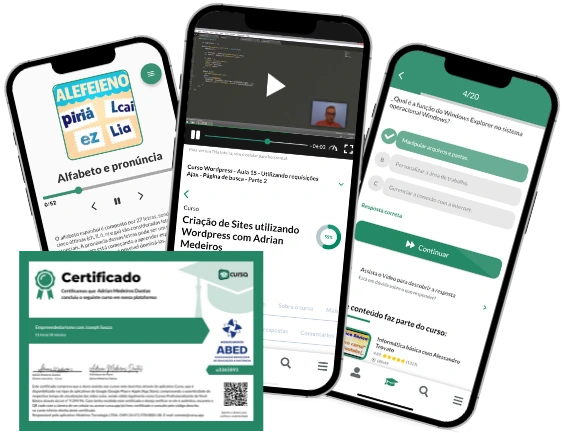
Carry knowledge in your pocket.
Download the Cursa app.
There are hundreds of free courses available, with a free certificate of completion that is saved in your mobile image gallery.
Download the app to access the Course Completion Certificate for Free.


+ 10 million
students

Free and Valid
Certificate

60 thousand free
exercises

4.8/5 rating in
app stores

Free courses in
video and ebooks