
Exercises
Build confidence with the Japanese Hiragana alphabet in this beginner-friendly quiz. Test your knowledge of common Hiragana characters and their pronunciations, including a, ka, mi, te, ne, fu, yo, ra, su, and no. Each question helps you connect Japanese sounds with their correct written symbols, making this a useful practice activity for new Japanese learners. Whether you are studying for class, reviewing kana, or starting your Japanese language journey, this quiz is a quick way to check your understanding of basic Hiragana.
Answer the questions below and check the explanation for each answer.
0/10 answered
Auto audio on: the next questions will be read aloud when you click Continue.
The character that represents the sound a in Hiragana is あ. Hiragana is a Japanese syllabary used for native Japanese words. While い represents the sound i and う represents the sound u, あ is the correct character for a.
The character pronounced as ka in the Japanese hiragana script is か. The other options are: さ, pronounced as sa, and な, pronounced as na.
The correct Hiragana character for the sound 'mi' is み. Hiragana is a Japanese syllabary, and each character represents a specific sound. Option 2 し represents the sound 'shi', and Option 3 り represents the sound 'ri'.
In the Hiragana script, the character て stands for the sound 'te'. Each Hiragana character corresponds to a specific sound, and in this case, て represents 'te'. The other options, せ and け, represent the sounds 'se' and 'ke', respectively.
The Hiragana character for the sound ne is ね. The other options represent different sounds: め is me and せ is se.
The Hiragana character for the sound fu is represented by ふ. It's part of the Japanese syllabary used for phonetic transcription of native Japanese words.
The Hiragana character used to write the sound 'yo' is よ. In Japanese, each Hiragana character corresponds to a specific syllable or sound, and よ represents the 'yo' sound.
In Hiragana, the sound ra is written as ら. Therefore, Option 2 is correct. Hiragana is a basic Japanese syllabary, and each character represents a specific sound.
The Japanese character す is pronounced as su in the English language.
The Hiragana character for the sound 'no' is の. Each Hiragana character represents a specific syllable in the Japanese language. In this case, option 3 correctly corresponds to the sound 'no'.
Free CourseJapanese Grammar lessons
5

(1)

19h14m

32 exercises
Free CourseKanji lessons
5
(1)
1h10m
1 exercises
Free CourseKanji reading and writing practice
5
(1)
3h54m
11 exercises
Free CourseJapanese Vocabulary N5
5
(5)
4h29m
4 exercises

Free CourseJapanese Vocabulary and Slang
5
(1)
13h36m
27 exercises
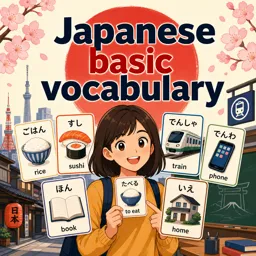
Free CourseJapanese basic vocabulary
4.8
(6)
140h00m
1 exercises
Free CourseJapanese
4.8
(61)
5h15m
45 exercises
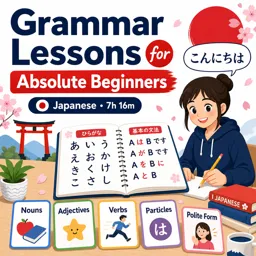
Free CourseGrammar Lessons for Absolute Beginners
4.8

(4)
7h16m
21 exercises
Thousands of online courses in video, ebooks and audiobooks.
To test your knowledge during online courses
Generated directly from your cell phone's photo gallery and sent to your email

Download our app via QR Code or the links below:.



Carry knowledge in your pocket.
Download the Cursa app.
There are hundreds of free courses available, with a free certificate of completion that is saved in your mobile image gallery.
Download the app to access the Course Completion Certificate for Free.


+ 10 million
students

Free and Valid
Certificate

60 thousand free
exercises

4.8/5 rating in
app stores

Free courses in
video and ebooks