
Exercises
Test your knowledge of German modal verbs in the past tense with this focused grammar quiz. Practice using the Präteritum forms of wollen, können, müssen, mögen, sollen and dürfen in everyday sentences. You will translate phrases such as “I wanted to speak,” “She could play the piano,” and “They had to leave early,” while identifying correct forms for permission, obligation, ability, preference and necessity. Review affirmative and negative sentences, including “You didn’t need to do it” and “They were not allowed to enter.” Ideal for German learners who want to strengthen their understanding of modal verbs and build confidence with past-tense sentence construction.
Answer the questions below and check the explanation for each answer.
0/9 answered
Auto audio on: the next questions will be read aloud when you click Continue.
The correct translation for I wanted to speak in German is Ich wollte sprechen. The verb wollte is the past tense of wollen, which means to want. Option 2, Ich könnte sprechen, means I could speak, and option 3, Ich sollte sprechen, means I should speak. Therefore, the correct answer is option 1.
The sentence Sie konnte Klavier spielen means She could play the piano in English. The modal verb konnte is the past tense of können, which means to be able to or could. The other options use different modal verbs with distinct meanings: darf (may) and muss (must).
In German, 'They had to leave early' is translated as Sie mussten früh verlassen. The verb 'mussten' is the past tense of 'müssen' (to have to) which correctly translates 'had to'. Option 1 uses the present tense 'müssen', and Option 3 uses 'mochten' which means 'liked', not fitting the context.
The correct past tense of mögen is mochte. In the sentence He liked to read books, the verb mögen is conjugated to mochte for the past tense.
The correct past tense form of sollen in German is sollten. This indicates that the action was intended to happen in the past. Therefore, the sentence should be Wir sollten sie besuchen to express the idea that we should have visited her yesterday.
The correct sentence is: Ich durfte Schokolade essen. The word durfte is the simple past (Präteritum) form of the modal verb dürfen, which means 'was allowed to'. Therefore, it correctly translates the English sentence 'I was allowed to eat chocolate'.
The correct translation for 'You didn't need to do it' in the past tense is 'Du brauchtest es nicht zu tun'. This sentence uses the simple past tense of 'to need' (brauchen), with 'brauchtest' being the second person singular in past tense. The other options either refer to present or subjunctive mood, not suitable for this translation.
The imperfect tense, or Präteritum, is used in German to describe past actions. 'Durften' is the correct imperfect form of 'dürfen', meaning 'were allowed' or 'permitted'. Therefore, 'Sie durften nicht eintreten' translates to 'They were not allowed to enter', correctly using the imperfect tense.
The phrase 'She wanted to see the movie' is in the past tense. The correct German translation in past tense is represented by Option 1: 'Sie wollte den Film sehen'. Option 2 'Sie will den Film sehen' is in the present tense. Option 3 'Sie würde den Film sehen' uses the conditional tense, meaning 'She would see the movie', which does not match the original sentence.

Free CourseGerman Vocabulary
5

(5)

15h53m

15 exercises

Free CourseGerman language A2
5
(2)
9h25m
27 exercises

Free CourseGerman B2
5
(2)
9h26m
3 exercises

Free CourseA2 | Learn German for beginners
4.9
(13)
8h58m
3 exercises

Free CourseGerman A1
4.9
(9)
10h34m
18 exercises

Free CourseGerman for beginners
4.8
(334)
4h10m
19 exercises
Free CourseB2 | Learn German Intermediate
4.8

(8)
2h12m
1 exercises
Free CourseGerman Grammar for Beginners
4.7
(11)
20h06m
41 exercises
Thousands of online courses in video, ebooks and audiobooks.
To test your knowledge during online courses
Generated directly from your cell phone's photo gallery and sent to your email

Download our app via QR Code or the links below:.


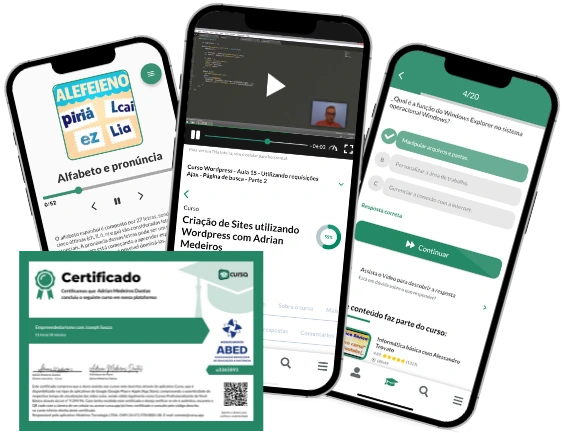
Carry knowledge in your pocket.
Download the Cursa app.
There are hundreds of free courses available, with a free certificate of completion that is saved in your mobile image gallery.
Download the app to access the Course Completion Certificate for Free.


+ 10 million
students

Free and Valid
Certificate

60 thousand free
exercises

4.8/5 rating in
app stores

Free courses in
video and ebooks