Duration of the online course: 20 hours and 6 minutes
4.8
(10)
Build confident German sentences fast with this free beginner grammar course—verbs, questions, negation, and polite forms—with practice and a certificate option.
In this free course, learn about
Overview of A1/A2 German grammar topics and course structure
German cases: nominative, accusative, dative and their basic function
Main-clause word order: verb in 2nd position and sentence structure basics
Yes/no questions: verb-first rule and basic question formation
Present tense conjugation of regular verbs with personal endings
Informal vs formal 'you': du (singular informal) vs Sie (formal)
Key special verbs: haben, sein, werden in present tense
Expressing likes: mögen vs gern, and how to like doing activities
Separable vs inseparable prefix verbs and how they behave in sentences
Reflexive verbs and choosing correct reflexive pronouns (e.g., dir vs dich)
Modal verbs and the sentence bracket (verb placement with infinitives)
Negation with nicht: placement rules, incl. negating adjectives
German nouns are always capitalized; basics of inflection/conjugation terms
About the free online course
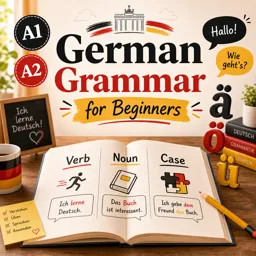
German can feel intimidating at first, especially when word order and verb forms don’t match what you’re used to. This beginner-friendly course helps you turn that initial confusion into clarity by showing you how German grammar works in real sentences. Designed for A1/A2 learners, it focuses on the building blocks that let you understand what you read and hear, and respond with confidence in everyday situations.
You’ll start by getting a clear overview of the system, including the cases used in German and why they matter for meaning. From there, you’ll learn how main clauses are built and where the verb belongs, so you can create sentences that sound natural instead of translated. Step by step, you’ll move through present-tense verb conjugation, covering both regular patterns and the common irregular changes that often trip learners up. Key verbs you meet constantly, such as have, be, and become, are given special attention so they become automatic.
The course goes beyond rules on a page. Short checks and guided exercises help you notice patterns, correct mistakes, and build accuracy without overthinking. You’ll also learn practical grammar for real conversations: how to express what you like, how to choose between informal and formal ways of addressing people, and how to handle verbs with prefixes that split or stay together depending on the sentence.
As you progress, you’ll gain control of question forms, including yes/no questions, and learn how German structures sentences with modal verbs using the sentence bracket. You’ll also master negation with nicht, so you can clearly say what you don’t want, don’t like, or isn’t true—without guessing where the word should go.
By the end, you’ll have a strong foundation for moving into higher levels, with sharper reading comprehension and more fluent speaking. If you’re looking for a free online course that helps you form correct German sentences and understand core grammar principles, this is a practical place to start.
Course content
Video class: Learn German Grammar for Beginners (A1 / A2) - Introduction and Outline17m
Exercise: Welche drei grammatischen Fälle werden in der deutschen Sprache verwendet?
Video class: Lesson 1: Sentence Structure in Main Clauses - Learn German Grammar for Beginners (A1 / A2)14m
Exercise: What is the position of the verb in main clauses in German?
Video class: Lesson 2: Conjugating Regular Verbs in Present Tense - Learn German Grammar for Beginners (A1 / A2)13m
Exercise: In German, which personal pronoun corresponds to the English 'you' in an informal singular context?
Video class: Lesson 3: Conjugating Irregular Verbs / Present Tense - Learn German Grammar for Beginners (A1/A2)13m
Exercise: What is a common feature of irregular verbs in present tense in German?
Video class: Lesson 4: Irregular Conjugation Endings Present Tense - Learn German Grammar for Beginners (A1/A2)23m
Exercise: What is a common characteristic of irregular verbs in German when conjugating in the present tense?
Video class: Lesson 5: Special Verbs haben, sein, werden - Learn German Grammar for Beginners (A1 / A2)26m
Video class: Lesson 6: Revision And Exercises - Learn German Grammar for Beginners (A1 / A2)27m
Video class: Lesson 7: How to Express Liking: mögen vs gern - Learn German Grammar for Beginners (A1 / A2)10m
Exercise: How do you express liking activities in German?
Video class: Lesson 8: How to Address People Politely - Learn German Grammar for Beginners (A1 / A2)20m
Exercise: In German, which form of 'you' would you use to address a single person formally?
Video class: Lesson 9: Verbs With Prefix (Separable / Inseparable) - Learn German Grammar for Beginners (A1/A2)24m
Exercise: What are separable verbs in German grammar?
Video class: Lesson 10: Reflexive Verbs - Learn German Grammar for Beginners (A1 / A2)39m
Exercise: What is the correct reflexive pronoun for 'du' when there is another accusative object present in the sentence?
Video class: Lesson 11: Exercises and Revision - Learn German Grammar for Beginners (A1 / A2)26m
Exercise: Identifying Separable and Inseparable Prefixes in German Verbs
Video class: Lesson 12: Open-Ended25m
Exercise: Welche Regel gilt für die Platzierung des Verbs in Ja/Nein-Fragen auf Deutsch?
Video class: Lesson 12: How To Ask Questions - Exercises - Learn German Grammar for Beginners (A1 / A2)11m
Exercise: What is the new format for the lessons?
Video class: Lesson 13: Modal Verbs And The Sentence Bracket - Learn German Grammar for Beginners (A1 / A2)19m
Video class: Lesson 13: Modal Verbs - Exercises - Learn German Grammar for Beginners (A1 / A2)06m
Exercise: How is 'shall I' expressed in German?
Video class: Lesson 14: Sentence Negation With Nicht - Learn German Grammar for Beginners (A1 / A2)21m
Exercise: Wo sollte man 'nicht' in einem deutschen Satz setzen, um ein Adjektiv zu negieren?
Video class: Lesson 14: Sentence Negation With Nicht - Exercises - Learn German Grammar for Beginners (A1/A2)12m
Video class: Lesson 15: Summary And Revision - Learn German Grammar for Beginners (A1 / A2)25m
Exercise: Welche Form der deutschen Sprache wird verwendet, wenn ein Verb in seine verschiedenen Endungen je nach Zeit oder Person geändert wird?
Video class: Lesson 16: Introduction To Section 2 - Learn German Grammar for Beginners (A1 / A2)24m
Exercise: What is unique about German nouns in terms of capitalization?
Video class: Lesson 17: What is declension in German? - Learn German Grammar for Beginners (A1 / A2)18m
Exercise: Welche der folgenden Optionen beschreibt, was unter 'Deklination' in der deutschen Grammatik verstanden wird?
Video class: Lesson 18: The Gender Of German Nouns - Learn German Grammar for Beginners (A1 / A2)12m
Video class: Lesson 18: The Gender Of German Nouns - Exercises - Learn German Grammar for Beginners (A1 / A2)09m
Exercise: Which of the following endings can help identify a German noun as feminine?
Video class: Lesson 19: German Plurals - Part 1 - Learn German Grammar for Beginners (A1 / A2)16m
Video class: Lesson 20: German Plurals - Part 2 - Learn German Grammar for Beginners (A1 / A2)12m
Exercise: Welches der folgenden Wörter ist ein unzählbares Substantiv im Deutschen?
Video class: Lesson 20: German Plurals - Part 2 - Exercises - Learn German Grammar for Beginners (A1 / A2)08m
Video class: Lesson 21: German Plurals - Part 3 - Learn German Grammar for Beginners (A1 / A2)11m
Exercise: Welches deutsche Nomen bleibt im Plural unverändert, selbst wenn es in der Kategorie der Substantive mit Endungen wie -er, -el oder -en vorkommt?
Video class: Lesson 22: German Plurals - Part 4 - Learn German Grammar for Beginners (A1 / A2)08m
Video class: Lesson 23: German Plurals - Part 5 - Learn German Grammar for Beginners (A1 / A2)11m
Exercise: Welches der folgenden deutschen Substantive nimmt im Plural die Endung -er an?
Video class: Lesson 23: German Plurals - Part 5 - Exercises - Learn German Grammar for Beginners (A1 / A2)21m
Video class: Lesson 24: German Plurals - Part 6 - Learn German Grammar for Beginners (A1 / A2)12m
Exercise: Welche Pluralendung wird in der Regel für mehrsilbige Maskulina und Feminina verwendet, die auf einen Konsonanten enden?
Video class: Lesson 25: German Plurals - Part 7 - Learn German Grammar for Beginners (A1 / A2)10m
Video class: Lesson 26: Summary And Revision - Learn German Grammar for Beginners (A1 / A2)11m
Exercise: Welche Pluralform ist korrekt für das deutsche Wort "Haus"?
Video class: Lesson 27: The German Cases - Learn German Grammar for Beginners (A1 / A2)15m
Video class: Lesson 28: Verb Categories By Function - Learn German Grammar for Beginners (A1 / A2)09m
Exercise: Welche Kategorie von Verben benötigt kein Objekt in einem deutschen Satz?
Video class: Lesson 29: Verbs Without Objects - Learn German Grammar for Beginners (A1 / A2)06m
Video class: Lesson 30: Verbs With Nominative Additions - Learn German Grammar for Beginners (A1 / A2)09m
Exercise: Which of the following sentences correctly uses a verb that requires a nominative addition in German?
Video class: Lesson 31 - Part 1: Verbs With Accusative Objects - Learn German Grammar for Beginners (A1 / A2)14m
Video class: Lesson 31 - Part 2: Verbs With Accusative Objects - Learn German Grammar for Beginners (A1 / A2)21m
Video class: Lesson 31 - Part 3: Verbs With Accusative Objects - Learn German Grammar for Beginners (A1 / A2)10m
Video class: Lesson 32 - Part 1: Verbs With Dative Objects - Learn German Grammar for Beginners (A1 / A2)21m
Exercise: Welche Funktion erfüllt der Dativfall in einem deutschen Satz?
Video class: Lesson 33: Comparative Overview of German Cases - Learn German Grammar for Beginners (A1 / A2)22m
Video class: Lesson 34 - Part 2: Verbs With Dative Objects - Learn German Grammar for Beginners (A1 / A2)19m
Exercise: Welche der folgenden Verben benötigen das Objekt im Dativfall?
Video class: Lesson 35: Exercises22m
Video class: Lesson 36: Verbs With Double Objects - Learn German Grammar for Beginners (A1 / A2)15m
Exercise: Welche Wortstellung ist korrekt für einen Satz mit einem Verb, das sowohl ein Akkusativ- als auch ein Dativobjekt erfordert?
Video class: Lesson 2: Conjugating Regular Verbs in Present Tense - Learn German Grammar for Beginners (A1 / A2)13m
Video class: Lesson 37: Personal Pronouns in Accusative17m
Exercise: In welchem Fall steht das Personalpronomen 'ihn' im folgenden Satz: 'Ich sehe ihn jeden Tag.'?
Video class: Lesson 38: Sentence Structure With Various Objects - Learn German Grammar for Beginners (A1 / A2)08m
Video class: Lesson 38 - Exercises - Learn German Grammar for Beginners (A1 / A2)11m
Exercise: Welches der folgenden Wörter ist das richtige dative Personalpronomen im Satz: 'Ich gebe dem Freund ein Buch.'?
Video class: Lesson 39: Noun Groups - Learn German Grammar for Beginners (A1 / A2)17m
Video class: Lesson 40: Types of Articles - Learn German Grammar for Beginners (A1 / A2)16m
Exercise: What is the main function of a definite article in the German language?
Video class: Lesson 41: Articles With Case Endings (Part 1) - Learn German Grammar for Beginners (A1 / A2)10m
Video class: Lesson 42: Articles With Case Endings (Part 2) - Learn German Grammar for Beginners (A1 / A2)08m
Exercise: What is the correct German demonstrative article for the neuter noun 'Buch' (book) in nominative case?
Video class: Lesson 42: Articles With Case Endings (Exercises) - Learn German Grammar for Beginners (A1 / A2)10m
Video class: I Am Back! - New Content Coming - Learn German Grammar for Beginners (A1 / A2)03m
Exercise: Was sollte man tun, um die verschiedenen deutschen Fälle besser verstehen zu lernen?
Video class: Lesson 43: Articles With Case Endings - Part 3 - Learn German Grammar for Beginners (A1 / A2)12m
Video class: Lesson 43: Article Case Endings - Part 3 (Exercises) - Learn German Grammar for Beginners (A1 / A2)07m
Exercise: What is the correct possessive article to use in German for 'his' when referring to a masculine noun?
Video class: Lesson 44: Article Declension Patterns - Learn German Grammar for Beginners (A1 / A2)25m
Video class: Lesson 44: Article Declension Patterns (Exercises) - Learn German Grammar for Beginners (A1 / A2)12m
Exercise: What is the function of the noun 'Milch' in the sentence 'Es gibt keine Milch mehr im Kühlschrank'?
Video class: Lesson 45: How far we've come - Learn German Grammar for Beginners (A1 / A2)12m
Video class: Lesson 46: Introduction to prepositions - Learn German Grammar for Beginners (A1 / A2)13m
Exercise: Welche der folgenden Optionen beschreibt korrekt eine kausale Präposition im Deutschen?
Video class: Lesson 47: Temporal prepositions - Learn German Grammar for Beginners (A1 / A2)19m
Video class: Lesson 47: Temporal prepositions (Exercises) - Learn German Grammar for Beginners (A1 / A2)13m
Exercise: Welches temporale Präposition passt in den Satz: 'Ich gehe _____ der Arbeit nach Hause.'?
Video class: Lesson 48: Two-way prepositions - Learn German Grammar for Beginners (A1 / A2)17m
Video class: Lesson 48: Two-way prepositions (Exercises) - Learn German Grammar for Beginners (A1 / A2)13m
Exercise: Welche der folgenden Verben erfordert die Verwendung des Akkusativs aufgrund von Bewegung?
Video class: Lesson 49: Local prepositions - Learn German Grammar for Beginners (A1 / A2)21m
Video class: Lesson 50: Summary of prepositions and their cases - Learn German Grammar for Beginners (A1 / A2)17m
Exercise: In welchem Fall stehen immer die reinen Dativpräpositionen im Deutschen?
Video class: Lesson 51: The German past tenses - Learn German Grammar for Beginners (A1 / A2)20m
Video class: Lesson 52: The Preterit tense - Learn German Grammar for Beginners (A1 / A2)32m
Exercise: What is the primary use of the predate tense in the German language?
Video class: Lesson 53: The Present Perfect - Learn German Grammar for Beginners (A1 / A2)34m
Video class: Lesson 54: Past Tense Revision28m
Exercise: Which of the following statements is true regarding the usage of past tenses in German?
Video class: Lesson 55: Comparative and Superlative - Learn German Grammar for Beginners (A1 / A2)26m
Programming, English, Digital Marketing and much more! Learn whatever you want, for free.
Study plan with AI
Our app's Artificial Intelligence can create a study schedule for the course you choose.
From zero to professional success
Improve your resume with our free Certificate and then use our Artificial Intelligence to find your dream job.
You can also use the QR Code or the links below.
Course comments: German Grammar for Beginners
Students found the free course excellent, helpful, and beginner-friendly. They praised the professor’s engaging teaching style, clear lessons, and easy-to-understand English, expressing strong appreciation and thanks.
AE
Asmae Elyakoubie
für beginnen dieses Kurs ist am besten
VB
Visha Bhatti
Excellent, Amazing.... Stefanie is an awesome teacher....Just loved her teaching style.
LH
Lam Hoang Viet
Thank you very much!
LH
Lam Hoang Viet
Thank you very much!
LH
Lam Hoang Viet
Good lesson! Your English is very easy to listen. Thank you very much!

























Course comments: German Grammar for Beginners
Students found the free course excellent, helpful, and beginner-friendly. They praised the professor’s engaging teaching style, clear lessons, and easy-to-understand English, expressing strong appreciation and thanks.
Asmae Elyakoubie
für beginnen dieses Kurs ist am besten
Visha Bhatti
Excellent, Amazing.... Stefanie is an awesome teacher....Just loved her teaching style.
Lam Hoang Viet
Thank you very much!
Lam Hoang Viet
Thank you very much!
Lam Hoang Viet
Good lesson! Your English is very easy to listen. Thank you very much!
shaimaa Nabil Mohammed youssef
very helpful
Jeremy Mwai
Very good teaching….Thank you