
Exercises
Put your foundational electrical knowledge to the test with this Electrician Apprenticeship Skill Test. Designed for aspiring electricians and trade students, this quiz covers essential residential and basic commercial electrical concepts, including circuit breaker safety, wire stripping tools, neutral and grounding conductors, standard household voltage, current measurement, GFCI protection, ampacity, resistance, and delta connections in three-phase systems. Use it to review key terminology, identify areas for further study, and build confidence for apprenticeship classes, job-site training, or entry-level electrical exams.
Answer the questions below and check the explanation for each answer.
0/10 answered
Auto audio on: the next questions will be read aloud when you click Continue.
A circuit breaker is a safety device that interrupts the flow of electricity in a circuit to prevent damage due to overload or short circuits, ensuring the protection of the electrical system.
A wire stripper is specifically designed to remove the insulation from electrical wires without damaging the wire itself, making it essential for electricians working with cables.
In residential wiring, the white color is generally used for neutral wires, which return current to the electrical panel and complete the circuit.
The standard voltage for household outlets in the United States is 120 volts. Some appliances and heavy equipment may require 240 volts, but standard outlets supply 120 volts.
An ammeter is a measuring instrument used to measure the electric current in a circuit, helping to ensure components are not overloaded.
A GFCI (Ground Fault Circuit Interrupter) outlet protects against electrical shocks by shutting off the circuit when it detects an imbalance in the current flow.
Bare copper wire is commonly used for grounding in residential wiring because it provides a direct path for electricity to follow to the ground, minimizing electrical hazards.
Ampacity refers to the maximum amount of electrical current a conductor or copper wire can carry without overheating, ensuring safe and efficient electrical operation.
Resistance in electrical circuits is measured in ohms, which indicates how much a device or material opposes the flow of electric current.
Delta connection is a type of three-phase system connection where the ends of each phase coil are connected, forming a closed loop, allowing high efficiency at lower voltages.

Free CourseInstall Your Own Solar Power System
5

(2)

59m

6 exercises
Free CourseElectronic Circuits Course
5
(7)
43h25m
49 exercises

Free CourseWind Turbines
5
(4)
3h49m
19 exercises
Free CourseEngineering Circuits Analysis
5
(6)
3h11m
20 exercises

Free CourseElectronics - Nanoelectronics: Devices and Materials
4.8
(44)
40h15m
31 exercises
Free CourseBasic electronics
4.8
(23)
6h04m
30 exercises
Free CourseElectrical engineering
4.8
(27)
11h53m
20 exercises

Free CourseElectrical - Fabrication of Silicon
4.8
(26)
35h10m
28 exercises
Thousands of online courses in video, ebooks and audiobooks.
To test your knowledge during online courses
Generated directly from your cell phone's photo gallery and sent to your email

Download our app via QR Code or the links below:.


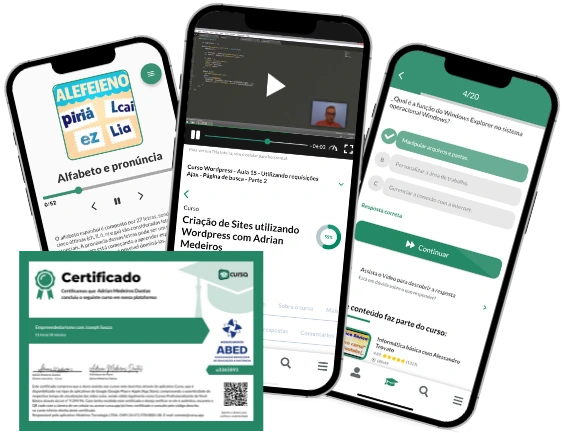
Carry knowledge in your pocket.
Download the Cursa app.
There are hundreds of free courses available, with a free certificate of completion that is saved in your mobile image gallery.
Download the app to access the Course Completion Certificate for Free.


+ 10 million
students

Free and Valid
Certificate

60 thousand free
exercises

4.8/5 rating in
app stores

Free courses in
video and ebooks