
Exercises
This quiz examines practical ways to provide accessible and respectful customer service to people with disabilities. Topics include offering assistance, communicating directly, respecting mobility aids and service animals, providing accessible information, improving physical service areas, and responding appropriately to accommodation requests. The questions combine foundational principles with realistic situations involving counters, queues, payment terminals, digital forms, emergency routes, and self-service kiosks.
Answer the questions below and check the explanation for each answer.
0/16 answered
Auto audio on: the next questions will be read aloud when you click Continue.
Ask before helping because the customer understands their own needs best. This respects independence and prevents well-intended assistance from creating a safety or accessibility problem.
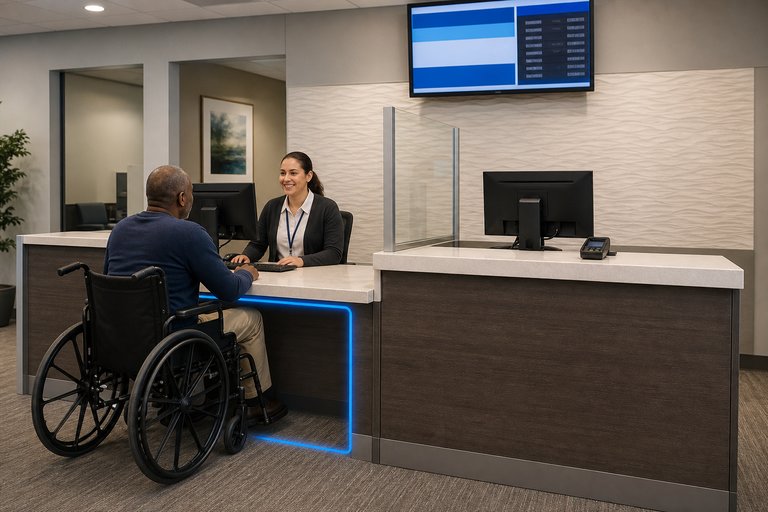
A lowered counter with unobstructed knee space gives a seated customer an accessible surface for conversations, forms, payments, and signatures.
A service animal may be performing an essential task. Employees should address the customer directly and avoid petting, feeding, calling, or otherwise distracting the animal.

When guidance is accepted, the employee can offer an arm and walk slightly ahead. The customer can then follow the guide's body movements without being pulled or pushed.
Communication preferences vary. A customer may prefer speechreading, writing, sign language, captions, or assistive technology, so asking is the most reliable approach.
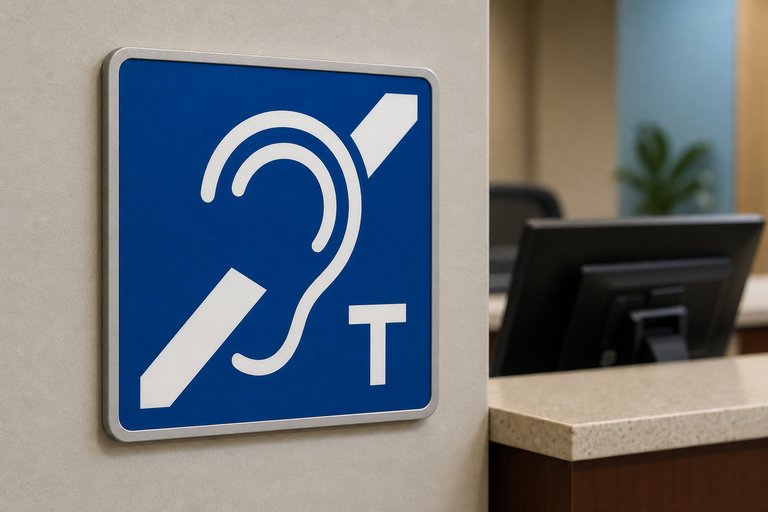
The ear symbol combined with a capital T commonly identifies a hearing loop. It can transmit sound directly to compatible hearing aids or cochlear implant processors.
Patient listening preserves the customer's control over the conversation. Finishing sentences may be inaccurate or disrespectful, while clarification can be requested when necessary.

Queue routes should provide sufficient clear width and turning space. Displays or movable barriers that narrow the path can prevent access for customers using wheelchairs or other mobility aids.
Plain language and clearly sequenced steps reduce unnecessary cognitive load. Written or visual support can also help the customer review information at their own pace.
Programmatically associated labels allow screen readers to announce each field's purpose. Color alone and disappearing placeholders do not provide reliable identification.
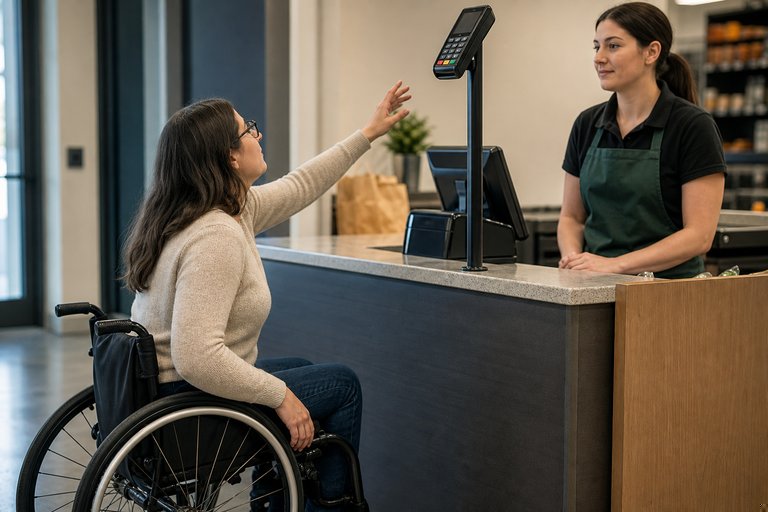
A portable or adjustable terminal lets customers position the controls and privacy screen within reach. Employees should never request or enter a customer's confidential PIN.
The customer remains the primary participant and should be addressed directly. A support person can assist in the manner the customer prefers.
Not all disabilities are visible. Staff should handle accommodation requests respectfully, protect privacy, and seek only the information required to arrange appropriate assistance under policy.
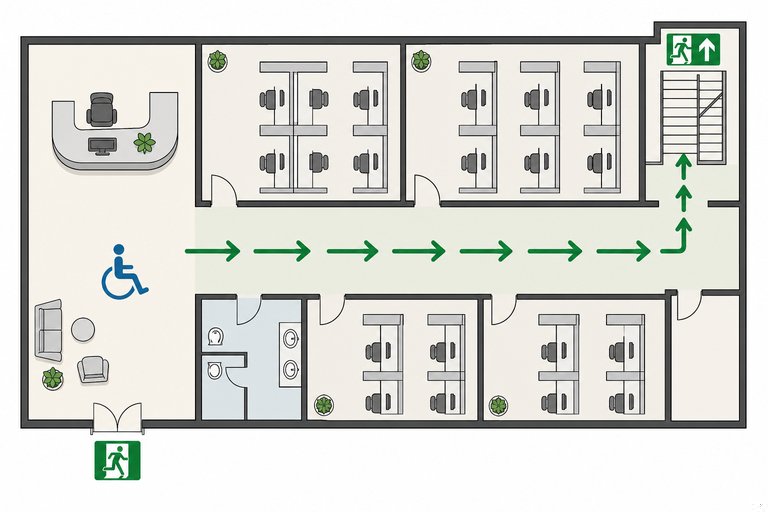
An emergency plan must account for people who cannot use stairs. It should identify an accessible evacuation route, approved evacuation assistance, or a designated refuge procedure as applicable.
Mobility aids are part of a person's personal space and may be essential for balance or independence. Staff should obtain permission before touching or moving them unless urgent danger requires action.
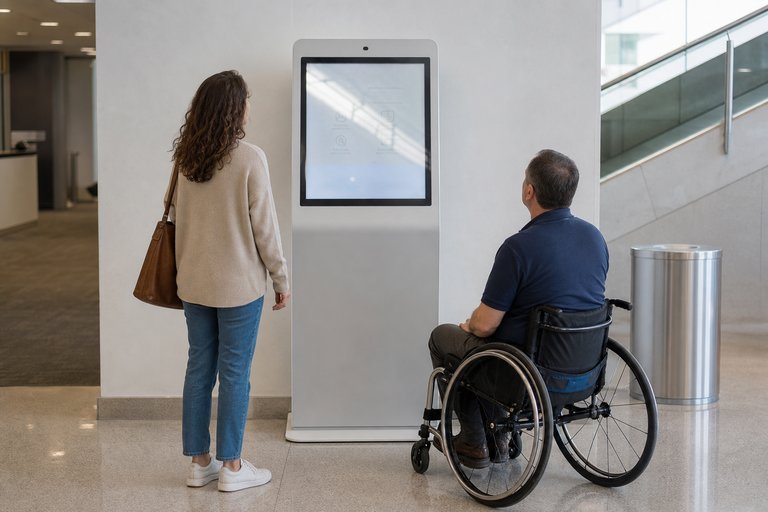
High contrast, adjustable presentation, audio support, and reachable controls address varied visual, motor, and cognitive needs. Accessible kiosks should also avoid color-only cues and unnecessarily short time limits.
Free CourseCall Center Agent Soft Skills Training: Communication, Empathy, Tone and Call Handling
5

(4)

4h02m

45 exercises

Free CourseCall Center Customer Service Training
4.9
(49)
5h53m
24 exercises

Free CourseCustomer Service
4.7

(50)
2h18m
9 exercises

Free CourseFront office training
4.6
(16)
24m
2 exercises

Free CourseCustomer Service full course
4.6
(47)
1h37m
18 exercises

Free CourseDental recepcionist training
4.5
(11)
26m
3 exercises

Free CourseHospitality Management
4.3
(35)
1h52m
11 exercises

Free CourseStore manager classes
4.2
(5)
2h06m
5 exercises
Thousands of online courses in video, ebooks and audiobooks.
To test your knowledge during online courses
Generated directly from your cell phone's photo gallery and sent to your email

Download our app via QR Code or the links below:.



Carry knowledge in your pocket.
Download the Cursa app.
There are hundreds of free courses available, with a free certificate of completion that is saved in your mobile image gallery.
Download the app to access the Course Completion Certificate for Free.


+ 10 million
students

Free and Valid
Certificate

60 thousand free
exercises

4.8/5 rating in
app stores

Free courses in
video and ebooks