
Exercises
This quiz assesses practical knowledge of placing, consolidating, finishing, and curing concrete slabs. Questions cover slump, vibration, bleed water, finishing tools, control and isolation joints, curing methods, weather conditions, testing, and common defects. Visual scenarios help learners recognize correct jobsite practices and avoid mistakes that can reduce concrete strength, durability, or surface quality.
Answer the questions below and check the explanation for each answer.
0/16 answered
Auto audio on: the next questions will be read aloud when you click Continue.
A slump test evaluates the consistency and relative workability of fresh concrete. It does not directly measure compressive strength.
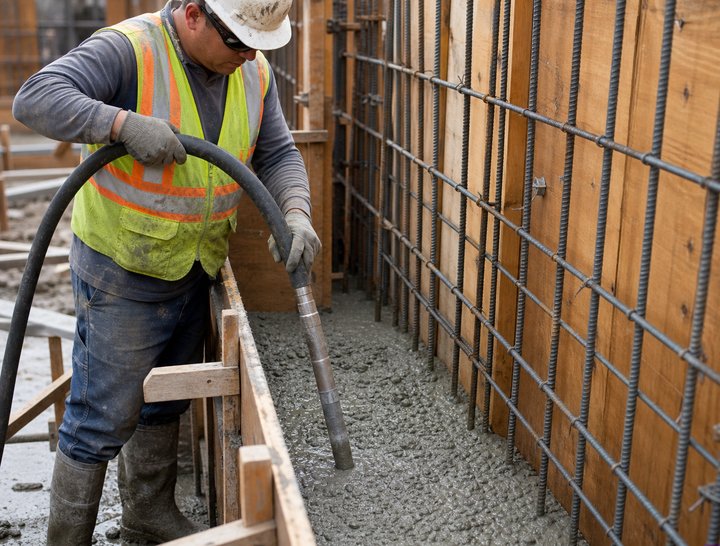
An internal vibrator consolidates fresh concrete by removing entrapped air and helping the mixture flow around reinforcement and into form corners.
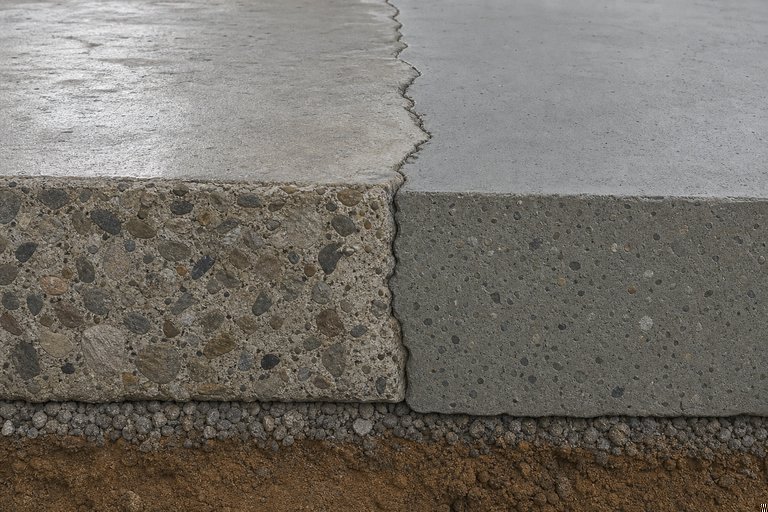
A cold joint can form when new concrete is placed against concrete that has stiffened enough to prevent the two placements from bonding as one continuous mass.
Finishing while bleed water remains can trap water and weaken the surface. Workers should wait for it to evaporate and should not add dry cement to absorb it.
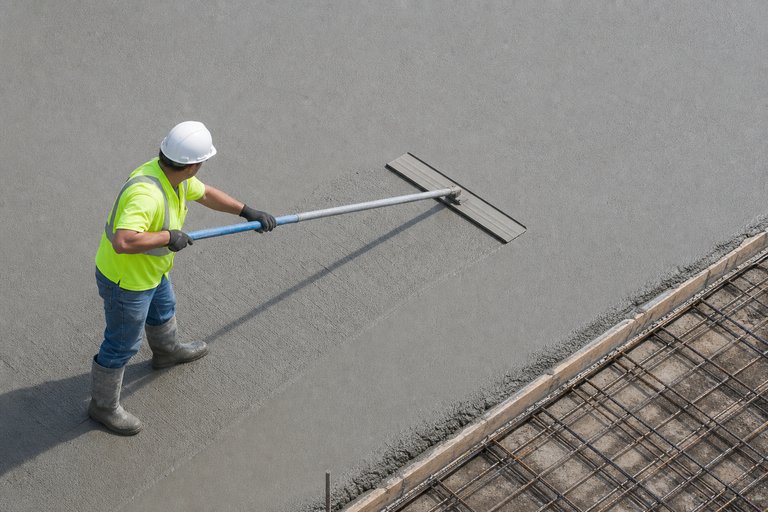
A bull float is passed over concrete after screeding to flatten ridges, fill small voids, and embed coarse aggregate slightly below the surface.
Entrained air creates microscopic, well-distributed voids that provide space for freezing water to expand, improving freeze-thaw durability.
Curing controls moisture and temperature so cement hydration can continue. Proper curing supports strength gain, durability, and reduced surface cracking.
Wet curing can be performed with saturated burlap or similar coverings kept continuously moist so the concrete surface does not dry prematurely.
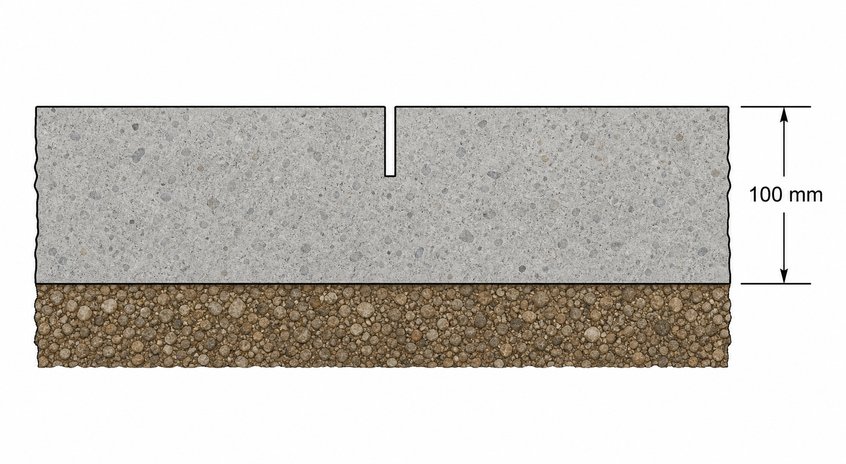
A conventional saw-cut control joint is commonly cut to at least one-quarter of the slab thickness. One-quarter of 100 mm is 25 mm.
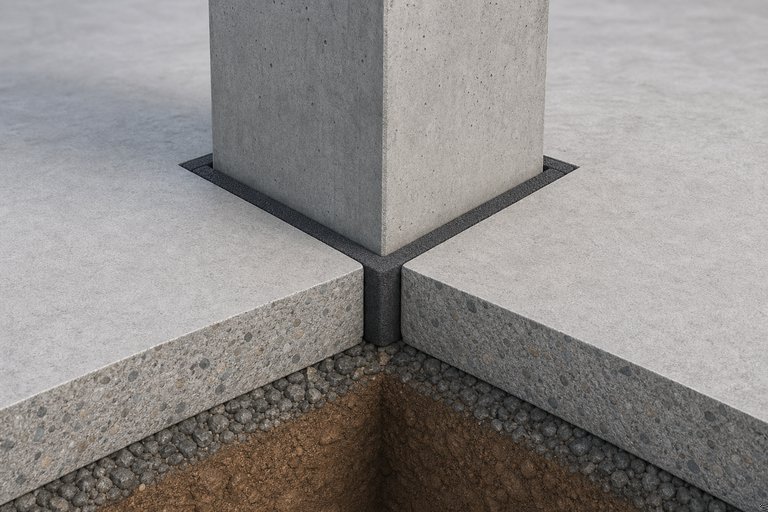
An isolation joint separates a slab from a fixed element such as a column or wall, permitting independent movement and reducing restraint cracking.
Heat, low relative humidity, and wind increase evaporation. If surface water is lost faster than bleed water replaces it, plastic shrinkage cracks may develop.
Proper air entrainment and curing improve freeze-thaw durability. Adding water or finishing over bleed water weakens the surface and can increase scaling.
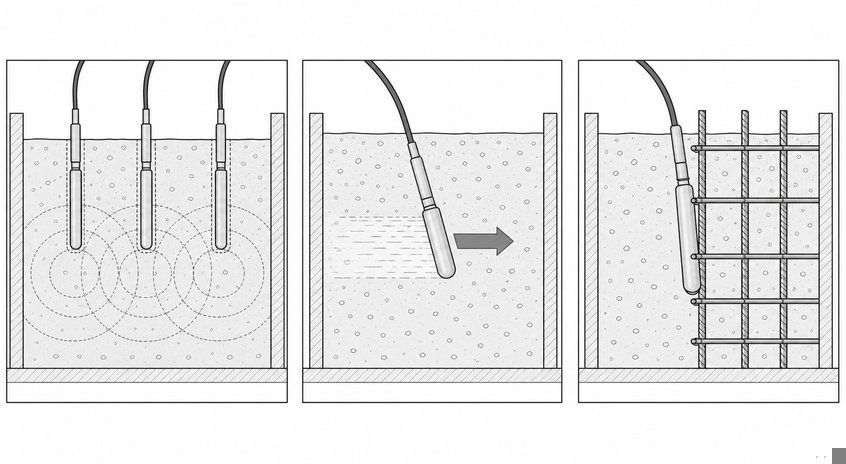
Internal vibrators should be inserted vertically at regular intervals so their zones of influence overlap. They should not be used to move concrete horizontally.
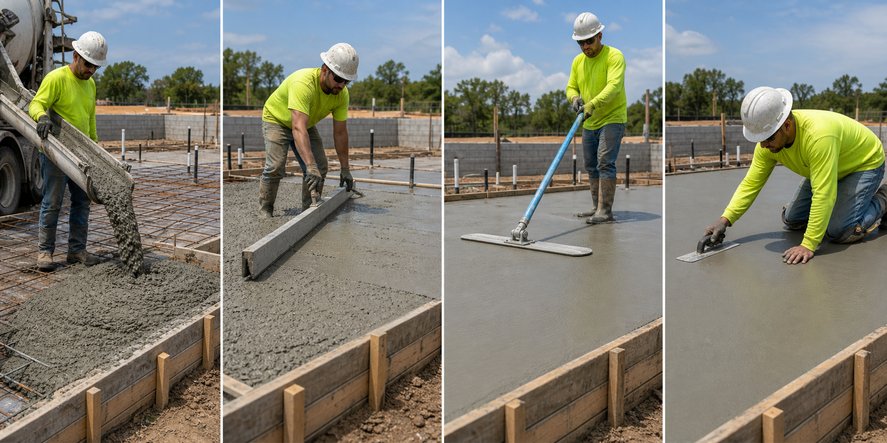
Concrete is first placed, then struck off by screeding. Bull floating follows to smooth ridges and embed aggregate, while final finishing occurs after bleed water has disappeared.
Acceptance cylinders receive protected initial curing and are then transported to standard curing conditions. This evaluates the supplied concrete against its specified strength.
Curing compound is generally applied uniformly after finishing and after the surface water sheen disappears. Applying it too late permits harmful moisture loss.

Free CourseHow to build a Shed
5

(1)

1h44m

16 exercises
Free CourseHow to Mud and Tape Drywall
5
(6)
1h34m
6 exercises

Free CourseHardwood floor installation for beginners
5
(2)
49m
6 exercises

Free CoursePro Painting guide
5
(5)
25m
5 exercises
Free CourseHow to tile
5
(1)
2h38m
6 exercises

Free CourseInterior Painting 101
5
(2)
1h18m
6 exercises

Free CourseDIY plumbing full course
4.9
(16)
2h22m

Free CourseIntroduction to Construction Project Management
4.9
(11)
19h51m
29 exercises
Thousands of online courses in video, ebooks and audiobooks.
To test your knowledge during online courses
Generated directly from your cell phone's photo gallery and sent to your email

Download our app via QR Code or the links below:.


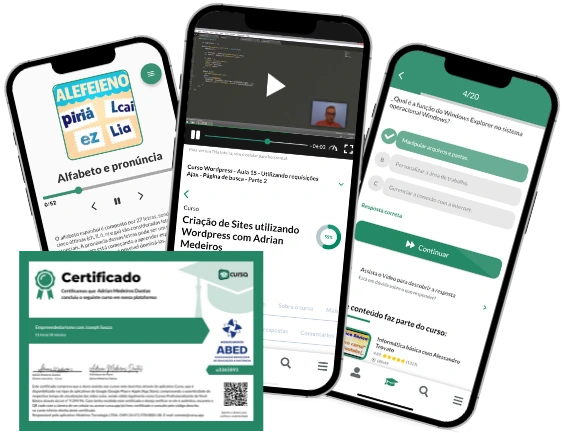
Carry knowledge in your pocket.
Download the Cursa app.
There are hundreds of free courses available, with a free certificate of completion that is saved in your mobile image gallery.
Download the app to access the Course Completion Certificate for Free.


+ 10 million
students

Free and Valid
Certificate

60 thousand free
exercises

4.8/5 rating in
app stores

Free courses in
video and ebooks