Introduction
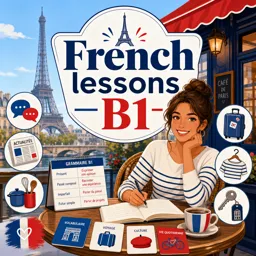
Reaching the B1 level in French opens up exciting opportunities for functional communication in real-life situations. At this intermediate stage, you can handle daily tasks, understand the main points of clear standard speech, and engage in conversations about familiar topics. In this article, we’ll explore essential B1 level phrases and scenarios to boost your ability to interact confidently in French-speaking environments.
Common B1 Scenarios and Essential Phrases
1. Navigating Public Transportation
- Où puis-je acheter un ticket ? (Where can I buy a ticket?)
- Ce bus va-t-il à la gare ? (Does this bus go to the train station?)
- À quelle heure part le prochain train ? (What time does the next train leave?)
2. At a Restaurant or Café
- Je voudrais une table pour deux, s’il vous plaît. (I would like a table for two, please.)
- Le menu, s’il vous plaît. (The menu, please.)
- Quels sont les plats du jour ? (What are the daily specials?)
3. Shopping and Asking for Help
- Combien ça coûte ? (How much does it cost?)
- Avez-vous cette chemise en taille M ? (Do you have this shirt in size M?)
- Pouvez-vous m’aider, s’il vous plaît ? (Can you help me, please?)
4. Giving and Asking for Directions
- Où se trouve la pharmacie la plus proche ? (Where is the nearest pharmacy?)
- Continuez tout droit, puis tournez à gauche. (Go straight ahead, then turn left.)
- Est-ce loin d’ici ? (Is it far from here?)
Tips for Expanding Your B1 Skills
- Practice role playing: Simulate real-life situations with a partner or tutor.
- Use French daily: Try to incorporate French into shopping lists, notes, or conversations.
- Listen and repeat: Utilize audio resources like podcasts and videos to hear authentic speech and mimic responses.
- Keep a phrasebook: Jot down new expressions and practice them regularly.
Conclusion
The B1 French level is all about applying your language skills to navigate everyday life with increasing independence. By mastering these essential phrases and scenarios, you’ll feel more at ease communicating in a variety of contexts. Keep practicing and immerse yourself in the French language for continued progress!