Fundamental German Phrases and Expressions for Beginners

Discover essential German phrases and expressions for beginners to navigate daily situations confidently and start speaking German right away.

Share on Linkedin Share on WhatsApp

Estimated reading time: 2 minutes

Article image Fundamental German Phrases and Expressions for Beginners

Introduction

Learning German as a beginner can be both exciting and challenging. Mastering some fundamental phrases and expressions is an excellent way to build your confidence and start communicating right away. In this article, we will explore essential German phrases that every beginner should know, helping you navigate daily situations and enrich your language learning journey.

Greetings and Introductions

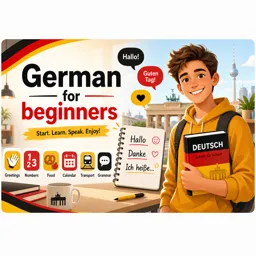
  • Hallo! – Hello!
  • Guten Morgen! – Good morning!
  • Guten Tag! – Good day!
  • Guten Abend! – Good evening!
  • Wie heißt du? – What’s your name? (informal)
  • Ich heiße … – My name is …
  • Schön, dich kennenzulernen. – Nice to meet you.

Polite Expressions

  • Bitte – Please/You’re welcome
  • Danke – Thank you
  • Entschuldigung – Excuse me/Sorry
  • Kein Problem – No problem

Useful Phrases for Everyday Situations

  • Wie geht’s? – How are you? (informal)
  • Mir geht’s gut. – I’m good.
  • Können Sie das bitte wiederholen? – Could you repeat that, please? (formal)
  • Ich verstehe nicht. – I don’t understand.
  • Sprechen Sie Englisch? – Do you speak English?
  • Wo ist die Toilette? – Where is the bathroom?

Numbers 1–10

  1. eins – 1
  2. zwei – 2
  3. drei – 3
  4. vier – 4
  5. fünf – 5
  6. sechs – 6
  7. sieben – 7
  8. acht – 8
  9. neun – 9
  10. zehn – 10

Tips for Practicing German Phrases

  • Practice speaking out loud, even if you’re alone.
  • Use flashcards to memorize new vocabulary.
  • Listen to German speakers in movies or online videos and repeat after them.
  • Find a language partner or join a beginner’s group to practice conversational German.

Conclusion

Getting familiar with these basic German phrases and expressions will help you start communicating effectively and boost your confidence. Remember to practice regularly and don’t be afraid to make mistakes—learning comes from using the language in real-life situations! Viel Erfolg (good luck) on your German learning journey!

Understanding Variables and Data Types in Python

Learn what variables and data types are in Python, how to use them, and why they are the foundation of every program you write.

How Websites Work: A Beginner’s Guide to Domains, Hosting, and Servers

Ever wondered what happens when you type a web address? Learn how domains, hosting, and servers work together to load a website.

What Is Prompt Engineering? A Beginner’s Guide

Learn what prompt engineering is, why it matters for working with AI tools, and practical techniques beginners can use to write better prompts.

What Is Version Control? An Introduction to Git for Beginners

Discover what version control is, why developers use Git, and the key concepts every beginner should know before writing their first commit.

Understanding Zero Trust Security: A Beginner’s Guide

Learn what Zero Trust security is, the core principles behind it, and why organizations are adopting this modern approach to cybersecurity.

SQL vs NoSQL: Understanding the Key Differences

Confused about SQL and NoSQL databases? Learn how they differ in structure, scaling, and use cases to choose the right one for your project.

What Is Responsive Web Design? A Beginner’s Guide

Learn what responsive web design is, why it matters, and the core techniques—fluid grids, flexible images, and media queries—to get started.

HTML, CSS, and JavaScript: The Three Pillars of Web Development

Learn how HTML, CSS, and JavaScript work together to build every website, and why they are the foundation of web development.