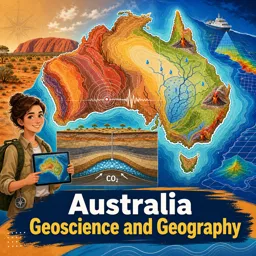


Geoscience is the study of Earth, including its rocks, landforms, processes, climate, and natural resources.

2



An Introduction to Physical Geography: Understanding Earth’s Natural Processes
Discover physical geography’s role in understanding Earth’s landforms, climates, water, and ecosystems, and how they shape our environment.

Climate, Water, and Ecosystems: The Interconnected Worlds of Physical Geography
Explore how climate, water, and ecosystems interact in physical geography, shaping landscapes, biodiversity, and environmental health.

Landforms and Earth’s Surface: Exploring Physical Geography’s Core Elements
Discover the core elements of physical geography, from landforms and climate to water systems, and understand their importance for life on Earth.

How Seismology Helps Predict and Understand Earthquakes
Discover how seismology helps detect, analyze, and predict earthquakes, contributing to safer communities and deeper understanding of Earth’s seismic activity.

Seismology Tools and Techniques: Unraveling Earth’s Vibrations
Explore the key tools and techniques in seismology that help detect, analyze, and understand Earth’s seismic vibrations for better safety and scientific insight.

The Role of Seismology in Understanding Earth’s Interior
Discover how seismology helps us understand Earth’s internal structure through seismic waves, improving earthquake monitoring, resource exploration, and public safety.

Understanding Earth’s Dynamic System: The Role of Geoscientists
Discover how geoscientists study Earth’s dynamic systems to manage resources, predict hazards, and protect the environment, shaping a sustainable future.

Geoscience Careers: Pathways and Opportunities in Earth Sciences
Discover geoscience career paths, essential skills, and global impacts in Earth sciences, and learn how to start your journey in this vital and rewarding field.
Explore our selection of free online Geoscience courses and build valuable knowledge about Earth, its materials, natural processes, history, and environments. Designed for students, teachers, professionals, and curious learners, these educational courses provide accessible lessons, practical exercises, and free certification to support academic development and career growth.
Geoscience combines geology, geography, geophysics, geochemistry, climatology, oceanography, and environmental science. Through structured online learning, you can study the forces that shape landscapes, examine rocks and minerals, understand plate tectonics, investigate natural hazards, and explore the relationship between Earth systems and human activity.
Each course includes educational content that can be studied at your own pace. The included exercises help you review important topics and evaluate your progress throughout the learning experience. After completing the course requirements, you can also receive free certification, offering a convenient way to document your studies and strengthen your résumé or academic portfolio.
These free courses are suitable for beginners who want an introduction to Earth science as well as learners seeking to expand existing knowledge. They can support school and university studies, teacher training, professional development, preparation for educational assessments, or independent scientific learning. No matter your goal, online Geoscience education provides a flexible opportunity to understand our dynamic planet.
To access the courses, lessons, exercises, and free certification, you must install the Cursa application. Android users can install it through Google Play using Download for Android. iPhone users can install it through the App Store using Download for iOS / iPhone.
Choose a free online Geoscience course, study anywhere, complete interactive exercises, and earn free certification. Begin learning about Earth systems, natural resources, geological processes, climate, and environmental challenges through accessible educational content.
What is geoscience?
Geoscience is the study of Earth, including its rocks, landforms, processes, climate, and natural resources.
What can I learn in an Australia geoscience and geography course?
You can explore Australia’s landscapes, geology, climate systems, ecosystems, natural hazards, and geographic regions.
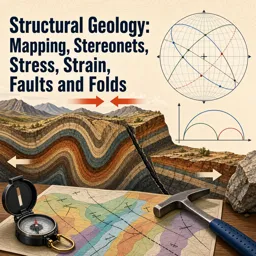
What is structural geology?
Structural geology examines how rocks deform and how features such as faults, folds, fractures, and mountain belts form.
Why is geological mapping important?
Geological mapping records rock types, structures, and their distribution to help interpret an area’s geological history.
What is a stereonet used for in geology?
A stereonet is a graphical tool used to plot and analyze the orientation of planes, lines, folds, and faults.
What is the difference between stress and strain in rocks?
Stress is the force applied to rock, while strain is the resulting change in its shape, size, or position.
How do faults and folds form?
Faults form when rocks break and move along fractures, while folds form when rocks bend under compression or other forces.

Complete any course and issue your certificate via the app — at no cost.

Download the app! to have access to more than 4,000 Online Courses + Certificate, all free!
Download the app! 100% free courses.


Carry knowledge in your pocket.
Download the Cursa app.
There are hundreds of free courses available, with a free certificate of completion that is saved in your mobile image gallery.
Download the app to access the Course Completion Certificate for Free.


+ 10 million
students

Free and Valid
Certificate

60 thousand free
exercises

4.8/5 rating in
app stores

Free courses in
video and ebooks