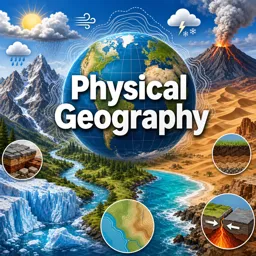


Physical geography is the study of Earth’s natural features, processes, climates, landforms, soils, water, and ecosystems.

2


Explore our selection of free online Physical Geography courses and develop a deeper understanding of the natural processes that shape Earth. These educational courses are designed for students, teachers, professionals, and curious learners who want to study landscapes, climate systems, landforms, water resources, soils, ecosystems, and environmental change through accessible online learning.
Physical Geography examines the interactions among the atmosphere, hydrosphere, lithosphere, and biosphere. Through structured lessons, you can strengthen your geographical knowledge while learning to interpret natural phenomena and spatial patterns. Every course is free, includes educational exercises for reviewing important concepts, and offers free certification upon successful completion.
These online courses support independent study, classroom revision, professional development, and preparation for geography assessments. The included exercises help learners practice terminology, reinforce theories, and evaluate their progress. After completing a course, learners can obtain a free certificate to document their educational achievement and add it to a résumé or academic portfolio.
To access the Physical Geography courses, exercises, and free certification, you must install the Cursa application. Android users can install it through Google Play: Download for Android. Apple users can install it through the App Store: Download for iOS / iPhone.
Choose a free course, follow the lessons at your own pace, complete the exercises, and expand your understanding of Earth systems. Begin your Physical Geography education today with flexible online study and free certification.
What is physical geography?
Physical geography is the study of Earth’s natural features, processes, climates, landforms, soils, water, and ecosystems.
What topics are covered in a physical geography course?
Courses commonly cover climate, weather, plate tectonics, rivers, glaciers, oceans, soils, biomes, and natural hazards.
Is physical geography the same as geoscience?
They overlap, but geoscience focuses more broadly on Earth’s physical structure, materials, and history, while physical geography emphasizes surface processes and environments.
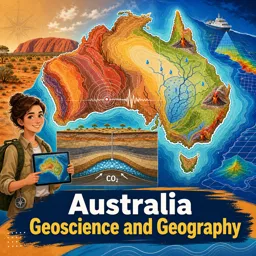
What will I learn in an Australia geoscience and geography course?
You may study Australia’s geology, climate zones, landscapes, water systems, ecosystems, natural resources, and environmental challenges.
Why is physical geography important?
It helps explain how natural systems work and supports informed decisions about hazards, climate change, conservation, and land use.
Does physical geography include climate change?
Yes. Physical geography examines climate systems, changing weather patterns, sea-level rise, droughts, and their effects on landscapes and ecosystems.
What careers can physical geography support?
It can support careers in environmental management, GIS, meteorology, conservation, urban planning, hazard assessment, and natural resource management.

Complete any course and issue your certificate via the app — at no cost.

Download the app! to have access to more than 4,000 Online Courses + Certificate, all free!
Download the app! 100% free courses.


Carry knowledge in your pocket.
Download the Cursa app.
There are hundreds of free courses available, with a free certificate of completion that is saved in your mobile image gallery.
Download the app to access the Course Completion Certificate for Free.


+ 10 million
students

Free and Valid
Certificate

60 thousand free
exercises

4.8/5 rating in
app stores

Free courses in
video and ebooks





What are people saying about free online courses of Physical Geography
Kagisho Andries Mothobi
I did enjoy the course, and it really makes a huge difference in my life. Thank you so much for bringing such a momentous course.
CoursePhysical Geography