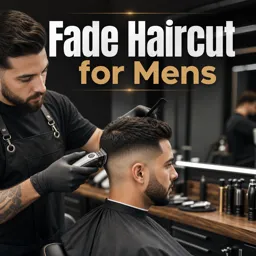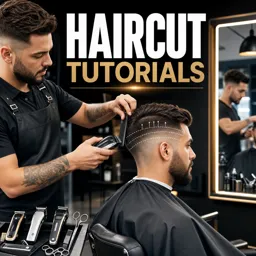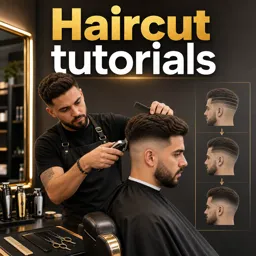


Free ebook on low, mid, high, and taper fades, with practical guidance on blending, tools, consultation, and finishing.
Free ebook content
-

Fade Haircuts 101: Tools, Hygiene, and Setup for Clean Fades
+ Exercise: When you spot a visible line in a fade, what lever approach helps remove it gradually without creating a new harsh step?
-
Fade Fundamentals: Understanding Length, Contrast, and Transition Zones
+ Exercise: If two haircuts are both mid fades but one starts at skin and the other starts at a #1 guard, what will most likely differ about their appearance?
-
Client Consultation for Fade Haircuts: Choosing Low, Mid, High, or Taper
+ Exercise: During a fade consultation, a client says they can only come in every 3+ weeks and wants the haircut to grow out looking intentional. Which recommendation best fits this constraint?
-
Sectioning for Fades: Building a Reliable Cutting Map
+ Exercise: What is the main purpose of creating a horseshoe section and clipping the top away before starting a fade?
-
Guidelines Made Simple: Creating the First Line Without Panic
+ Exercise: When setting the first guideline for a fade, which approach best helps prevent carving a deep, hard-to-remove line?


-
Low Fade Workflow: Soft Transitions and Natural Finish
+ Exercise: When erasing a visible line between the first two low-fade zones, what approach best preserves a soft, low transition?
-
Mid Fade Workflow: Balanced Height and Even Graduation
+ Exercise: When placing and maintaining a balanced mid fade, what practice best helps keep the “wrap” level and prevent one side from drifting higher?
-
High Fade Workflow: Tight Blends Near the Ridge Without Harsh Steps
+ Exercise: When setting a high fade near the ridge, what is the best approach to avoid pushing the fade into the top and creating harsh steps?
-
Taper Fades Made Simple: Sideburn and Nape Refinement
+ Exercise: When refining a conservative taper fade, what is the recommended first move if you notice a faint line between two steps?
-
Blending Techniques for Fade Haircuts: Lever Control, Guards, and Stroke Mechanics
+ Exercise: When a dark shelf near the parietal ridge is caused by bulk rather than a visible line, which approach is the best first move?
-
Erasing Harsh Lines: Troubleshooting Dark Bands and Patchy Blends
+ Exercise: When you notice a dark band under a lighter zone in a fade, what is the most appropriate corrective approach?
-
Adapting Fade Haircuts to Hair Texture: Straight, Wavy, Curly, Coily
+ Exercise: When fading high-shrinkage textures (curly/coily), what approach best helps prevent cutting the fade too short?
-
Head Shape and Growth Patterns: Managing Cowlicks, Flat Spots, and Swirls
+ Exercise: A client has a noticeable dent behind the ear but asks for a skin finish. Which approach best prevents the dent from being emphasized in the fade?
-
Detailing and Finishing Fade Haircuts: Edges, Necklines, and Final Polish
+ Exercise: During the micro-detailing pass to refine a fade blend, what approach best helps prevent removing too much hair while still fixing dark pockets and faint lines?
-
Consistency Building: Repeatable Fade Haircut Checklists and Common Mistakes
+ Exercise: When a fade line won’t disappear and the area starts looking thin or patchy, what is the most effective next step to fix it consistently?
About the free ebook
Fade Haircuts 101: Low, Mid, High, and Taper Fades Made Simple
This free online ebook provides a practical foundation for creating clean, controlled fade haircuts in a barbershop setting. Learn how to prepare your tools and workspace, maintain hygiene, read hair growth, and build fades with deliberate sectioning and reliable guidelines.
Build cleaner blends with a repeatable method
Fade work is not about guessing at guard numbers. It is about managing length, contrast, transition zones, lever positions, and stroke direction. The ebook explains how to establish a clear cutting map, remove weight gradually, and assess the blend from multiple angles before moving on.
Choose the right fade placement
Understand the visual difference between low, mid, high, and taper fades, then connect placement to a client’s head shape, hair texture, lifestyle, and desired finish. You will learn how a low fade can preserve a natural profile, how a mid fade creates balanced structure, how a high fade produces a tighter look, and how taper fades refine the sideburns and neckline.
Improve control and problem-solving
Explore clipper-over-comb concepts, guard progression, lever control, and efficient blending strokes. The guidance also addresses common issues such as dark bands, patchy areas, harsh initial lines, cowlicks, swirls, and uneven density. Strong finishing habits help turn a technically sound fade into a polished result.
Designed for practical barbering practice
- Clean setup: Prepare tools, sanitize surfaces, and organize your working process.
- Intentional blending: Use controlled transitions rather than rushing through guard changes.
- Client-focused results: Adapt the fade to texture, growth patterns, and facial balance.
- Consistent finishing: Refine edges, necklines, symmetry, and overall polish.
Use this ebook as a clear reference for developing repeatable fade-haircut habits and diagnosing the details that separate a soft blend from an unfinished one.
What is the difference between a low fade, mid fade, and high fade?
The difference is the height of the transition: low fades sit near the ears, mid fades rise to the temple area, and high fades begin closer to the ridge.
How do barbers remove a dark line in a fade?
Use the correct guard or lever position below the dark area, work with short controlled strokes, and reassess the blend from different angles.
How should a fade be adjusted for curly or coily hair?
Account for curl shrinkage, density, and growth direction; use clear sectioning and avoid cutting transition zones too high or too aggressively.
This ebook includes:

15 content chapters

Digital certificate of course completion (Free)

Exercises to train your knowledge

100% free, from content to certificate
Ready to get started?

 recommended
In the app you will also find...

Over 5,000 free courses
Programming, English, Digital Marketing and much more! Learn whatever you want, for free.

Study plan with AI
Our app's Artificial Intelligence can create a study schedule for the course you choose.

From zero to professional success
Improve your resume with our free Certificate and then use our Artificial Intelligence to find your dream job.
You can also use the QR Code or the links below.