Choose heat-tolerant lettuce varieties, maintain consistent moisture, and use shade or timing strategies to reduce heat stress.

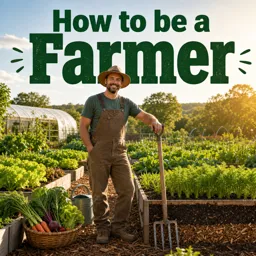
Duration of the online course: 2 hours and 2 minutes
5

(1)
Build real farming skills online: no-till growing, soil health, compost and smart production. Take the free course and level up toward a better harvest.
Starting a farm can feel overwhelming: soil, weeds, tools, markets, and the constant question of what to do next. This free online course helps you build practical farming judgment by focusing on the real decisions growers face every week. You will learn how to start strong from the ground up, improving soil structure, choosing approaches that protect long-term fertility, and adopting systems that fit your land, climate, and available time.
Through field-tested examples, you will explore no-till strategies that support healthier soil life while still aiming for reliable harvests. You will see how to make choices for seed starting and transplant success, why timing and variety selection matter in challenging seasons, and how growers adapt when crops become more demanding than expected. The course also looks at problem-solving in the field, including resilient ways to reduce invasive pressure in a no-till setting and how smart material use can simplify maintenance and improve growing conditions.
Farming is not only production, it is a workflow. You will consider how to create useful space where others waste it, how to decide when to loosen soil and when to leave it alone, and how to evaluate tools by the quality of results and the energy they save. Along the way, the course connects everyday technique to sustainability and profitability, touching on what it takes to move from a homestead mindset to a farm business that can serve customers consistently without burning you out.
Whether you are aiming for a market garden, a diversified small farm, or a serious homestead, you will finish with a clearer framework for improving your system rather than simply expanding. Expect actionable insights, a more confident decision-making process, and a grounded understanding of how soil care, crop strategy, and efficient operations come together in modern farming.

2 hours and 2 minutes of online video course

Digital certificate of course completion (Free)

Exercises to train your knowledge

100% free, from content to certificate
How can I grow lettuce successfully during hot summer weather using no-till methods?
Choose heat-tolerant lettuce varieties, maintain consistent moisture, and use shade or timing strategies to reduce heat stress.
What are soil blocks, and why are they useful for starting vegetable seeds?
Soil blocks are compressed cubes of growing medium that start seedlings without plastic pots, helping reduce transplant shock and root binding.
How can wood chips and farm pathways improve a no-till farm?
Wood chips can suppress weeds, retain moisture, and build organic matter, while productive pathways can be planted or managed to add farm value.
Ready to get started?Download the app and get started today.
Install the app now
to access the course
Over 5,000 free courses
Programming, English, Digital Marketing and much more! Learn whatever you want, for free.

Study plan with AI
Our app's Artificial Intelligence can create a study schedule for the course you choose.

From zero to professional success
Improve your resume with our free Certificate and then use our Artificial Intelligence to find your dream job.
You can also use the QR Code or the links below.



Free CourseSustainable Agriculture Fundamentals: Whole-Farm Practices, Soil Health and Economics
5
(3)

22m

8 exercises
Free CourseAgribusiness Management: Finance, Marketing, Supply Chain and Sustainability
5
(5)
2h02m
10 exercises
Free CourseAgriculture complete
4.9
(7)
1h58m
6 exercises

Free CourseFish Farming
4.8
(6)
54m
7 exercises
Free CourseDairy Cow farming course
4.8
(9)
4h41m
25 exercises
Free CourseDairy Goat Farming course
4.7

(10)
4h48m
26 exercises
Free CourseIntroduction to Agribusiness
4.2
(5)
2h09m
7 exercises
Free CourseUrban Gardens Course
New
2h12m
18 exercises
Carry knowledge in your pocket.
Download the Cursa app.
There are hundreds of free courses available, with a free certificate of completion that is saved in your mobile image gallery.
Download the app to access the Course Completion Certificate for Free.


+ 10 million
students

Free and Valid
Certificate

60 thousand free
exercises

4.8/5 rating in
app stores

Free courses in
video and ebooks
Course comments: How to be a Farmer
James Wildschutt
I like the course give me more
Stretch Rest
truly appreciate this course. I am learning and really happy to be doing something g meaningful for myself and future. thank you for keeping free