Exercises
Explore the central Christian doctrine of the Trinity with this theology quiz. Test your understanding of how Christians describe one God in three distinct persons: the Father, the Son, and the Holy Spirit. Questions cover the meaning of consubstantiality, the role of the Holy Spirit, Jesus as the Son of God, Trinitarian baptismal language in Scripture, the Nicene and Constantinopolitan creeds, major church councils, non-Trinitarian perspectives, and perichoresis. Ideal for students, church learners, and anyone seeking to review foundational concepts in historic Christian belief.
Answer the questions below and check the explanation for each answer.
0/10 answered
Auto audio on: the next questions will be read aloud when you click Continue.
The doctrine of the Trinity primarily expresses that there is one God in three persons: the Father, the Son, and the Holy Spirit. This means that the three persons are distinct yet coexist in unity as one essence or substance. This concept is fundamental to most Christian theological understanding of the nature of God.
The Nicene Creed is most associated with the formalization of the Trinity doctrine. It was established during the First Council of Nicaea in AD 325 and further refined at the First Council of Constantinople in AD 381. This creed specifically affirms the Trinity by emphasizing the divinity of the Father, Son, and Holy Spirit.
The term consubstantial in Christian theology refers to the concept that the Father, Son, and Holy Spirit are of the same substance or essence. This is a fundamental tenet of the Nicene Creed, emphasizing the unity and equality of the three persons of the Trinity, and distinguishing it from beliefs that imply a hierarchy or creation of one person by another within the Godhead.
Unitarianism is the theological perspective that denies the Trinity and maintains that God is strictly one. Unitarians believe in the singular nature of God and reject the concept of God existing as three persons in one essence, which is the core tenet of the doctrine of the Trinity. This view distinguishes them from other Christian theological perspectives that hold Trinitarian beliefs.
In Christian theology, the Holy Spirit is regarded as the comforter, helper, and giver of life, which aligns with option 3. This is based on descriptions found in the New Testament, particularly in books such as John 14:26 and Acts 1:8, where the Holy Spirit is said to offer guidance, support, and life to believers.
The correct answer is 2. In trinitarian theology, Jesus is referred to as the 'Son of God' because He is eternally begotten of the Father, not created or made. This concept emphasizes the eternal and consubstantial relationship between Jesus and God the Father, underscoring the belief in their distinct persons within the Holy Trinity, yet sharing the same essence or divine nature.
The doctrine of the Trinity teaches that Father, Son, and Holy Spirit are three distinct persons in one God, not merely modes or roles. Each person is fully God, sharing the same essence, but they are not interchangeable modes.
The scripture often cited as support for the Trinity is Matthew 28:19, where Jesus says to baptize "in the name of the Father and of the Son and of the Holy Spirit." This is seen as giving equal authority to each member of the Trinity in the context of baptism.
The First Council of Constantinople is known for addressing the divinity of the Holy Spirit in relation to the Trinity. This council, held in 381 AD, expanded the Nicene Creed established by the First Council of Nicaea, particularly by clarifying the Holy Spirit's position within the Holy Trinity.
The doctrine of perichoresis relates to the Trinity by explaining how the three persons of the Trinity interpenetrate and indwell one another. It emphasizes the intimate relationship between Father, Son, and Holy Spirit, maintaining unity and equality without division.
Thousands of online courses in video, ebooks and audiobooks.
To test your knowledge during online courses
Generated directly from your cell phone's photo gallery and sent to your email

Download our app via QR Code or the links below:.


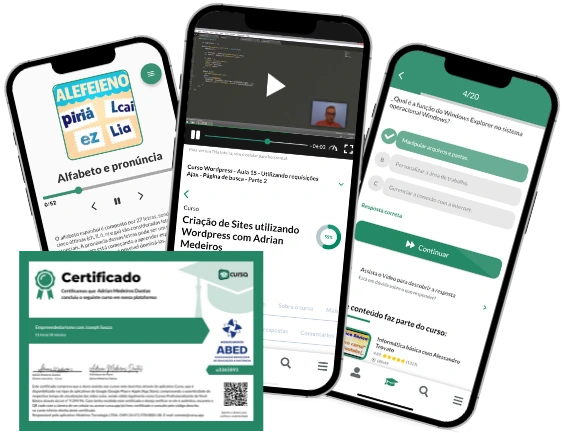
Carry knowledge in your pocket.
Download the Cursa app.
There are hundreds of free courses available, with a free certificate of completion that is saved in your mobile image gallery.
Download the app to access the Course Completion Certificate for Free.


+ 10 million
students

Free and Valid
Certificate

60 thousand free
exercises

4.8/5 rating in
app stores

Free courses in
video and ebooks