
Exercises
Put your Spanish past-tense skills to the test with questions on the preterite and imperfect. Practice identifying when to use each tense, conjugating regular -ar verbs, and recognizing key irregular forms such as ir and ver. You will also work with common verbs including comer, leer, and nadar, choosing accurate translations and spotting sentences in the correct past tense. This quiz is ideal for Spanish learners who want to strengthen their understanding of completed actions, ongoing past actions, habits, and repeated events.
Answer the questions below and check the explanation for each answer.
0/10 answered
Auto audio on: the next questions will be read aloud when you click Continue.
To talk about actions completed at a definite time in the past, the Preterite tense is used. It indicates actions that are complete, specific, and occurred at a particular point in time. This tense is crucial for narrating events and telling stories about the past with clarity and precision.
The correct translation of 'I was eating' into Spanish is Estaba comiendo. This phrase uses the imperfect tense of the verb 'estar' combined with the gerund of 'comer' to form the past continuous tense, which is used to describe an ongoing action in the past. The other options, He comido and Comí, mean 'I have eaten' and 'I ate' respectively, and do not convey the same meaning.
The preterite tense is used for actions completed in the past. The verb ir (to go) in the preterite form for ella is fue. Therefore, option 3 is correct.
The imperfect tense in Spanish is used for actions that were ongoing or habitual in the past. The verb hablaba is in the imperfect tense, indicating a past action that was not completed or was ongoing. In contrast, habló is in the preterite tense, and ha hablado is in the present perfect tense.
In Spanish, the verbs tener and hacer are irregular in the preterite tense, with forms like tuve and hice respectively. The verb comer is a regular verb in the preterite tense, following the standard pattern with forms like comí, comiste, comió, etc.
The imperfect tense for -ar verbs is formed by adding -aba to the stem of the verb. This tense is used to describe actions that were ongoing or habitual in the past.
The imperfect tense in Spanish is used to express past habitual actions or to describe conditions or incomplete actions in the past. For the verb 'ver', the third person singular form in the imperfect tense is veía.
The preterite tense, also known as the simple past tense in Spanish, is used to describe actions that were completed in the past. The verb cantaron is the preterite conjugation of cantar for the pronoun ellos, indicating a completed action in the past. The other options represent the future tense (cantarán) and the imperfect tense (cantaban), respectively.
The sentence 'We used to swim every summer' is translated to Spanish as 'Nadábamos cada verano.' because 'nadábamos' is the imperfect tense of the verb 'nadar', which is used to express actions that were habitual in the past.
The verb leer, in the preterite tense for the first person plural (nosotros), is conjugated as leímos. The preterite tense is used in Spanish to describe actions that were completed in the past. Leemos is the present tense, and leíamos is the imperfect tense, neither of which fits the requirement for the preterite tense.
Free CourseSpanish for Beginners: Essential Grammar and Vocabulary (Season 1)
5

(5)

5h23m

20 exercises
Free CourseSpanish for Kids
5
(3)
53m
Free CourseSpanish course A2
5
(4)
11h23m
Free CourseSpanish Verbs for beginners
5
(3)
3h42m
15 exercises
Free CourseSpanish course A1
4.8
(11)
10h51m
6 exercises
Free CourseSpanish
4.8
(405)
6h22m
11 exercises
Free CourseSpanish full course B1
4.8
(5)
1h29m
15 exercises
Free CourseSpanish
4.7

(56)
8h55m
27 exercises
Thousands of online courses in video, ebooks and audiobooks.
To test your knowledge during online courses
Generated directly from your cell phone's photo gallery and sent to your email

Download our app via QR Code or the links below:.


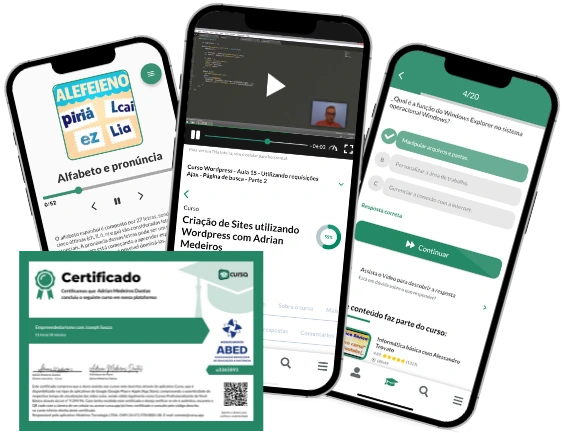
Carry knowledge in your pocket.
Download the Cursa app.
There are hundreds of free courses available, with a free certificate of completion that is saved in your mobile image gallery.
Download the app to access the Course Completion Certificate for Free.


+ 10 million
students

Free and Valid
Certificate

60 thousand free
exercises

4.8/5 rating in
app stores

Free courses in
video and ebooks