
Exercises
Put your Selenium WebDriver skills to the test with questions covering core web automation testing concepts. Explore WebDriver’s purpose, supported languages, browser driver setup, page navigation, and retrieving page titles. Check your understanding of effective locator strategies, explicit waits with WebDriverWait, handling dynamic elements, and findElement behavior when an element cannot be located. You’ll also review the benefits of the Page Object Model (POM) for building maintainable, scalable automated test suites. This quiz is ideal for QA testers, developers, and beginners preparing to use Selenium WebDriver in real-world browser automation projects.
Answer the questions below and check the explanation for each answer.
0/10 answered
Auto audio on: the next questions will be read aloud when you click Continue.
Selenium WebDriver is primarily used for web application automation. It is a tool that allows developers and testers to automate web browsers, enabling the execution of browser-based tests to verify that web applications behave as expected. It supports multiple browsers and can interact with dynamic web content just like a real user would.
Selenium WebDriver supports multiple programming languages such as Python and C#, offering native bindings to facilitate test script writing. However, Perl is not among the officially supported languages for Selenium WebDriver, making option 3 the correct choice.
The correct way to instantiate a FirefoxDriver in Selenium WebDriver is by using new FirefoxDriver(). This creates a new instance of the browser for automation. The other options presented are incorrect because new WebDriver('firefox') and WebDriver.create('firefox') are not valid syntax in Selenium.
The correct method to navigate to a new webpage using Selenium WebDriver is driver.navigate().to(url). This method is explicitly provided by Selenium to navigate to a new URL or webpage. Option 1, browser.get(url), is not a standard Selenium WebDriver method, and Option 3, driver.goto(url), is incorrect and does not exist in Selenium WebDriver.
In Selenium WebDriver, to retrieve the title of the current page, you should use the driver.getTitle() method. This method returns a String representing the title of the current page that the driver is controlling.
When trying to find a unique element on a page, the ID should be used as the first choice locator strategy. This is because IDs are supposed to be unique within an HTML document, making them the most reliable and fastest method for locating a specific element.
The correct use of WebDriverWait in Selenium WebDriver is option 1. It properly utilizes the constructor by passing the driver and the timeout duration as arguments and employs ExpectedConditions to wait for an element to be visible. Option 2 incorrectly places driver.findElement in the until method, and option 3 uses an invalid method signature.
The Explicit wait is used in WebDriver to manage the inherent latency of web elements. It allows the test to wait for a specific condition to occur before proceeding, ensuring elements are available and ready for interaction. This is essential for dealing with dynamic content or slower loading components.
The findElement method in Selenium throws a NoSuchElementException when the element is not found. Unlike findElements, which returns an empty list, findElement does not return null or any other object upon failure. Therefore, when an element is not located by findElement, it results in an exception.
The main advantage of using the Page Object Model (POM) in Selenium WebDriver is that it promotes code reusability and makes the code more manageable. POM allows for the creation of an abstraction layer between test scripts and web pages, thereby making the tests easy to maintain and reducing code duplication.

Free CourseSoftware Testing course
5

(1)

10h18m

Free CourseIT Automation
5
(4)
6h20m

9 exercises

Free CourseSoftware Testing full course
5
(2)
4h55m
6 exercises
Free CourseJavaScript Testing
5
(1)
1h00m
6 exercises

Free CourseSoftware testing for begginers
4.7

(214)
1h01m
21 exercises

Free CourseManual Testing in softwares
4.6
(5)
19h40m
4 exercises

Free CourseSoftware testing tutorials
4.4
(44)
8h02m
27 exercises
Free CourseSoftware testing complete
4.2
(9)
10h41m
33 exercises
Thousands of online courses in video, ebooks and audiobooks.
To test your knowledge during online courses
Generated directly from your cell phone's photo gallery and sent to your email

Download our app via QR Code or the links below:.


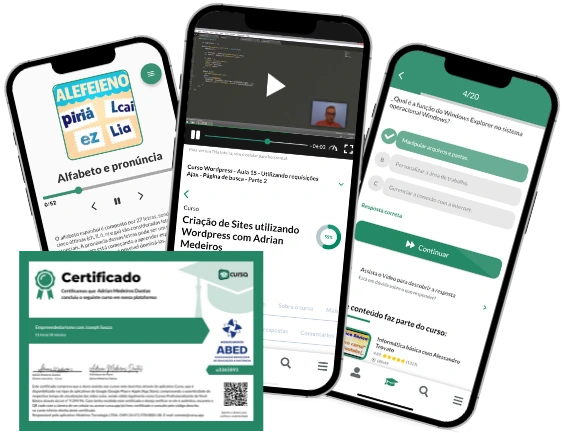
Carry knowledge in your pocket.
Download the Cursa app.
There are hundreds of free courses available, with a free certificate of completion that is saved in your mobile image gallery.
Download the app to access the Course Completion Certificate for Free.


+ 10 million
students

Free and Valid
Certificate

60 thousand free
exercises

4.8/5 rating in
app stores

Free courses in
video and ebooks