
Exercises
Learn to interpret the visual language of garment fit. This quiz examines muslin preparation, drag lines, garment balance, bust adjustments, shoulder asymmetry, sleeve pitch, crotch fit, waistband gaping, hem balance, and pattern correction. The questions combine practical fitting scenarios with visual analysis to help you identify causes rather than merely conceal symptoms. It is designed for fashion and sewing students who want to produce better-fitting custom garments.
Answer the questions below and check the explanation for each answer.
0/20 answered
Auto audio on: the next questions will be read aloud when you click Continue.
A toile allows the maker to assess fit, balance, ease, and style lines before cutting valuable fabric. Approved changes can then be transferred to the paper pattern.
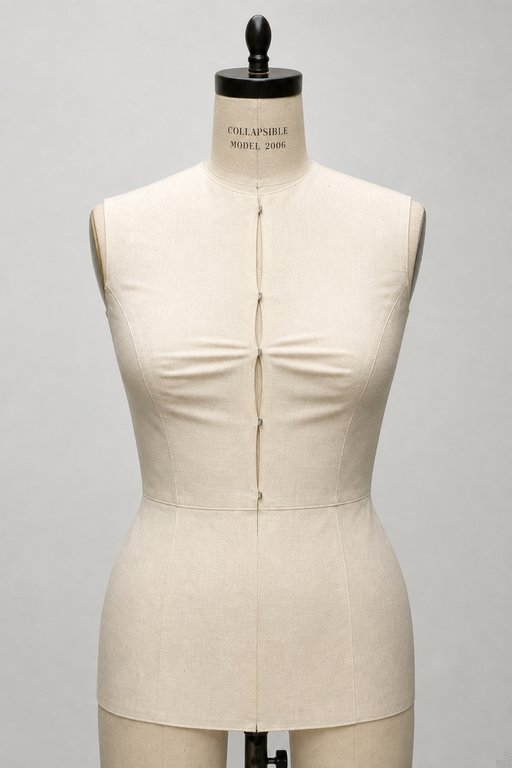
Horizontal strain lines and a gaping front closure show that the bodice lacks sufficient bust circumference and shaping. A full-bust adjustment may be required.
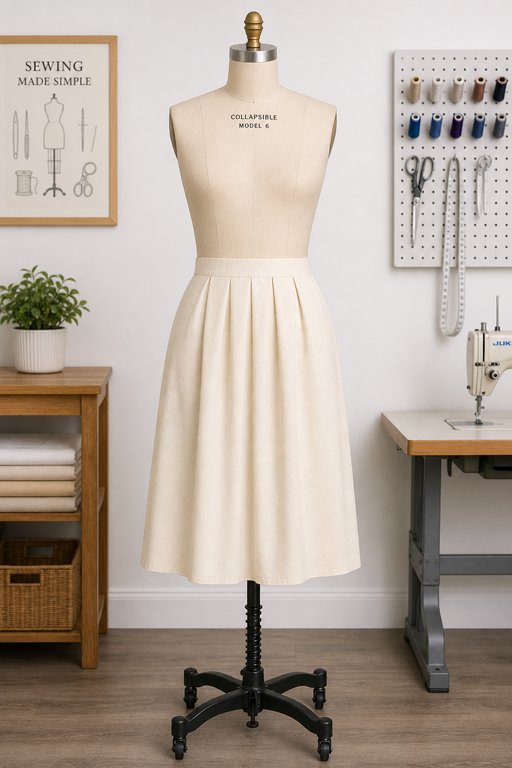
Soft vertical folds generally appear when more circumference is present than the body requires. Removing controlled width can improve the fit while preserving ease.
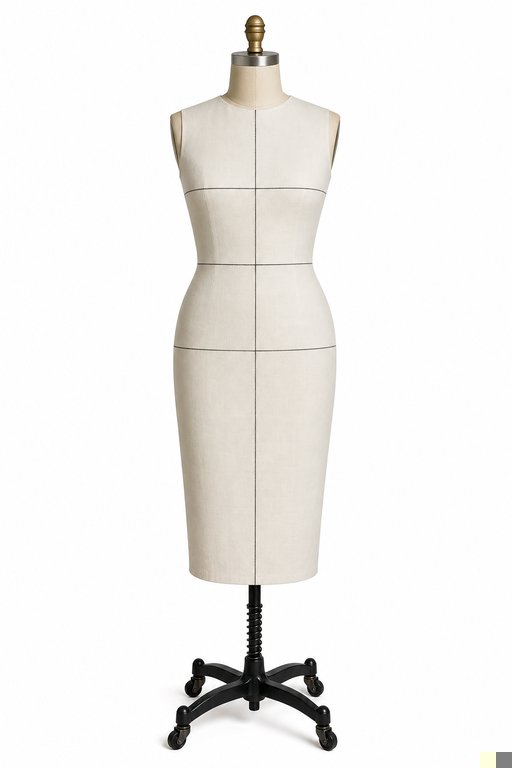
Horizontal balance lines should remain level on a standing figure. Tilting or distortion helps reveal length, posture, or circumference problems.
A full-bust adjustment adds the width and length needed to cover a fuller bust while minimizing changes to the neckline, shoulder, and upper chest.
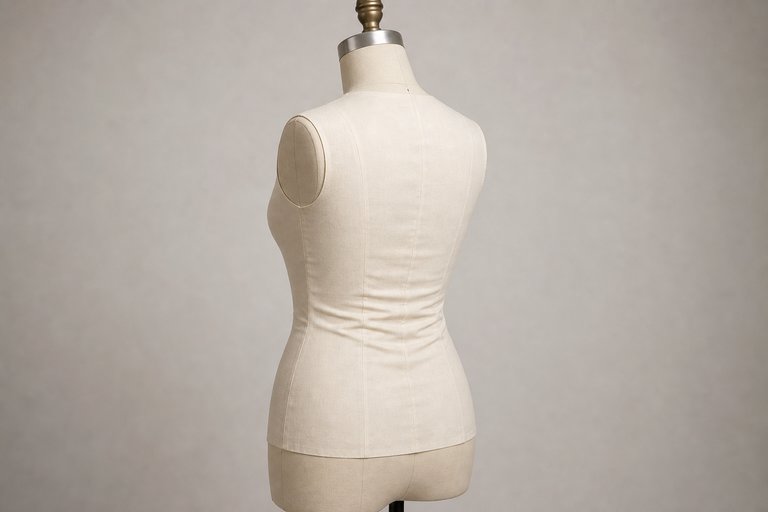
Lower-back pooling commonly indicates excess vertical length over a curved or swayback posture. A swayback adjustment removes that surplus without unnecessarily reducing hip width.
A rounded upper back requires additional fabric length over the curve. A high-round-back adjustment supplies that length without enlarging the neckline unnecessarily.
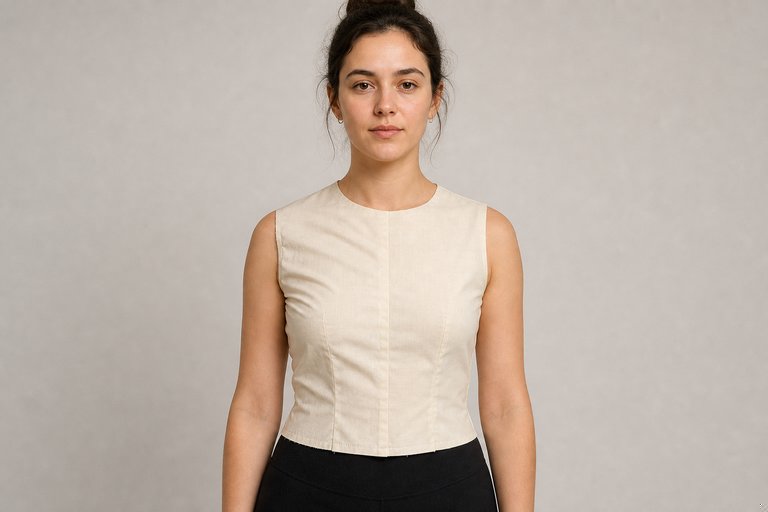
Visible body asymmetry may require separate left and right corrections. Treating both sides identically can leave drag lines or an uneven neckline and hem.
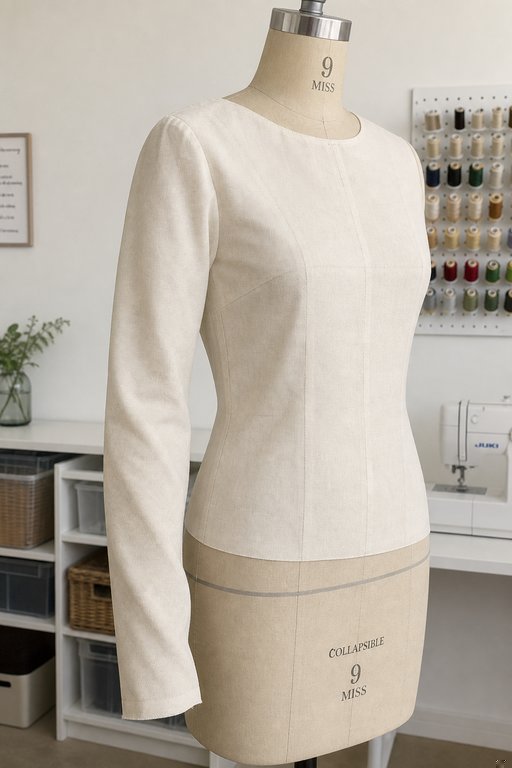
Sleeve pitch controls how the sleeve hangs relative to the arm. A pitch mismatch or incorrect notch alignment can make an otherwise adequately sized sleeve twist.
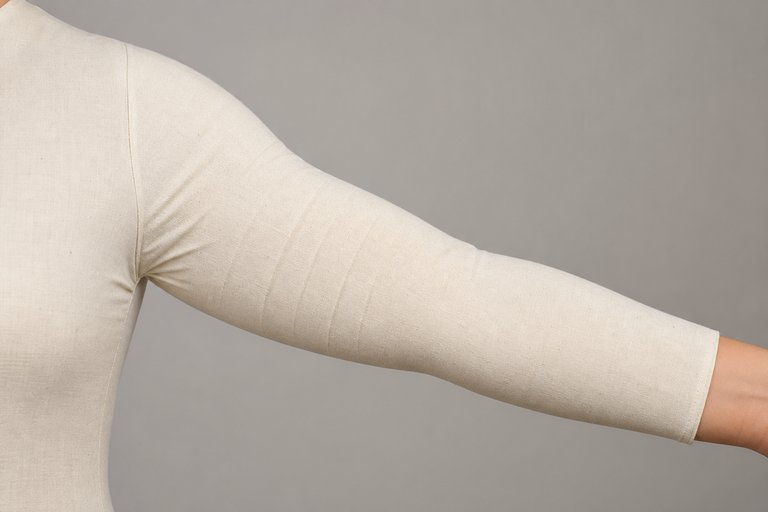
Horizontal tension across the upper arm indicates inadequate biceps circumference. A biceps adjustment adds width while controlling changes to the sleeve cap and wrist.
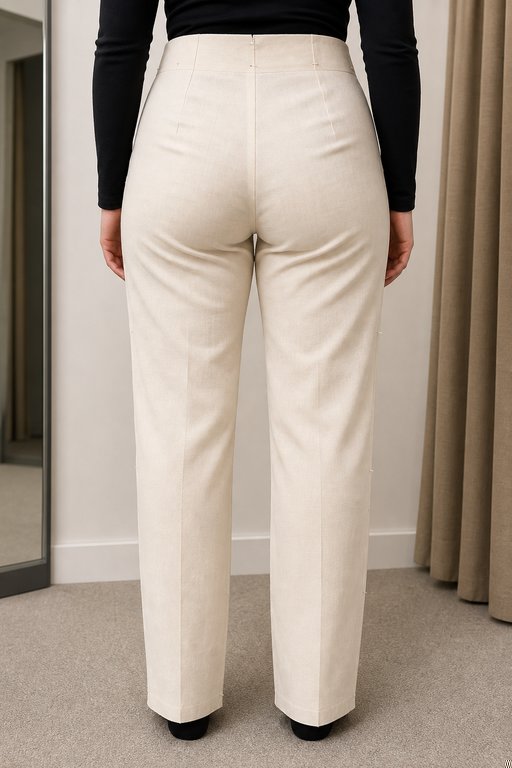
Tight wrinkles curving upward beneath the seat usually indicate that the back crotch lacks enough length or extension to travel comfortably around the body.
When the hips and seat fit but the back waist gaps, the excess is localized at the waist. It should be removed there rather than through the full length of the garment.
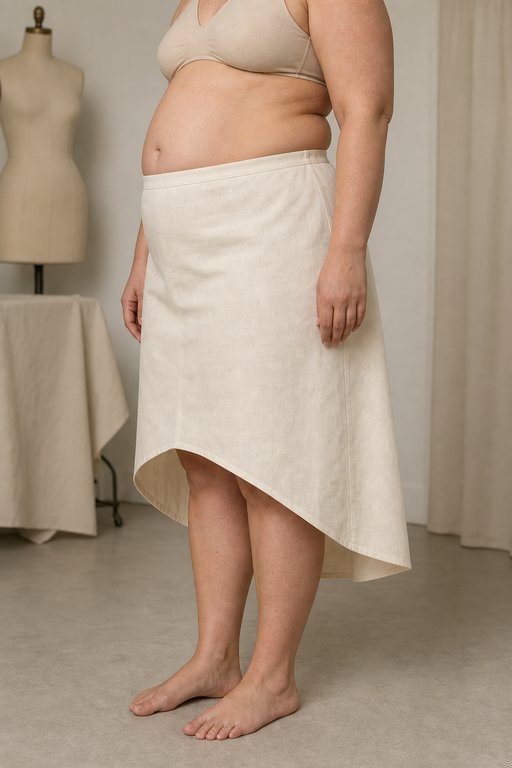
A prominent abdomen requires additional vertical length for the fabric to travel over the curve. Adding front length allows the hem to return to level.
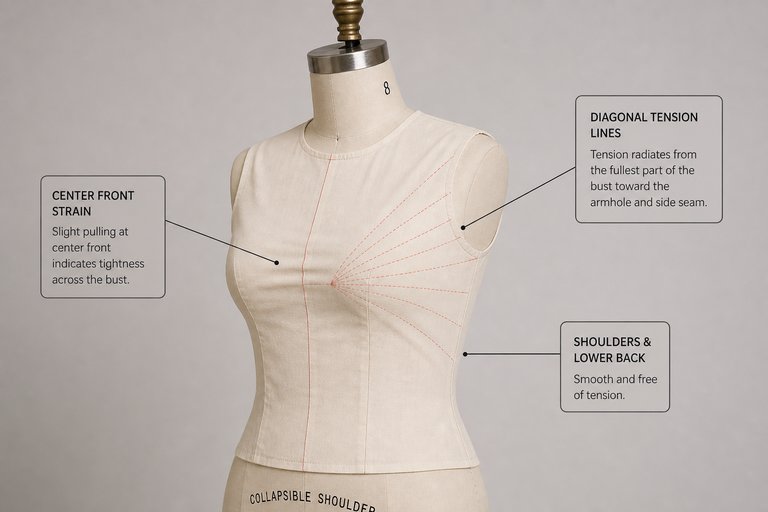
Drag lines point toward the area needing more room. When they radiate from the bust and the center front strains, the bodice usually lacks adequate bust volume.
A dart should usually end before the fullest point of the bust. The appropriate distance varies with bust fullness, but moving the point back creates smoother shaping.
Length and balance influence how the entire garment hangs. Correcting them first prevents later width and shaping changes from being based on a distorted fit.
For a symmetrical figure, balanced changes at corresponding seams help preserve grainlines and garment balance. Genuine body asymmetry is an exception and should be fitted separately.
Curved seam allowances can restrict a neckline, armhole, or other concave edge. Careful clipping releases that tension so the true fit can be evaluated.
Extra seam allowance provides flexibility to let out or move a seam during fitting. It cannot replace accurate grainlines, balance marks, or repeated evaluation.
Approved changes must be transferred accurately to the pattern. The revised seams, curves, darts, grainlines, and adjoining seam lengths should then be checked before cutting.
Free CourseDressmaking for beginners
5

(1)

1h02m
Free CourseBeginner Start Up Sewing Guide
5
(2)
1h29m

4 exercises
Free CourseSewing your own clothes
5
(3)
19m
2 exercises

Free CourseCrochet Classes for Beginners
5
(1)
5h03m
24 exercises
Free CourseDressmaking for beginners
5
(2)
53m
9 exercises
Free CourseBeginners Sewing Tutorials
4.7

(93)
4h01m
10 exercises
Free CourseSewing complete classes
4.6
(10)
10h02m
30 exercises
Free CourseLearn to Sew
4.5
(32)
8h49m
12 exercises
Thousands of online courses in video, ebooks and audiobooks.
To test your knowledge during online courses
Generated directly from your cell phone's photo gallery and sent to your email

Download our app via QR Code or the links below:.


Carry knowledge in your pocket.
Download the Cursa app.
There are hundreds of free courses available, with a free certificate of completion that is saved in your mobile image gallery.
Download the app to access the Course Completion Certificate for Free.


+ 10 million
students

Free and Valid
Certificate

60 thousand free
exercises

4.8/5 rating in
app stores

Free courses in
video and ebooks