The course demonstrates how to take body measurements, draft a fitted template, and build a reinforced DIY dress form for accurate fitting.

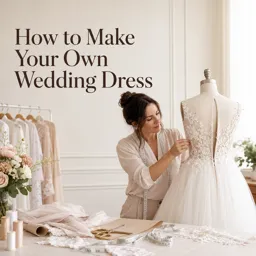
Duration of the online course: 2 hours and 51 minutes
New
Sew a stunning wedding dress with this free online course—build a custom dress form, master fit, lace, zippers, and finish like a pro.
Creating your own wedding dress is one of those projects that feels impossible until you understand the process behind a professional finish. This free online course guides you through the full journey of making a bridal gown that looks refined, fits your body, and holds up through a long day of movement, photos, and celebration. Instead of guessing your way through delicate fabrics, you will learn practical methods that help you work with precision, especially when your design includes sheer mesh, the bare skin effect, lace motifs, and structured bodice details.
A standout part of the learning experience is the focus on fit. You will build and refine a DIY dress form based on your measurements, then use it as a reliable foundation for shaping, placing seams, and keeping balance in the garment. This makes a major difference when working with very elastic materials or fine mesh, where small measurement errors can quickly turn into distortion. You will see how professionals mark key lines, control seam allowances, and keep the dress aligned so the front, sides, and back sit exactly where they should.
As you progress, the course shows how to prepare supportive elements and clean closures for a high-end look. You will understand thoughtful choices like adjusting underwire length for comfort and shape, selecting a blind zipper for delicate see-through areas, and using the right presser foot to stitch close and neat without damaging the fabric. You will also learn how to plan lace placement so motifs look intentional, symmetrical, and flattering, and how to handle stitches and seams that disappear into sheer layers.
The skirt portion moves from planning and fabric calculations to cutting, refining the shape, and joining pieces without twisting or warping—especially important when adding gathering, a train, or a lace overlay. Finishing details are treated with the same care, including techniques to keep decorative elements laying flat and the waist join looking smooth and stable. By the end, you will not only have a clearer path to a wedding gown you can be proud of, but also transferable fashion and sewing skills you can apply to future custom garments.

Explore free online Do It Yourself courses designed to help you master practical DIY skills from home. Learn home improvement, crafts, repairs, decorating, woodworking, and creative projects at your own pace. Each course is completely free and includes a certificate of completion, making it easy to build new skills, boost your confidence, and showcase your achievements.

Explore free online dressmaking courses with certificates and learn essential sewing skills from home. Master pattern cutting, garment construction, fabric selection, alterations, finishing techniques, and more through flexible lessons for beginners and aspiring designers. Enrol today to build practical fashion skills and earn a certificate.

2 hours and 51 minutes of online video course

Digital certificate of course completion (Free)

Exercises to train your knowledge

100% free, from content to certificate
How do you create a custom dress form for sewing a wedding dress?
The course demonstrates how to take body measurements, draft a fitted template, and build a reinforced DIY dress form for accurate fitting.
What fabric creates a bare-skin illusion in a wedding dress bodice?
Fine nude stretch mesh is typically used to create the bare-skin effect while supporting lace appliqués and bodice details.
How do you sew an invisible zipper into a mesh wedding dress?
Use a blind zipper with the tape folded inward, then stitch close to the teeth with a zipper presser foot for a clean, discreet finish.
Ready to get started?Download the app and get started today.
Install the app now
to access the course
Over 5,000 free courses
Programming, English, Digital Marketing and much more! Learn whatever you want, for free.

Study plan with AI
Our app's Artificial Intelligence can create a study schedule for the course you choose.

From zero to professional success
Improve your resume with our free Certificate and then use our Artificial Intelligence to find your dream job.
You can also use the QR Code or the links below.



Free CourseDressmaking for beginners
5

(1)

1h02m
Free CourseBeginner Start Up Sewing Guide
5
(2)
1h29m

4 exercises
Free CourseSewing your own clothes
5
(3)
19m
2 exercises
Free CourseCrochet Classes for Beginners
5
(1)
5h03m
24 exercises
Free CourseDressmaking for beginners
5
(2)
53m
9 exercises
Free CourseBeginners Sewing Tutorials
4.7

(93)
4h01m
10 exercises
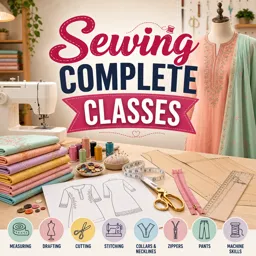
Free CourseSewing complete classes
4.6
(10)
10h02m
30 exercises
Free CourseLearn to Sew
4.5
(32)
8h49m
12 exercises
Free CourseThe basics of Sewing
4.5
(2)
26m
6 exercises
Free CourseSewing
4.5
(26)
6h13m
3 exercises
Carry knowledge in your pocket.
Download the Cursa app.
There are hundreds of free courses available, with a free certificate of completion that is saved in your mobile image gallery.
Download the app to access the Course Completion Certificate for Free.


+ 10 million
students

Free and Valid
Certificate

60 thousand free
exercises

4.8/5 rating in
app stores

Free courses in
video and ebooks