
Exercises
This quiz examines practical strategies for maintaining hydration and regulating body temperature during physical activity. Questions cover sweat-rate calculations, fluid and electrolyte replacement, environmental heat stress, acclimatization, warning signs of heat illness, emergency cooling, and hydration in different climates. Use the scenarios and visual cues to evaluate safe, evidence-based decisions for exercise and healthy living.
Answer the questions below and check the explanation for each answer.
0/19 answered
Auto audio on: the next questions will be read aloud when you click Continue.
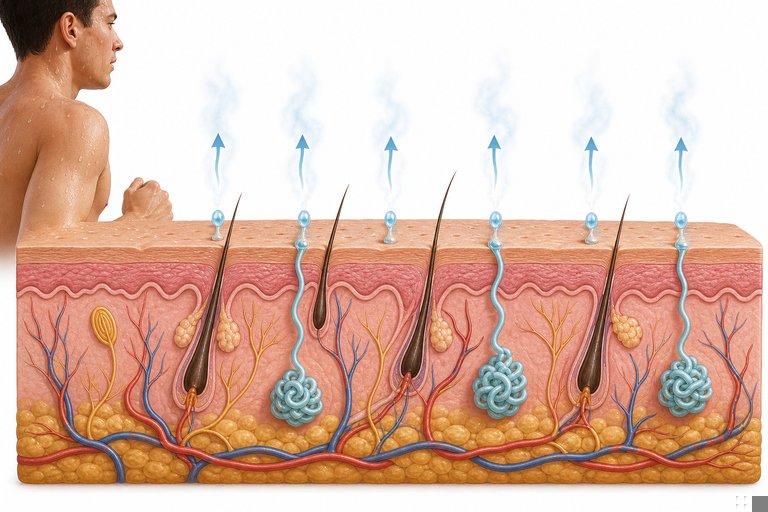
Evaporation removes heat when liquid sweat changes into vapor. It is the body's main cooling mechanism during vigorous exercise, especially when air temperature is high.
Mass loss was 0.8 kg, approximately 0.8 L of fluid. Adding the 0.5 L consumed gives a total sweat loss of 1.3 L over one hour, so the estimated rate is 1.3 L per hour.
Two percent of 75 kg is calculated as 75 × 0.02, which equals 1.5 kg. A loss of this size can impair performance, particularly during prolonged exercise in the heat.
Exercise-associated hyponatremia occurs when blood sodium becomes abnormally diluted, often because fluid intake exceeds losses. Severe cases can cause confusion, seizures, or coma.
A practical guideline is approximately 5–7 mL per kg around four hours before exercise. This allows time for fluid absorption and for excess fluid to be excreted.
Sodium is a major electrolyte lost in sweat. Replacing it during prolonged, sweaty exercise can support thirst, fluid retention, and maintenance of fluid balance, although individual needs vary.
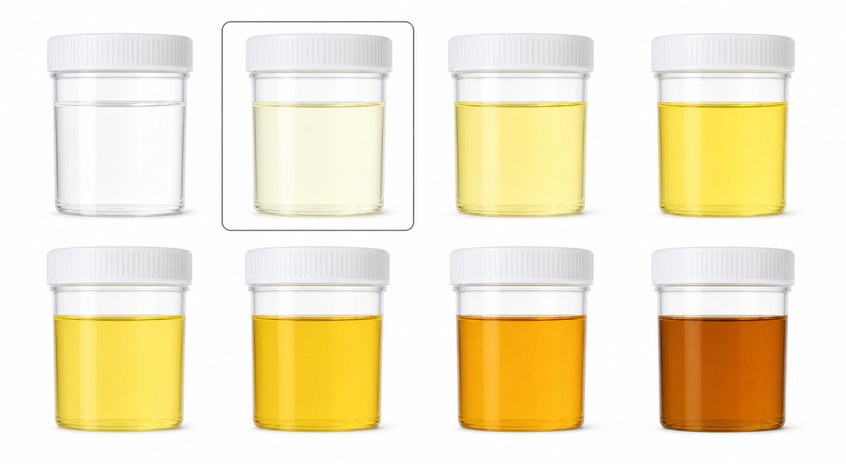
Pale straw-colored urine generally suggests adequate hydration. Urine color is only a screening clue, however, and can be affected by supplements, foods, medications, and recent fluid intake.
Heat acclimatization typically produces earlier and more effective sweating, better skin blood flow, expanded plasma volume, and more dilute sweat. These adaptations reduce physiological strain at a given workload.
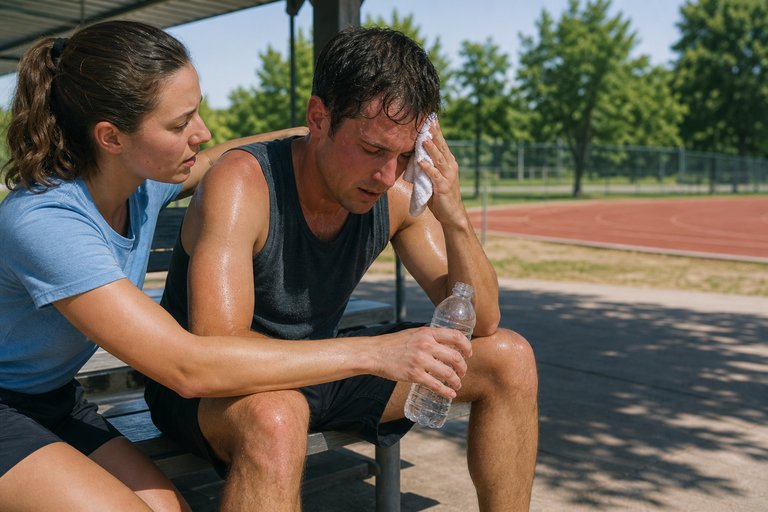
Heavy sweating, weakness, dizziness, nausea, and headache are characteristic of heat exhaustion. Exercise should stop, and the person should be moved to a cooler setting and monitored.
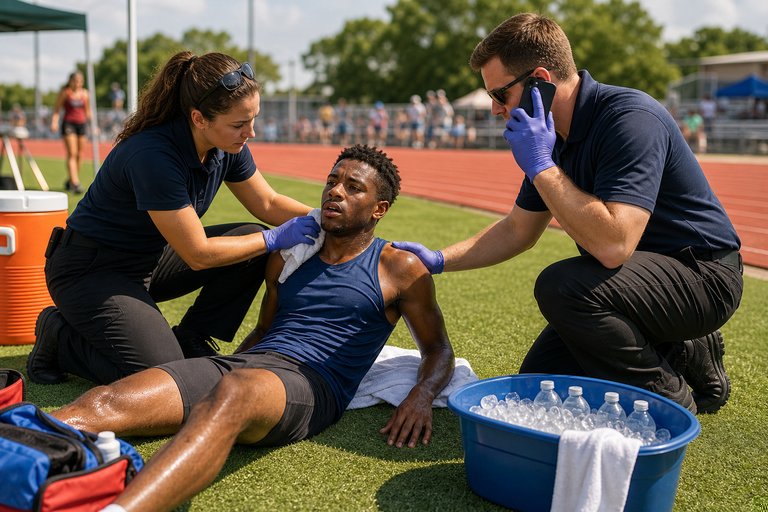
Confusion or altered behavior during heat exposure suggests exertional heat stroke, a medical emergency. Activate emergency services and begin rapid cooling, ideally cold-water immersion, without unnecessary delay.
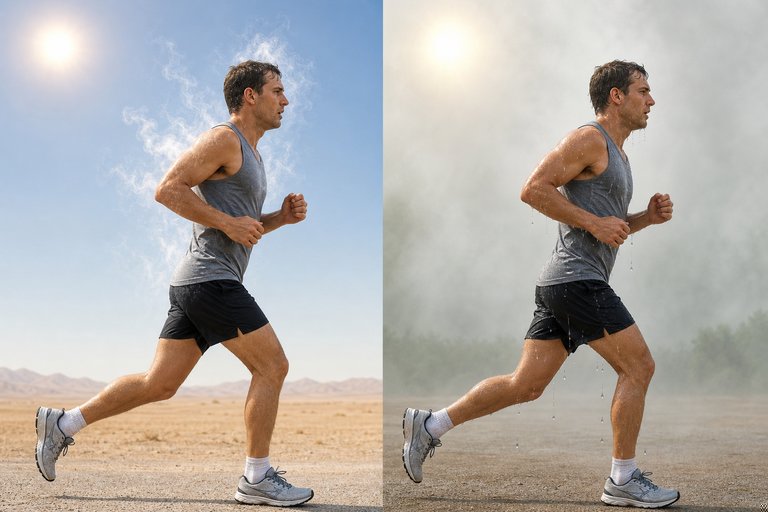
Humid air already contains substantial water vapor, so sweat evaporates less efficiently. Sweat may remain on the skin or drip off without removing as much body heat.
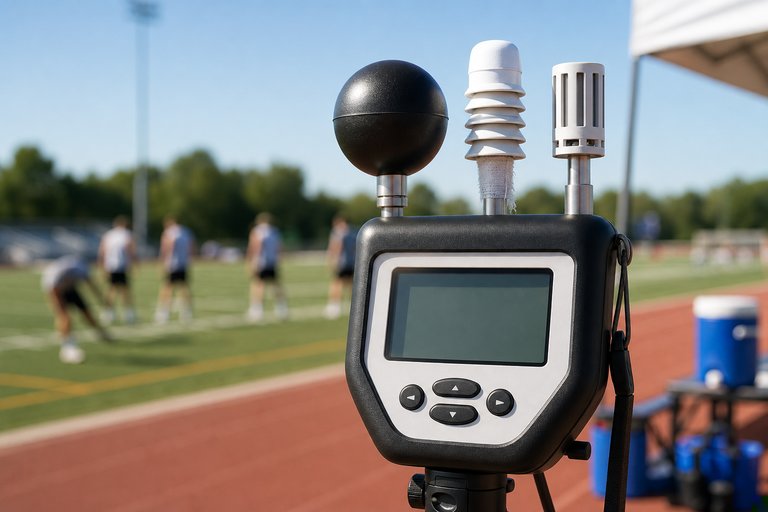
WBGT estimates environmental heat stress by considering temperature, humidity, radiant heat, and air movement. It is more useful for activity planning than air temperature alone.
During long, vigorous sessions, a sports drink can provide fluid, carbohydrate for energy, and electrolytes such as sodium. Plain water is generally sufficient for many shorter or lower-intensity sessions.
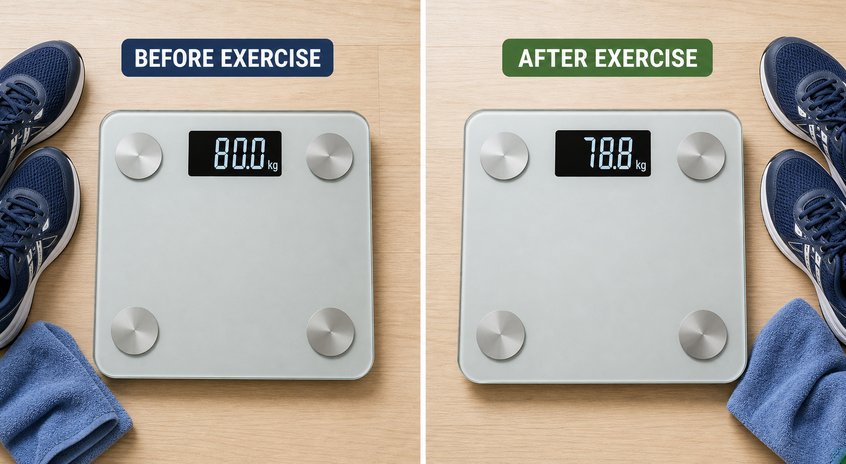
The loss is 1.2 kg. Dividing 1.2 by the initial 80.0 kg and multiplying by 100 gives 1.5%. Consistent pre- and post-exercise weighing can help estimate individual fluid loss.
Replacing roughly 125–150% of a fluid deficit may be appropriate when rapid recovery is needed because sweating and urine production can continue. Sodium-containing fluids and meals can improve retention.
Thirst is useful, but it may not always prompt enough intake to match high sweat losses during demanding heat exposure. An individualized plan should consider thirst, sweat rate, session duration, and conditions while avoiding overdrinking.
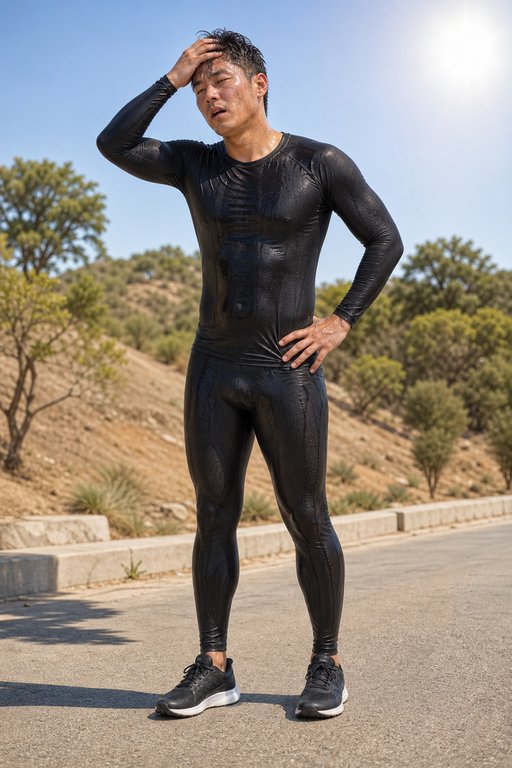
Lightweight, loose, breathable clothing promotes air circulation and sweat evaporation. Lighter colors can also reduce heat absorbed from solar radiation compared with dark clothing.
A liter contains 10 portions of 100 mL. Therefore, 60 g per liter equals 6 g per 100 mL, which is a 6% carbohydrate solution.
Cold conditions do not eliminate fluid loss. Athletes may sweat beneath insulated clothing, lose water through breathing, experience cold-induced urine production, and feel less thirsty than expected.

Free CourseKettlebell Workout
5

(16)

7h47m

16 exercises

Free CourseHow to do Pilates
5
(1)
2h26m
26 exercises

Free Course30 minutes of Dumbells Workout
5
(1)
32m
4 exercises

Free CourseHIIT Workout
5
(2)
4h08m
8 exercises

Free CoursePilates for all
5
(1)
9h57m
14 exercises

Free CourseRecovery exercises for Athletes
5
(3)
33m
5 exercises

Free CourseExercises to Lose Weight
4.9
(40)
11h23m
26 exercises

Free Course30 Days of Yoga
4.8
(94)
11h35m
21 exercises
Thousands of online courses in video, ebooks and audiobooks.
To test your knowledge during online courses
Generated directly from your cell phone's photo gallery and sent to your email

Download our app via QR Code or the links below:.



Carry knowledge in your pocket.
Download the Cursa app.
There are hundreds of free courses available, with a free certificate of completion that is saved in your mobile image gallery.
Download the app to access the Course Completion Certificate for Free.


+ 10 million
students

Free and Valid
Certificate

60 thousand free
exercises

4.8/5 rating in
app stores

Free courses in
video and ebooks