Exercises
Put your mobile phone screen repair skills to the test with questions covering the essential steps of screen replacement. Explore safe preparation before disassembly, common repair tools, heat-assisted adhesive removal, and the components that control touchscreen functionality. You will also review signs that a screen needs repair beyond obvious cracks, proper handling of replacement displays, transferring reusable parts, and the added challenges of repairing water-resistant phones. Finish by troubleshooting common post-installation issues, such as display distortion or unusual colors. This quiz is ideal for beginners, DIY repair enthusiasts, and anyone looking to strengthen their smartphone repair fundamentals.
Answer the questions below and check the explanation for each answer.
0/10 answered
Auto audio on: the next questions will be read aloud when you click Continue.
A torque wrench is primarily used to precisely apply a specific torque to a fastener, such as a nut or bolt, and is commonly utilized in the automotive and engineering fields. It is not typically used in mobile phone screen replacement, where tools like a heat gun, hairdryer, and suction cup are standard for dismantling and assembling phone parts.
The first thing to do before removing the screen is to turn the phone off. This ensures safety and prevents any potential short circuits or data loss. After turning it off, the next steps would be to disconnect the battery and ensure there are no power connections.
The digitizer is responsible for the touch functionality of a phone screen. It is a thin transparent layer that detects touch inputs and converts them into digital signals for the device to process.
A heat gun is used in the screen removal process to melt the adhesive securing the screen to the device. This softens the glue, allowing for easier removal of the screen without causing damage to the device or the screen itself.
An unresponsive touch screen indicates a need for screen repair because it suggests that the screen may be damaged or not functioning properly, even if there are no visible cracks. Other options like sluggish phone performance and low battery life are typically linked to software issues or battery conditions, not screen damage.
The best practice is Option 2: Wearing gloves to prevent fingerprints and oil residues. This practice ensures that no fingerprints or natural oils from the hands are transferred onto the screen, which can hinder performance or lead to installation issues. Direct touching might introduce dirt or scratches, while cleaning with alcohol wipes immediately could potentially damage some protective coatings on the new screen.
A loose cable connection is a common issue that can lead to display problems. If the cable connecting the screen to the phone's motherboard isn't properly connected, the display might not function correctly. It is more likely than a faulty screen, especially if the screen was just replaced.
When replacing a screen, it's common for some components like the speaker mesh and the home button to be reused from the old screen, especially if the new screen doesn't include them. Therefore, All of the above (Option 3) is often the correct choice, ensuring the device retains full functionality.
When replacing the screen on a waterproof or water-resistant phone, the most difficult part is maintaining the water-resistant seal. After a screen is replaced, ensuring that the phone remains water-resistant requires careful reapplication of the adhesive and seals that protect the device from moisture. This step is crucial to prevent any potential water damage after the repair.
A loose connection is a common cause of display issues like distortions or unusual colors. When a screen's connection is not secure, it can result in poor signal transmission, leading to display anomalies. Ensuring the connection is tight and secure can often resolve these visual problems. Other options might be relevant but are less likely in case of a newly installed screen.
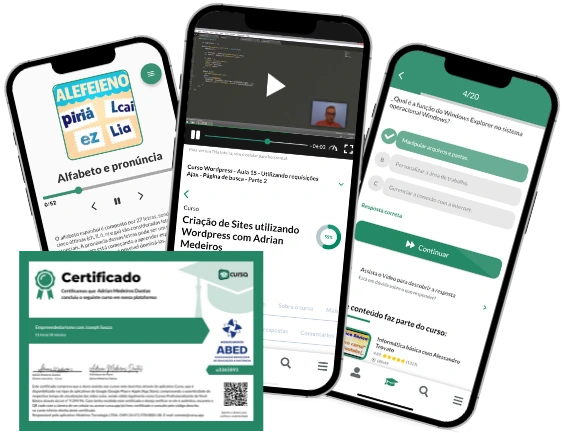
Thousands of online courses in video, ebooks and audiobooks.
To test your knowledge during online courses
Generated directly from your cell phone's photo gallery and sent to your email

Download our app via QR Code or the links below:.


Carry knowledge in your pocket.
Download the Cursa app.
There are hundreds of free courses available, with a free certificate of completion that is saved in your mobile image gallery.
Download the app to access the Course Completion Certificate for Free.


+ 10 million
students

Free and Valid
Certificate

60 thousand free
exercises

4.8/5 rating in
app stores

Free courses in
video and ebooks