Exercises
This quiz assesses practical knowledge of diagnosing and remediating liquid damage in mobile devices. Topics include emergency handling, liquid contact indicators, corrosion identification, safe logic-board cleaning, ultrasonic cleaning, multimeter tests, current-limited power analysis, thermal imaging, connector damage, data recovery priorities, and post-repair sealing. The questions range from foundational safety procedures to advanced board-level diagnostic techniques.
Answer the questions below and check the explanation for each answer.
0/20 answered
Auto audio on: the next questions will be read aloud when you click Continue.
Removing power limits short circuits and electrochemical corrosion. The battery should be disconnected as soon as the device can be opened safely.
Conductive liquid can bridge electrical nodes. Applying charger power may produce damaging current and accelerate corrosion through electrochemical reactions.
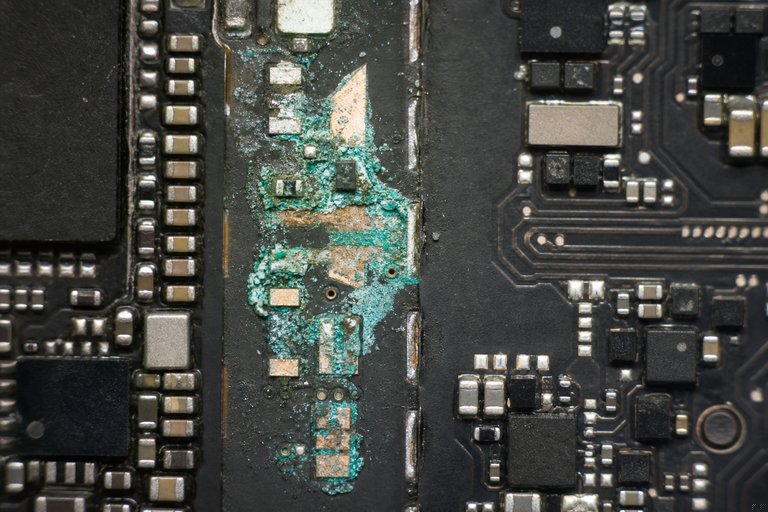
Blue-green deposits are commonly associated with corrosion products formed when copper reacts in the presence of moisture and contaminants.
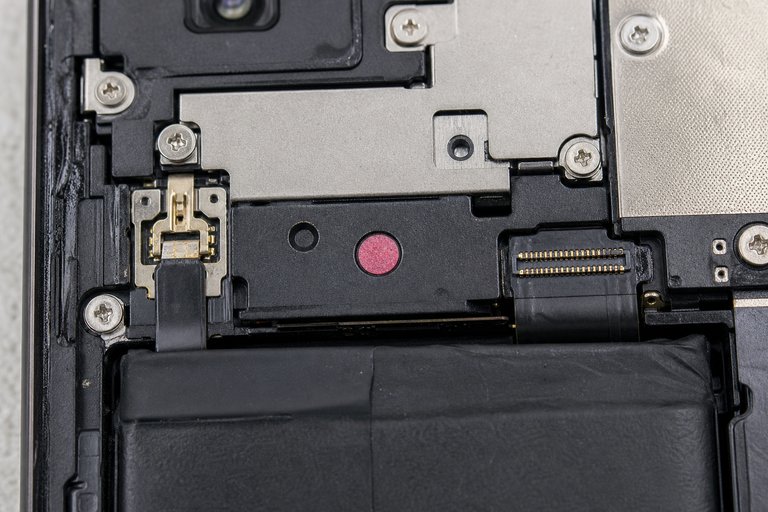
An activated indicator documents moisture contact near its location. It does not identify every affected area or prove that a specific component has failed.
Saltwater contains mobile ions that increase electrical conductivity and support rapid corrosion. Salt residue remains after evaporation and can continue attracting moisture.
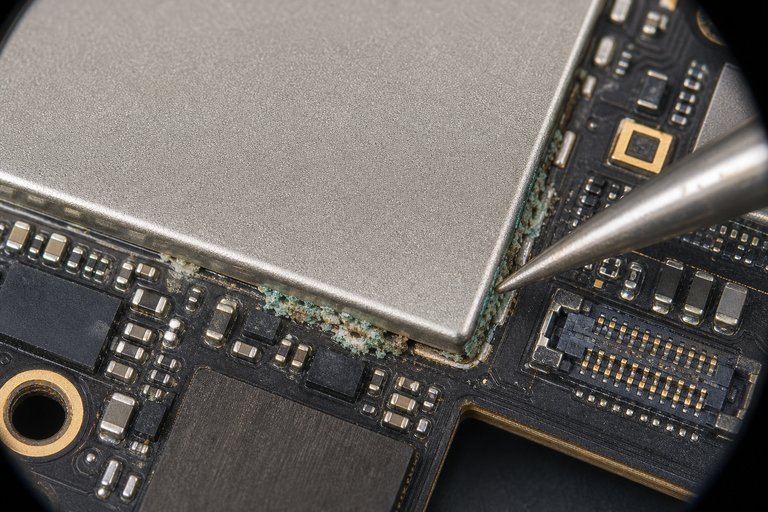
Liquid can travel beneath board shields by capillary action. Removing an affected shield permits inspection and cleaning of otherwise hidden components.
High-purity isopropyl alcohol evaporates quickly and introduces less water than diluted products. Additive-free electronics-grade products are preferred.
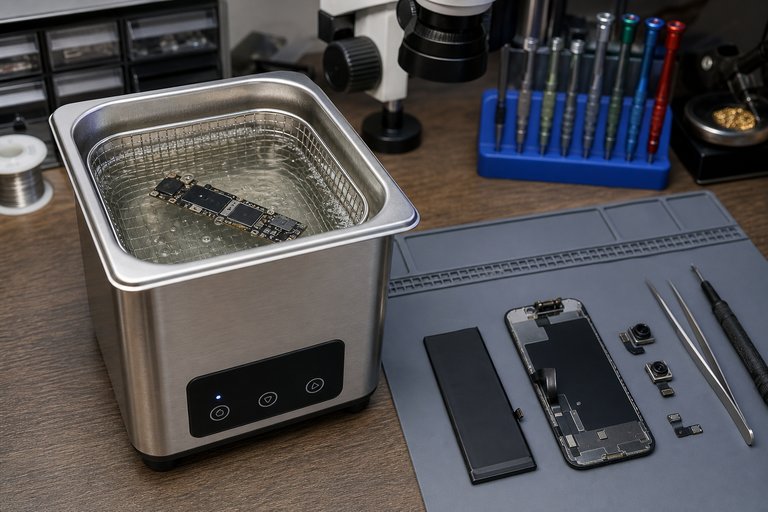
Ultrasonic cleaning is generally limited to suitable bare-board assemblies. Batteries and sensitive modules can be damaged by immersion and may retain solution.
Moisture can remain beneath shields and packages after surfaces appear dry. The board should be fully dried and electrically checked before controlled power is applied.
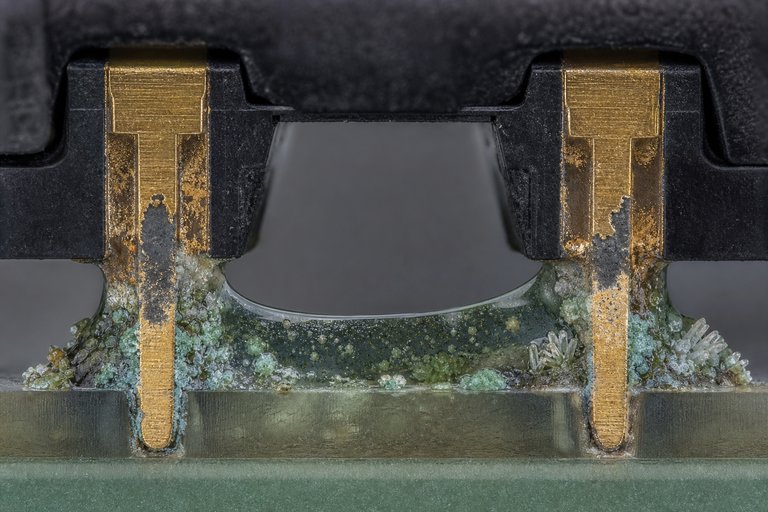
Voltage across a conductive liquid enables electrochemical reactions. Metal can dissolve, migrate, and form conductive deposits between nearby nodes.
Many healthy boards draw little or no current before startup is requested. Significant immediate draw can indicate leakage or a short on a rail that is already active.
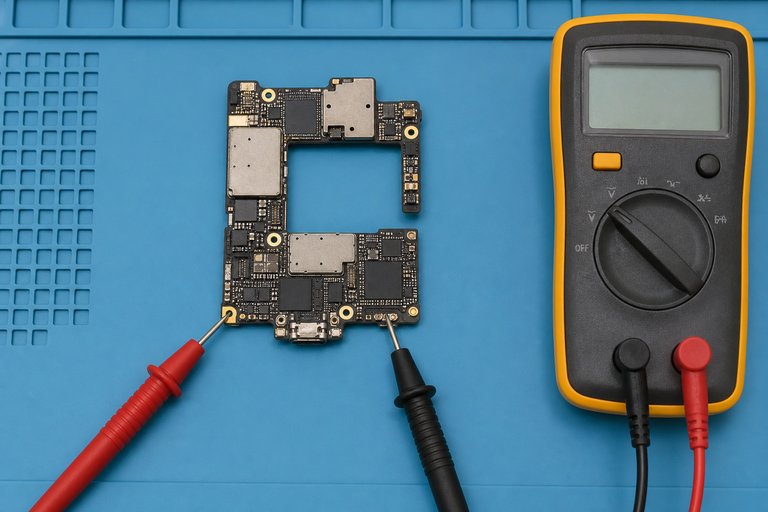
A resistance, continuity, or diode-mode check can help detect an abnormal path between the main positive rail and ground. Readings must be interpreted against expected values.
User data is normally tied to storage and security hardware on the original board. Board replacement or a factory reset does not recover that original data.
Rice cannot clean conductive residue or stop corrosion hidden under shields and components. It may delay the disconnection, inspection, and cleaning the device needs.
Galvanic corrosion requires an electrolyte and electrically connected materials with different electrochemical potentials. Contaminated liquid can provide the electrolyte.
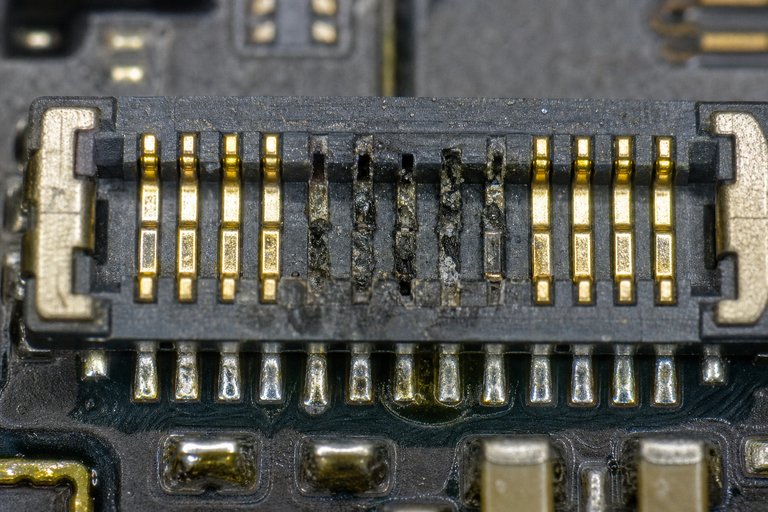
Cleaning cannot restore metal that has been eaten away. A connector with missing or severely pitted contacts should be replaced, with pad and trace repairs performed where necessary.
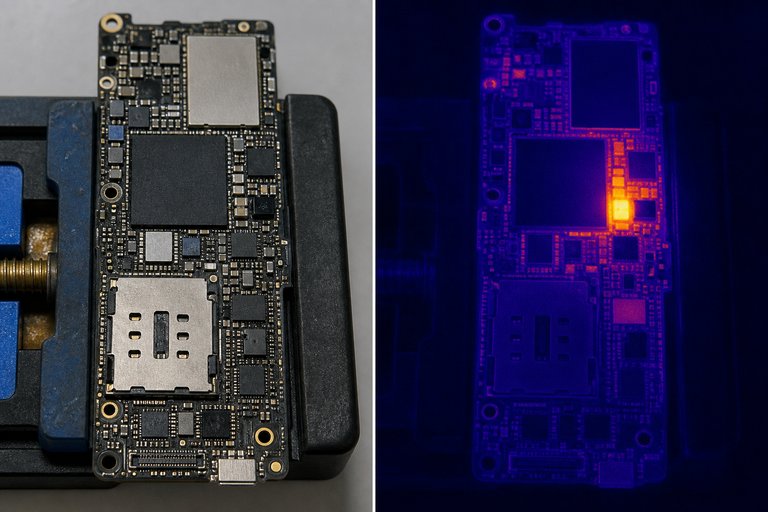
A localized hot spot identifies where electrical energy is being dissipated. It is a diagnostic clue that must be confirmed because heat can spread from the actual fault.
Pre-cleaning photographs preserve evidence that cleaning may remove. They support diagnosis, repair planning, reassembly, and clear communication with the device owner.
Seal performance depends on adhesive quality, frame condition, installation, and validated pressure testing. A repair alone does not guarantee the original factory rating.
Contamination hidden beneath shields, connectors, or packages can retain moisture and continue corroding conductors. A temporary recovery does not prove that remediation was complete.
Thousands of online courses in video, ebooks and audiobooks.
To test your knowledge during online courses
Generated directly from your cell phone's photo gallery and sent to your email

Download our app via QR Code or the links below:.



Carry knowledge in your pocket.
Download the Cursa app.
There are hundreds of free courses available, with a free certificate of completion that is saved in your mobile image gallery.
Download the app to access the Course Completion Certificate for Free.


+ 10 million
students

Free and Valid
Certificate

60 thousand free
exercises

4.8/5 rating in
app stores

Free courses in
video and ebooks