
Exercises
This quiz assesses essential knowledge of manual lymphatic drainage for massage therapy students. Topics include lymphatic anatomy, appropriate pressure, treatment sequencing, drainage direction, breathing techniques, contraindications, warning signs, and documentation. The questions emphasize safe, practical application while recognizing situations that require advanced training or medical referral.
Answer the questions below and check the explanation for each answer.
0/10 answered
Auto audio on: the next questions will be read aloud when you click Continue.
Manual lymphatic drainage uses gentle, rhythmic movements to encourage lymph uptake and transport. It is not intended to create deep muscular pressure or forceful contractions.
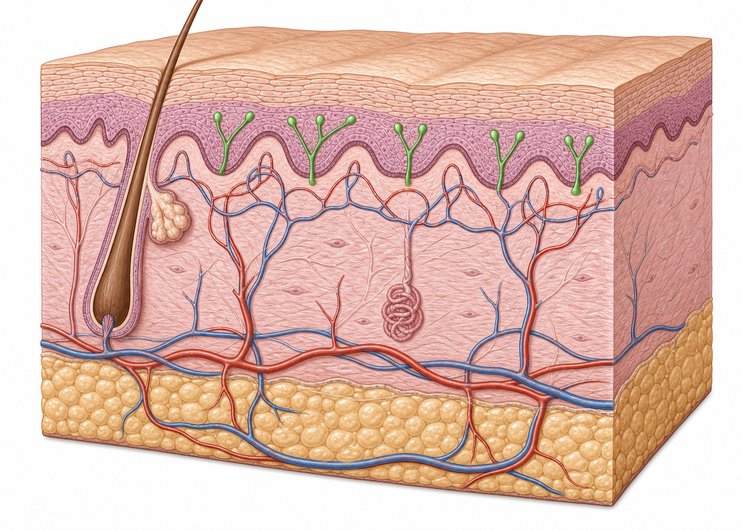
Initial lymphatic capillaries are blind-ended superficial vessels that absorb interstitial fluid. Their delicate location helps explain why manual lymphatic drainage uses light pressure.
Preparing proximal regions supports an orderly drainage route toward central lymphatic pathways. Distal areas are then addressed while maintaining the intended proximal direction of flow.
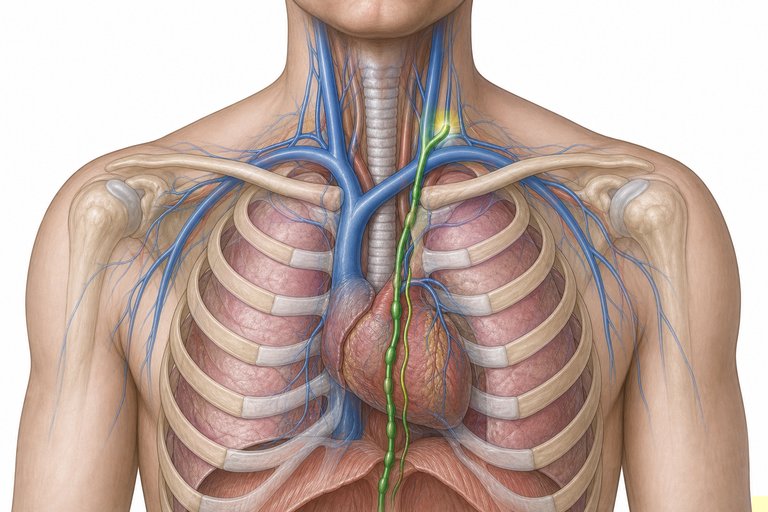
The thoracic duct empties at the left venous angle, where the left internal jugular and subclavian veins meet. This returns lymph to the venous circulation.
Acute cellulitis is an active infection requiring medical care. Massage should not be applied over the affected region because treatment may aggravate symptoms or contribute to the spread of infection.
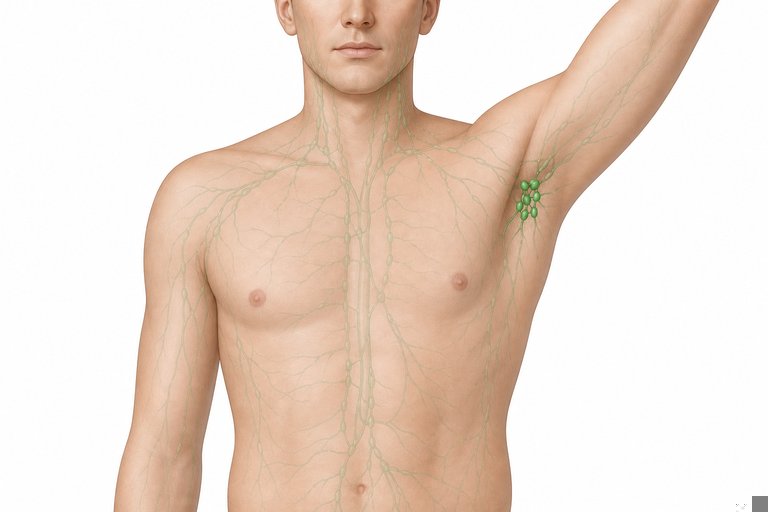
The highlighted cluster is in the armpit, identifying the axillary lymph nodes. These nodes receive lymph from much of the upper limb, chest wall, and breast region.
Sudden unilateral swelling, warmth, and pain may indicate a serious condition such as deep vein thrombosis. Massage should stop, and the client should receive prompt medical evaluation.
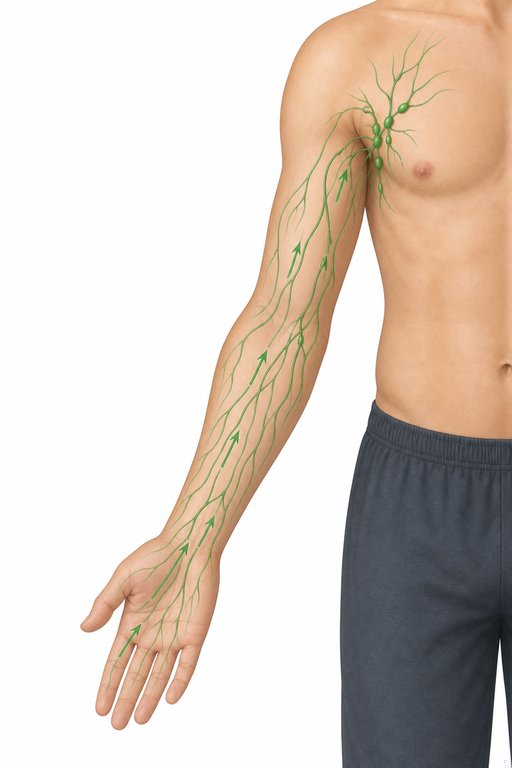
With intact pathways, strokes generally guide fluid from distal parts of the arm toward proximal axillary drainage. Surgical node removal or damaged pathways may require specialized rerouting by a trained practitioner.
Diaphragmatic movement creates changing pressures in the chest and abdomen. These pressure changes can support lymph movement toward central collecting vessels and venous return.
Professional notes should record the areas treated, methods used, relevant findings, client response, and any recommendations or referrals. Massage therapists should not guarantee medical outcomes.
Free CourseThai Massage complete tutorial
5

(4)

39m

3 exercises
Free CourseThai massage course
5
(2)
1h16m
8 exercises
Free CourseThai massage
5
(4)
3h49m
11 exercises

Free CourseMassage techniques for working the Head
5
(1)
26m
3 exercises
Free CourseMassage course
4.9
(130)
1h42m
19 exercises
Free CourseDeep tissue massage techniques
4.8
(13)
22m
2 exercises

Free CourseMassage Techniques
4.7

(7)
3h32m
26 exercises
Free CourseMassage
4.4
(23)
5h07m
23 exercises
Thousands of online courses in video, ebooks and audiobooks.
To test your knowledge during online courses
Generated directly from your cell phone's photo gallery and sent to your email

Download our app via QR Code or the links below:.



Carry knowledge in your pocket.
Download the Cursa app.
There are hundreds of free courses available, with a free certificate of completion that is saved in your mobile image gallery.
Download the app to access the Course Completion Certificate for Free.


+ 10 million
students

Free and Valid
Certificate

60 thousand free
exercises

4.8/5 rating in
app stores

Free courses in
video and ebooks