
Exercises
This quiz examines how causal claims are constructed, challenged, and supported in logical arguments. You will analyze confounding variables, reverse causation, selection bias, randomized experiments, natural experiments, mediators, colliders, temporal order, and dose-response evidence. The questions range from foundational concepts to advanced causal diagrams and are designed to improve the evaluation of arguments commonly encountered in analytical reasoning and LSAT-style contexts.
Answer the questions below and check the explanation for each answer.
0/15 answered
Auto audio on: the next questions will be read aloud when you click Continue.
Neighborhood wealth is a confounding variable because it can independently explain both the availability of parks and residents' health. The observed association therefore may not reflect a causal effect of parks.
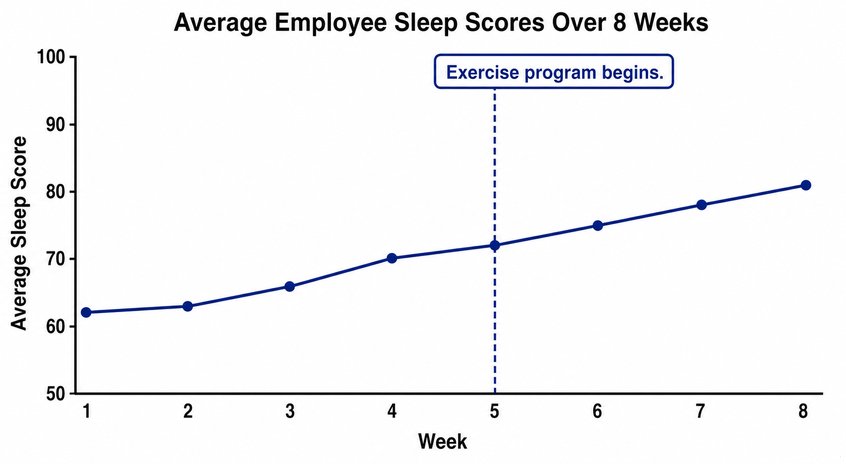
A cause must precede its effect. Because the improvement began before the program, the program cannot explain the initial improvement, although it might have influenced later scores.
Random assignment reduces systematic differences between treatment and control groups. This makes the assigned treatment, rather than a preexisting group difference, a more credible explanation of the outcome.
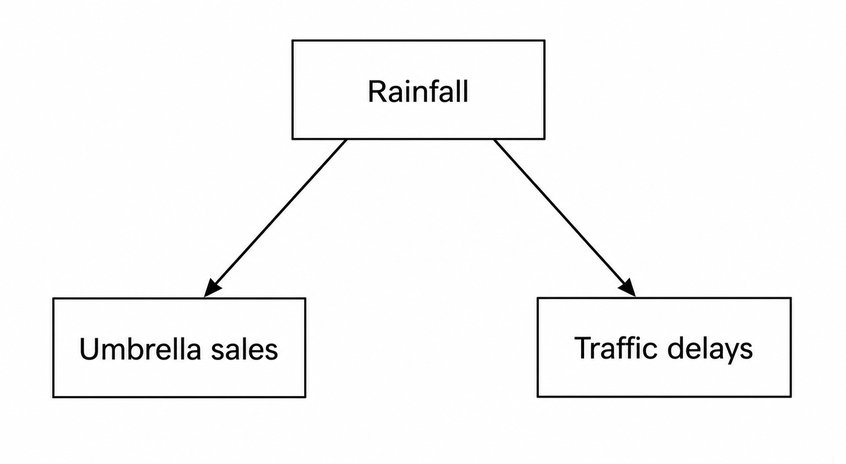
The diagram identifies rainfall as a common cause. Umbrella sales and traffic delays can move together even though neither causes the other.
If the reaction cannot occur without Z, then Z is a necessary condition. This does not make Z sufficient, because other reactants or conditions may also be required.
A randomized double-blind trial reduces selection effects, expectancy effects, and systematic differences in treatment. Its result provides much stronger causal evidence than patients' voluntary choices.
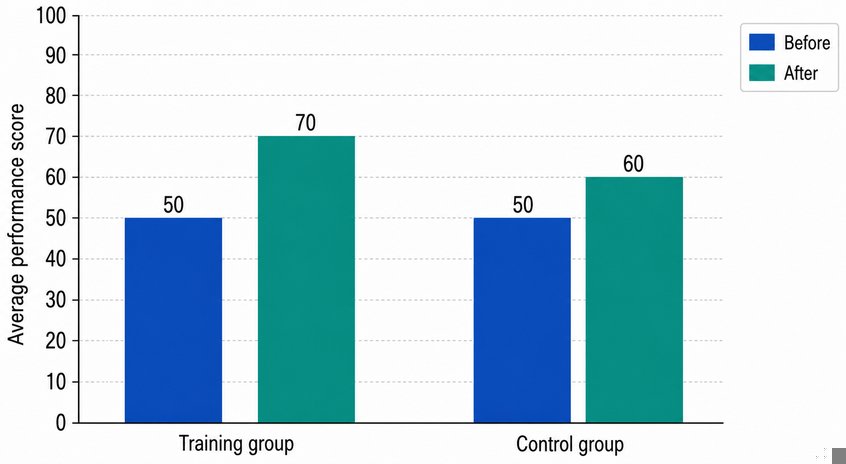
The treatment group improved by 20 points, while the control group improved by 10. The difference-in-differences estimate is 20 minus 10, or 10 points.
The sample is affected by selection bias. People using a fitness app and choosing to answer its survey are unlikely to represent the exercise habits of all adults.
A mediator lies on the causal pathway between a cause and its outcome. Here, training appears to increase confidence, which then improves sales.
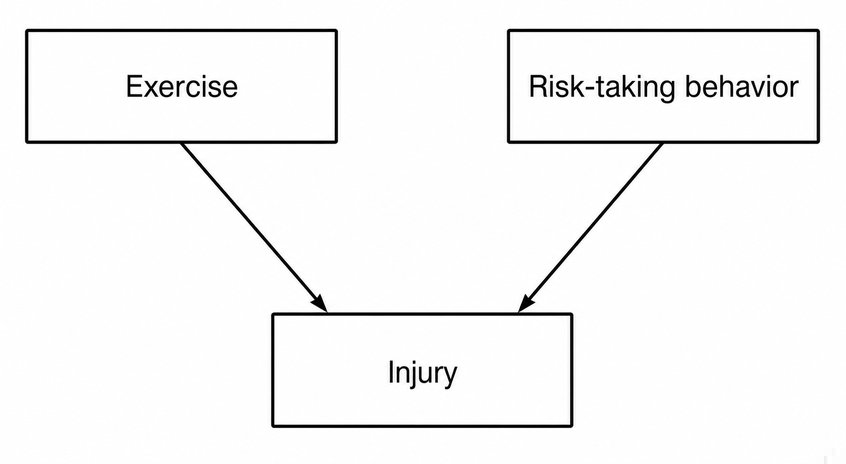
Injury is a collider because two arrows converge on it. Restricting the sample to injured people conditions on that collider and can create a misleading association between its causes.
A cutoff can create groups that are very similar except for policy exposure. This quasi-random variation can function as a natural experiment, especially near the threshold.
A preexisting height difference provides an alternative explanation for the later result. Without accounting for the baseline difference, the farmer cannot confidently attribute the outcome to the fertilizer.
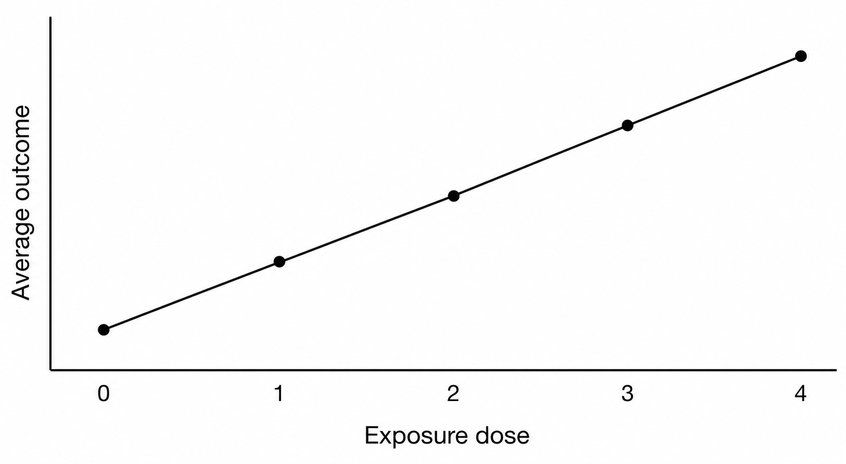
The outcome rises steadily as exposure increases. This is a positive dose-response pattern, which can support a causal hypothesis, though it does not by itself eliminate confounding.
The button press can trigger production, but it cannot do so alone. Power, material, and clearance are enabling conditions that must accompany the trigger.
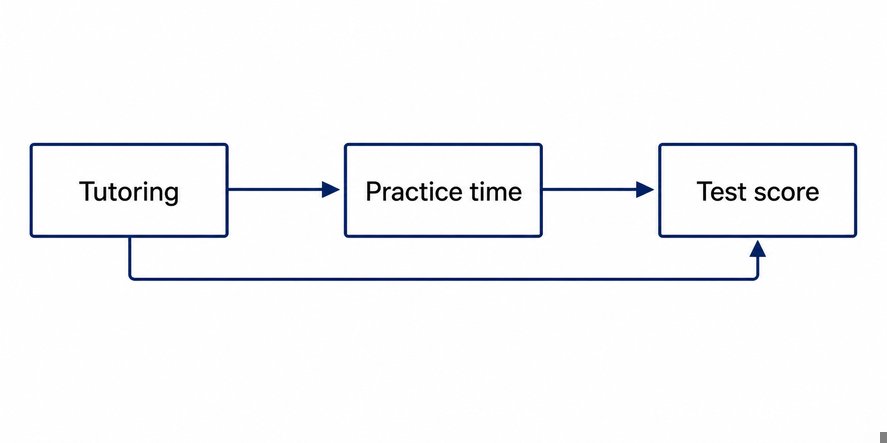
The total effect includes every directed causal path from tutoring to test score: the direct path and the indirect path mediated by practice time.
Free CourseLogical Reasoning Mini Course
5

(4)

14h39m

30 exercises
Free CourseLogical Reasoning
4.8
(5)
13h29m
2 exercises
Free CourseLogical Reasoning
4.8

(160)
11h02m
12 exercises
Free CourseLogical Reasoning
4.8
(4)
29m
5 exercises
Free CourseLogic Reasoning 101
New
4h48m
20 exercises
Free CourseLogical Reasoning for LSAT Exam
New
8h20m
8 exercises
Thousands of online courses in video, ebooks and audiobooks.
To test your knowledge during online courses
Generated directly from your cell phone's photo gallery and sent to your email

Download our app via QR Code or the links below:.


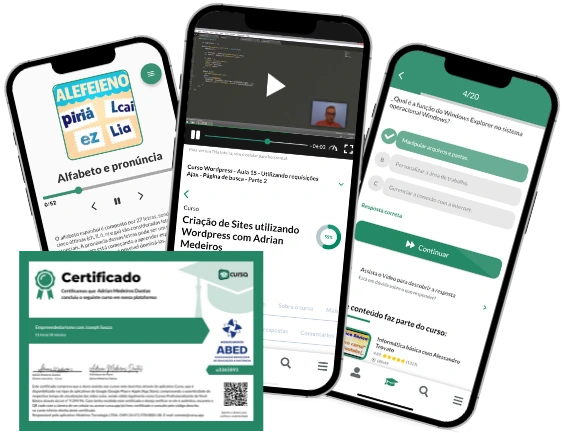
Carry knowledge in your pocket.
Download the Cursa app.
There are hundreds of free courses available, with a free certificate of completion that is saved in your mobile image gallery.
Download the app to access the Course Completion Certificate for Free.


+ 10 million
students

Free and Valid
Certificate

60 thousand free
exercises

4.8/5 rating in
app stores

Free courses in
video and ebooks