
Exercises
A well-arranged drum kit supports efficient movement, consistent technique, and long-term comfort. This quiz assesses practical knowledge of throne adjustment, pedal positioning, drum and cymbal placement, posture, reach, and setup troubleshooting. Use the questions and visual scenarios to determine how each part of an acoustic kit should be positioned for balanced, relaxed playing.
Answer the questions below and check the explanation for each answer.
0/13 answered
Auto audio on: the next questions will be read aloud when you click Continue.
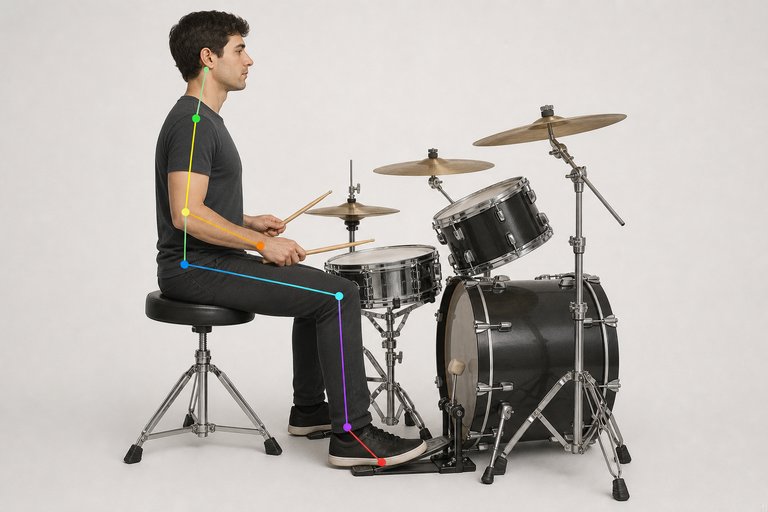
With the hips slightly above the knees, the legs can operate the pedals without excessive hip compression. This usually supports balance, mobility, and a more neutral posture.
The distance should let the foot control the pedal while the ankle, knee, and hip remain comfortable. Reaching or crowding reduces balance and can create unnecessary tension.
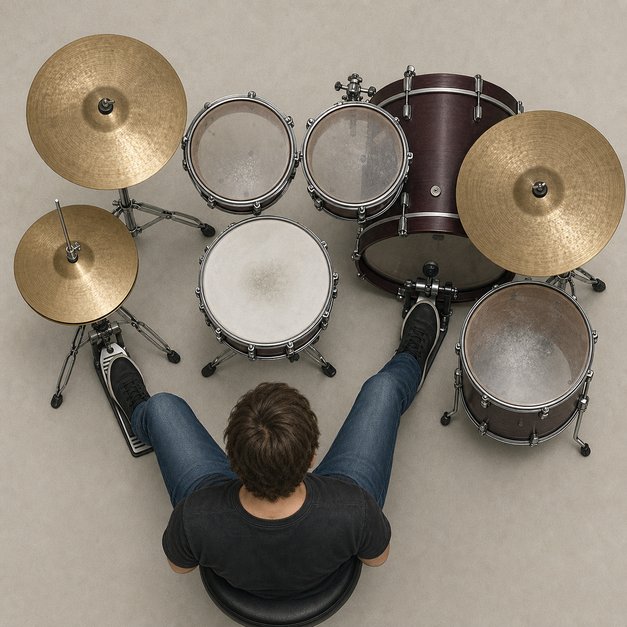
A pedal should generally follow the natural angle of the lower leg and foot. A large sideways offset may twist the hip, knee, or ankle during repeated strokes.
The snare should clear the legs while remaining accessible with relaxed shoulders and arms. Its exact height varies by player and grip, but it should not obstruct the stroke path.
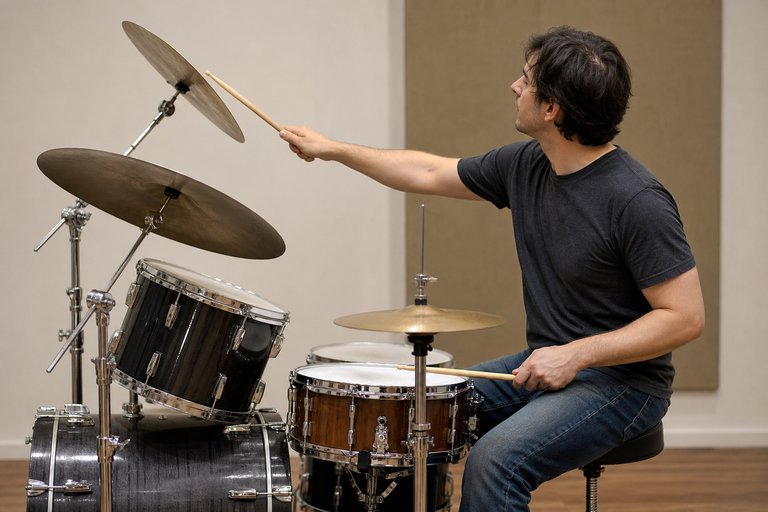
A moderate angle supports glancing blows rather than repeated direct strikes into the edge. The cymbal should also have enough mounting freedom to move after impact.
A cymbal needs controlled freedom to flex and swing. Clamping it rigidly can restrict vibration and place unnecessary stress around the mounting hole.
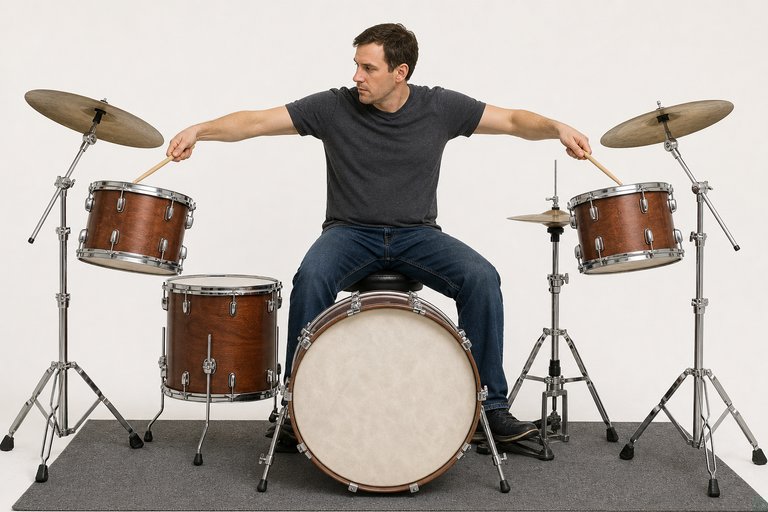
Positioning toms in a compact arc reduces excessive reaching and shoulder elevation. The player should be able to move around the kit while keeping the upper body comparatively relaxed.
The throne and pedals establish the player's foundation. Once balance and leg positions are comfortable, the snare, toms, and cymbals can be arranged around that position.
Frequently played instruments should sit within an efficient range of motion. Bringing the ride closer can reduce repeated trunk rotation while preserving relaxed shoulder and elbow movement.
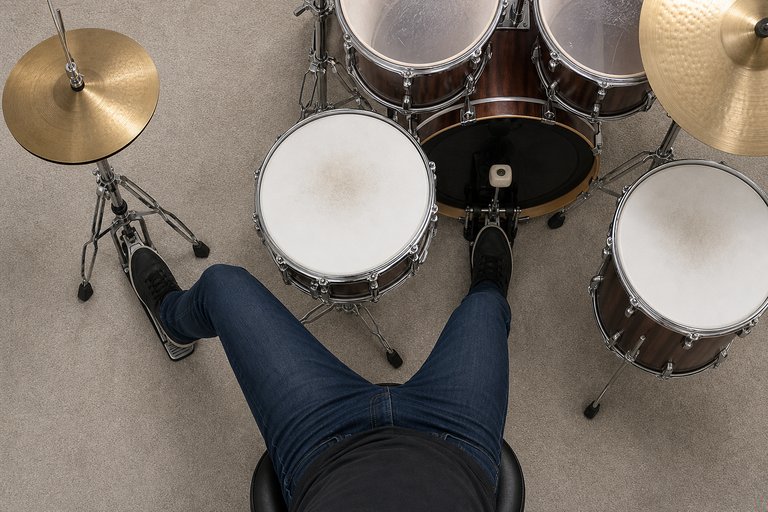
The hi-hat pedal should accommodate a comfortable path from hip through knee to foot. Repositioning it can reduce inward knee deviation and unnecessary joint strain.
A setup may look orderly yet feel awkward in motion. Playing tests whether limbs move freely, sticks clear nearby equipment, and balance remains stable while both feet work.
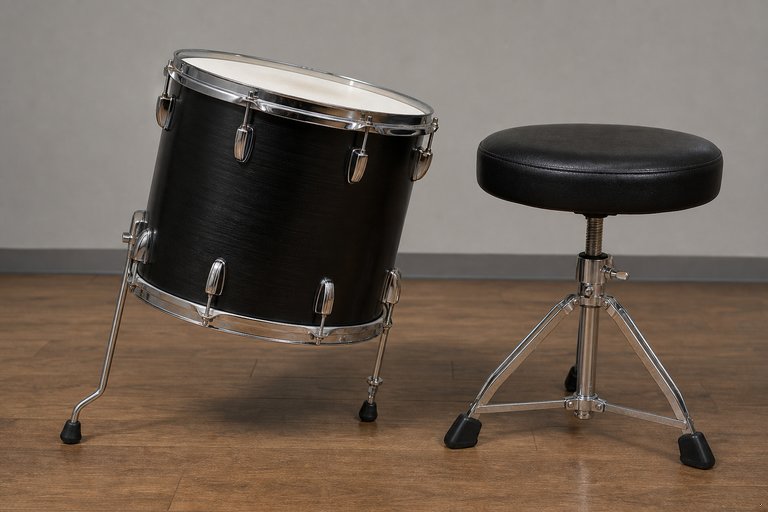
Floor tom legs determine the drum's height, angle, and stability. They should be secured so the drum does not wobble or tilt unintentionally during playing.
Shoulder tension isolated to one cymbal often indicates excessive height or distance. The cymbal should be reachable through a comfortable arm path without repeated shrugging or overextension.
Free CourseBeginner Drum Lessons
5

(2)

3h12m

42 exercises

Free CourseBeginner Drum Lessons
5
(1)
5h33m
36 exercises

Free CourseDrums
4.9
(8)
77h20m
42 exercises

Free CourseDrum lessons for beginners
4.8
(12)
5h34m
22 exercises

Free CourseDrum lessons
New
1h35m
9 exercises

Free CourseLearning Drums
New
5h25m
34 exercises

Free CourseBeginner Drum Lessons
New
1h47m
8 exercises

Free CourseBeginner Drums Lessons
New
2h29m
13 exercises
Thousands of online courses in video, ebooks and audiobooks.
To test your knowledge during online courses
Generated directly from your cell phone's photo gallery and sent to your email

Download our app via QR Code or the links below:.


Carry knowledge in your pocket.
Download the Cursa app.
There are hundreds of free courses available, with a free certificate of completion that is saved in your mobile image gallery.
Download the app to access the Course Completion Certificate for Free.


+ 10 million
students

Free and Valid
Certificate

60 thousand free
exercises

4.8/5 rating in
app stores

Free courses in
video and ebooks