
Exercises
Explore how anatomy, alignment, and training habits influence a dancer's safety and performance. This quiz covers neutral posture, turnout mechanics, jump landings, ankle and foot alignment, warm-ups, recovery, training load, warning signs of overuse, and sprung floors. The questions combine practical scenarios with visual analysis to help dancers recognize movement faults and make safer training decisions.
Answer the questions below and check the explanation for each answer.
0/13 answered
Auto audio on: the next questions will be read aloud when you click Continue.
Neutral alignment stacks the rib cage over the pelvis without eliminating the spine's natural curves. Excessive tucking or rib thrust can increase strain and interfere with efficient movement.
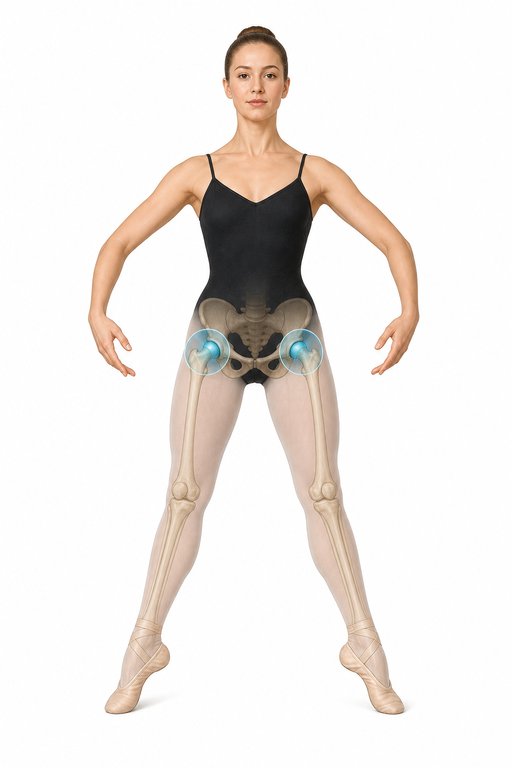
Safe turnout is created primarily by external rotation at the hip joints. Forcing rotation through the knees or feet can place harmful stress on the lower limbs.
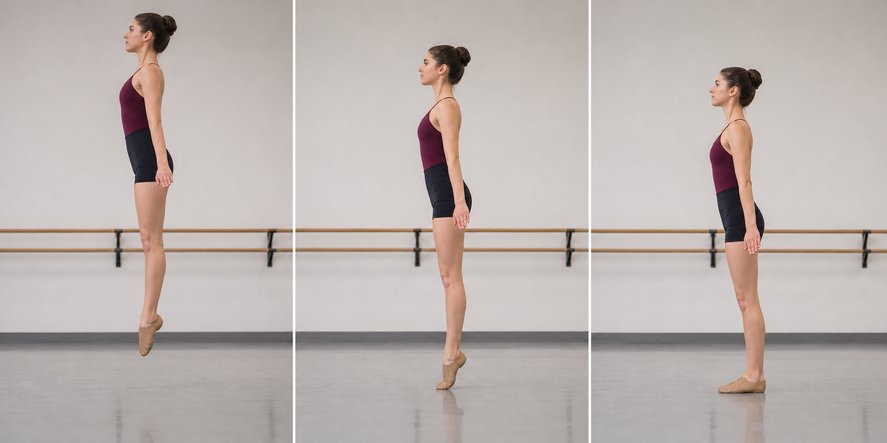
A heel-first, stiff landing provides poor shock absorption. A safer landing moves through the forefoot with controlled heel lowering and coordinated bending at the ankles, knees, and hips.
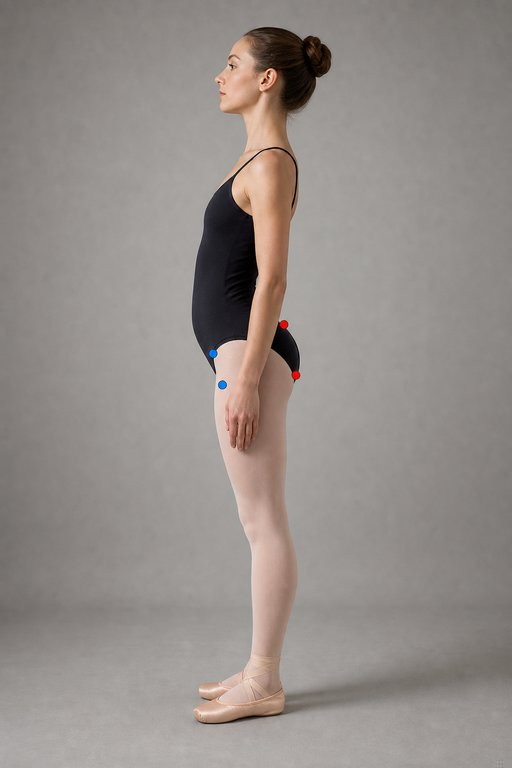
In an anterior pelvic tilt, the front of the pelvis tips downward and the lumbar curve often increases. Dancers should develop control rather than forcing the pelvis into either extreme.
A dynamic warm-up gradually increases circulation, tissue temperature, joint movement, and neuromuscular readiness. It should prepare the dancer without causing unnecessary fatigue.
Delayed-onset muscle soreness commonly develops after exercise and is often strongest within 24 to 72 hours. Sudden, sharp, or highly localized pain should not automatically be treated as normal soreness.
Progressively loaded calf raises strengthen the plantar-flexor muscles and build the Achilles tendon's capacity. Loading should increase gradually and remain appropriate for the dancer's condition.
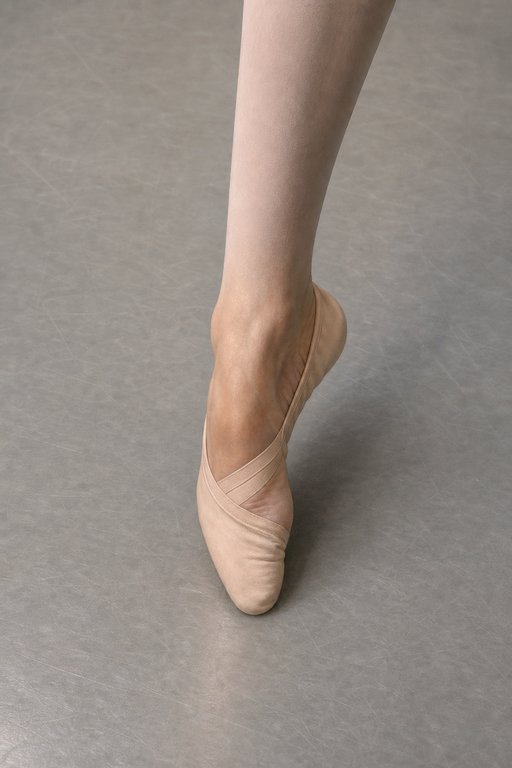
Sickling occurs when the pointed foot curves inward at the ankle instead of continuing the line of the lower leg. This disrupts alignment and can place uneven stress on the ankle and foot.
Sudden pain and swelling can indicate an acute injury. The dancer should stop, protect the area from further harm, and seek an appropriate assessment rather than testing it through continued dancing.
Gradual progression allows muscles, tendons, bones, and coordination to adapt. Recovery periods are also necessary because abrupt increases in duration or intensity can exceed tissue capacity.
Persistent focal pain, especially when it worsens with activity or causes compensation, is a warning sign. Continuing to train through altered mechanics can aggravate an overuse problem.
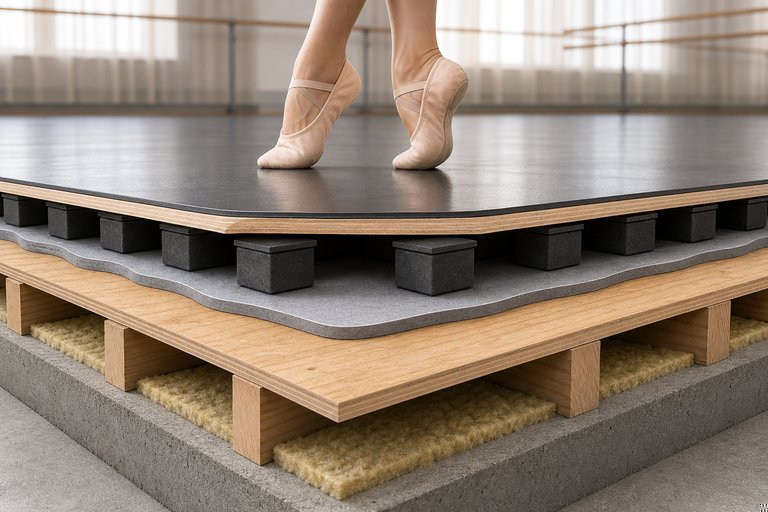
A sprung floor contains a resilient understructure that deforms slightly and helps manage impact. Surface finish affects traction, but it does not replace the shock-reducing function of the supporting structure.
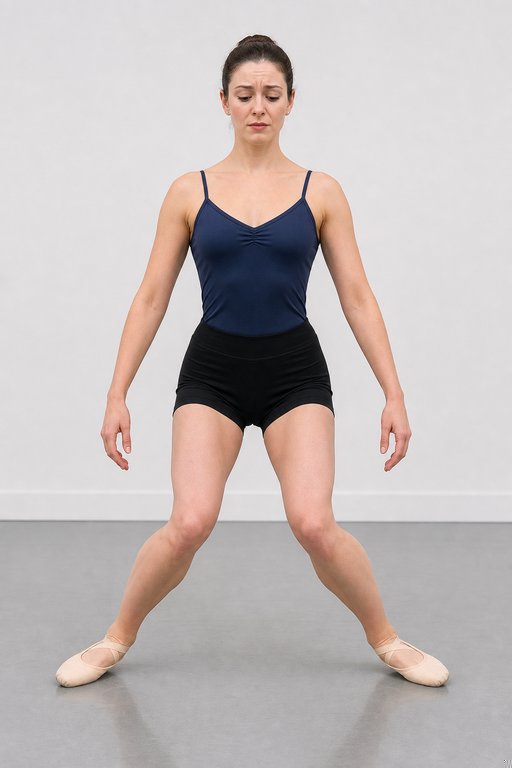
Turnout should remain within the dancer's available hip rotation. Reducing the angle allows the knees and toes to align, limiting torque through the knees, ankles, and feet.

Free CourseBelly Dance class
4.8

(6)

30m

3 exercises
Free CourseSalsa Dance basics
4.8

(4)
29m
5 exercises
Free CourseBeginner Ballet Class
4.8
(4)
28m
3 exercises

Free CourseHow to Dance at a Party
4.5
(6)
1h18m
8 exercises

Free CourseAbsolute beginners Ballet class
3.5
(2)
32m
3 exercises

Free CourseCuban Salsa for Beginners: Essential Steps and Turns
New
2h04m
13 exercises
Thousands of online courses in video, ebooks and audiobooks.
To test your knowledge during online courses
Generated directly from your cell phone's photo gallery and sent to your email

Download our app via QR Code or the links below:.



Carry knowledge in your pocket.
Download the Cursa app.
There are hundreds of free courses available, with a free certificate of completion that is saved in your mobile image gallery.
Download the app to access the Course Completion Certificate for Free.


+ 10 million
students

Free and Valid
Certificate

60 thousand free
exercises

4.8/5 rating in
app stores

Free courses in
video and ebooks