Exercises
This quiz assesses practical knowledge of accepting and processing checks in a cashier or bank teller role. Topics include check components, MICR information, endorsement types, payee requirements, stale-dated and postdated checks, deposit slip verification, restrictive endorsements, check holds, and returned items. The questions combine routine procedures with situations that require careful interpretation and adherence to institutional policy.
Answer the questions below and check the explanation for each answer.
0/20 answered
Auto audio on: the next questions will be read aloud when you click Continue.
A check is a written order directing a financial institution to pay a specified amount from the drawer's account to the named payee or lawful holder.
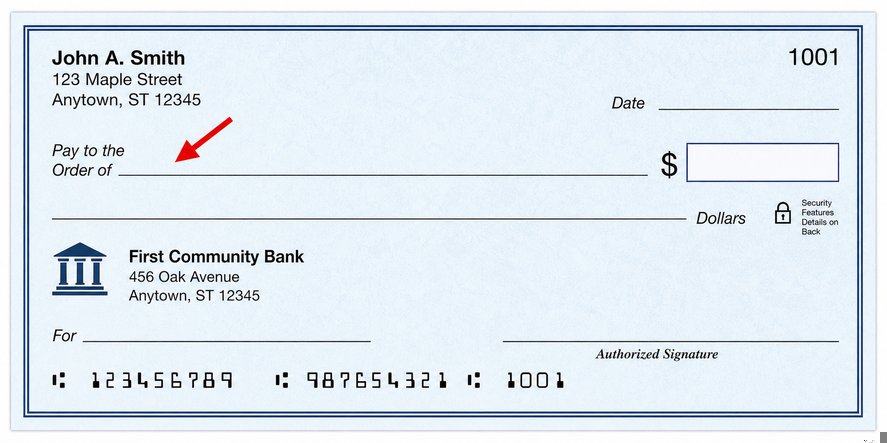
The line following Pay to the Order of identifies the payee—the person or organization authorized to receive the funds.
A blank endorsement consists only of the payee's signature. Because it may make the check payable to its holder, it should be used carefully.
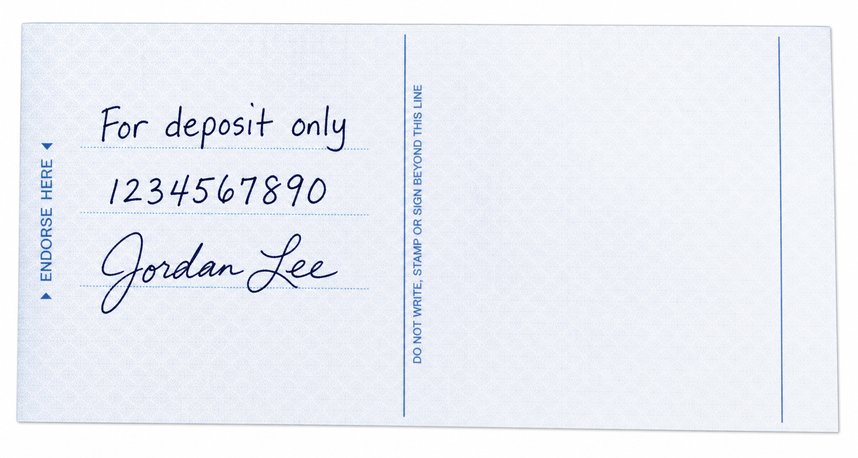
The phrase For deposit only restricts how the check may be used. It directs the item into an account rather than permitting it to be cashed freely.
The teller should not alter the check or disregard the difference. Name variations must be handled according to institutional procedures, including applicable endorsement and identification requirements.
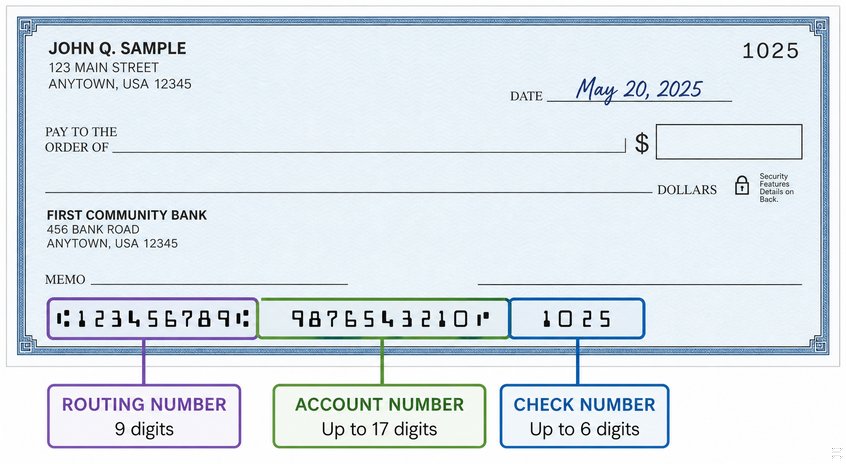
The MICR line contains machine-readable characters used to identify routing, account, and check information during automated processing.
The routing number identifies the financial institution involved in processing the payment. The account number identifies the customer's account at that institution.
A personal check more than six months old is generally considered stale-dated. It is not necessarily void, but its acceptance depends on applicable law and institutional policy.
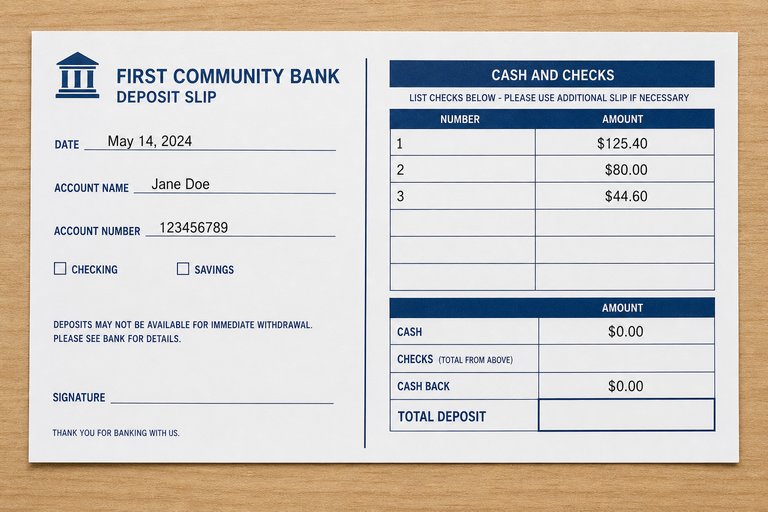
Add the three checks: $125.40 + $80.00 + $44.60 = $250.00. With no cash or cash back, that is the net deposit.
A deposit discrepancy must be recalculated and resolved before processing. The teller should document or correct it using the institution's approved procedure.
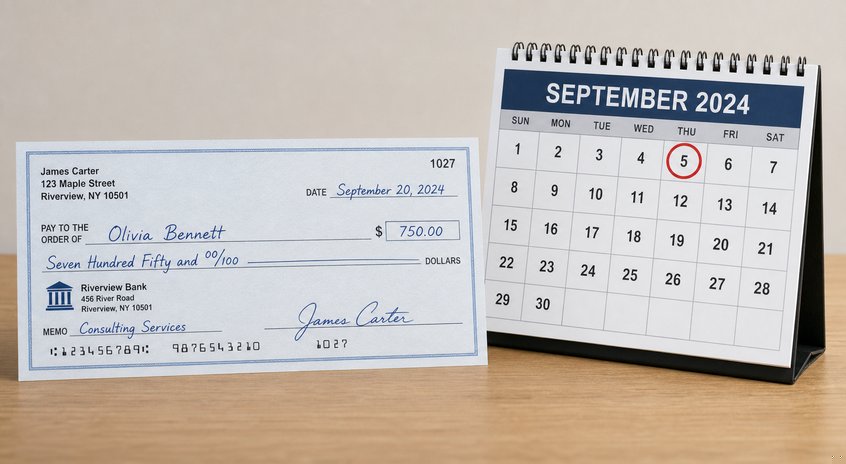
A check bearing a date later than the presentation date is postdated. Its handling should follow applicable law and the financial institution's policy.
An active stop-payment alert must not be overridden by the teller. Payment should not be completed, and the item should be handled under the bank's established procedure.
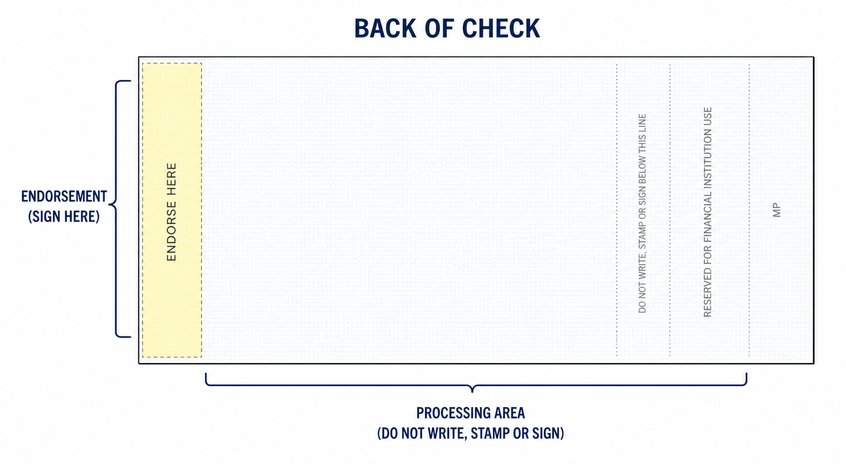
The highlighted section is the endorsement area. The payee normally signs or adds restrictive instructions there while staying within the designated boundary.
A check payable to a business generally belongs in an account appropriately titled to that business. Any exception requires proper authority and must follow institutional policy.
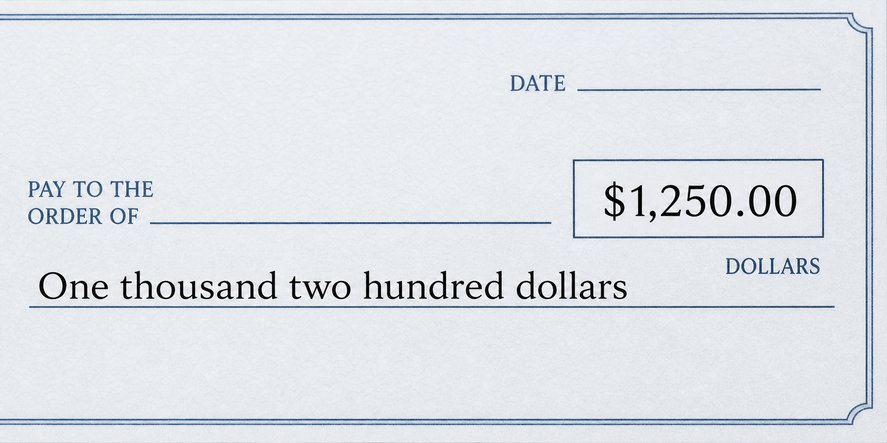
When the written and numeric amounts conflict, the amount expressed in words generally controls. The discrepancy should still be handled under institutional review procedures.
When payees are joined by and, both generally must endorse the check. Requirements may also depend on applicable law and the institution's procedures.
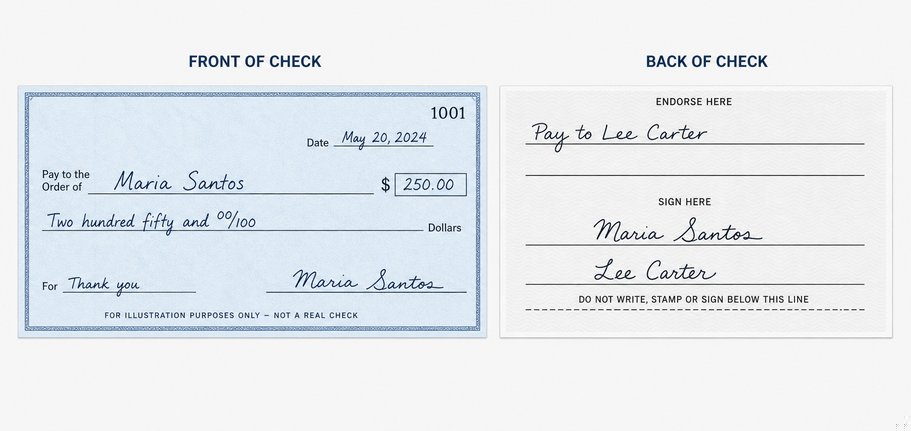
Writing Pay to Lee and signing is a special endorsement that identifies a new holder. Acceptance of third-party checks remains subject to institutional policy.
The endorsement limits the item to a particular mobile-deposit channel and institution. A teller should not alter it and should follow policy for rejecting or escalating the item.
The customer should receive accurate information about when funds are expected to become available, along with any notice required by law and institutional policy.
Check deposits are commonly credited provisionally. If the paying bank returns the item unpaid, the depositary bank may reverse the credit and apply its established notice and fee procedures.
Thousands of online courses in video, ebooks and audiobooks.
To test your knowledge during online courses
Generated directly from your cell phone's photo gallery and sent to your email

Download our app via QR Code or the links below:.


Carry knowledge in your pocket.
Download the Cursa app.
There are hundreds of free courses available, with a free certificate of completion that is saved in your mobile image gallery.
Download the app to access the Course Completion Certificate for Free.


+ 10 million
students

Free and Valid
Certificate

60 thousand free
exercises

4.8/5 rating in
app stores

Free courses in
video and ebooks