
Exercises
This quiz assesses practical knowledge of automotive air conditioning diagnosis and repair. Topics include refrigerant flow, manifold gauge readings, condenser airflow, system evacuation, leak detection, compressor clutch inspection, refrigerant safety, and contamination control. The questions combine component identification, symptom analysis, service procedures, and workshop safety for technicians learning to diagnose and repair vehicle A/C systems.
Answer the questions below and check the explanation for each answer.
0/13 answered
Auto audio on: the next questions will be read aloud when you click Continue.
The compressor draws in low-pressure refrigerant vapor and compresses it into a high-pressure, high-temperature vapor that flows to the condenser.
An undercharged system commonly produces low readings on both sides because too little refrigerant is circulating. A weak compressor more often causes an abnormally high low-side reading and low high-side reading.
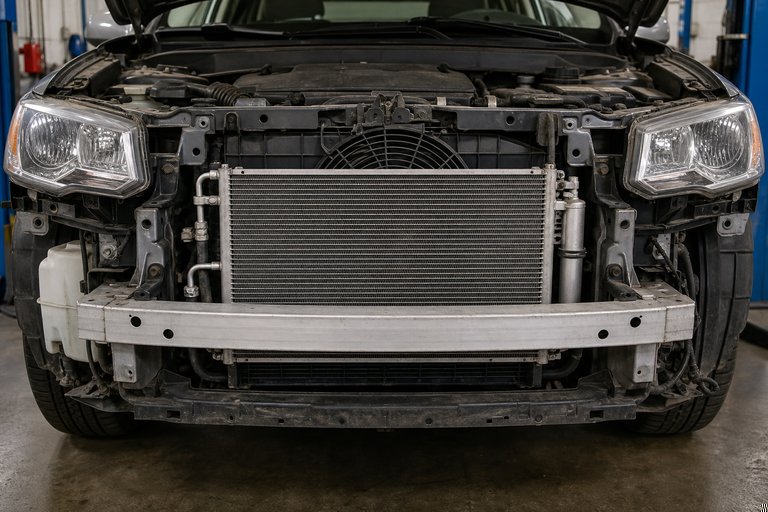
Road speed supplies airflow while the vehicle is moving. At idle, an inoperative fan allows condenser pressure and temperature to rise, reducing cooling performance.
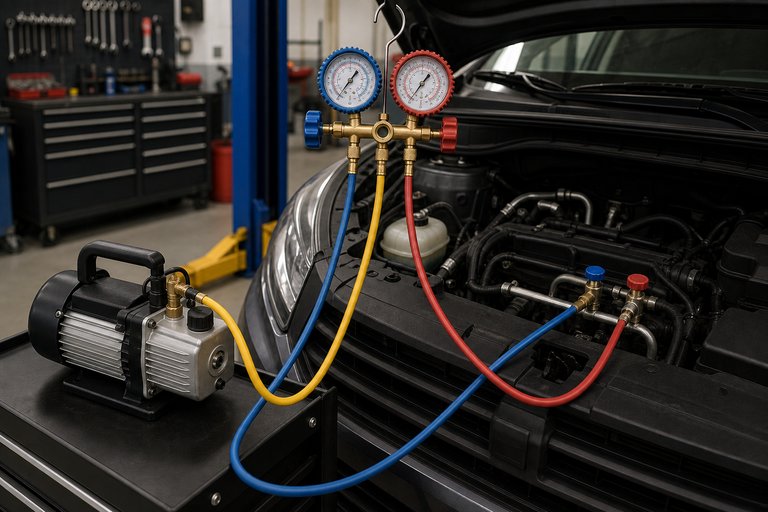
Deep evacuation removes non-condensable air and lowers the pressure enough for moisture to vaporize and be extracted. Air and moisture can cause poor cooling, corrosion, and damaging chemical reactions.
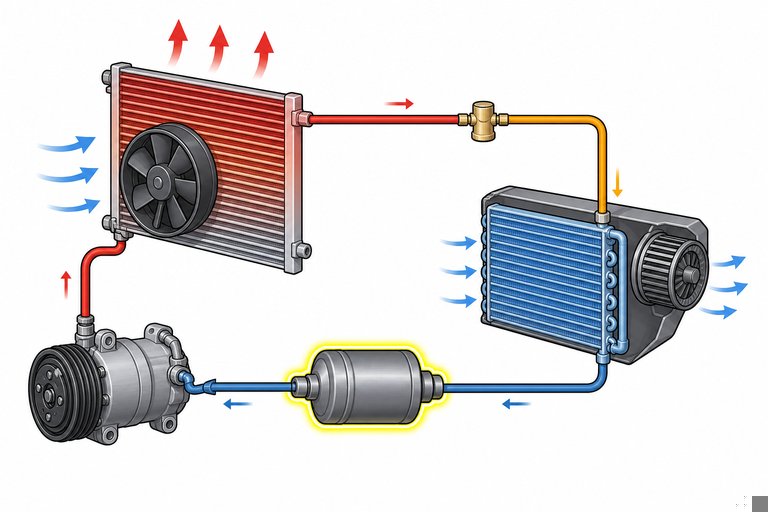
An accumulator is installed on the low-pressure side after the evaporator in many fixed-orifice systems. It prevents liquid refrigerant from reaching the compressor and also contains desiccant.
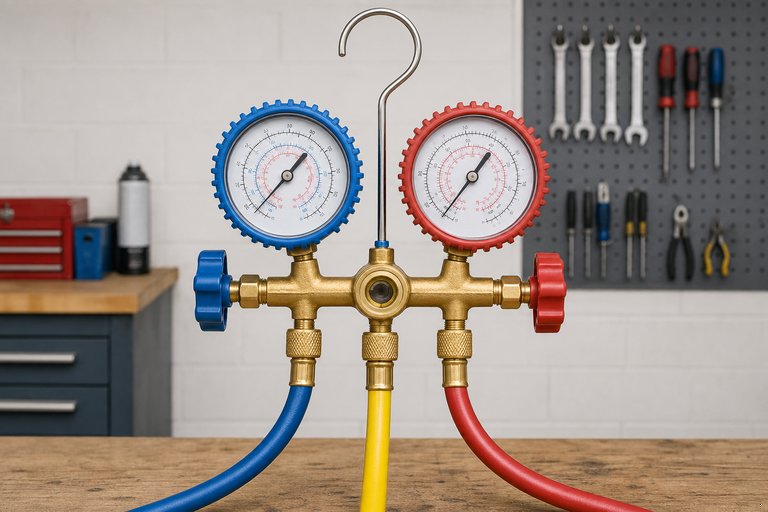
The yellow center hose is the service hose used for evacuation, recovery, or charging. Blue connects to the low side, while red connects to the high side.
Static pressure can be compared with a pressure-temperature chart to check whether the reading is plausible. It cannot determine the exact refrigerant charge because similar pressure may exist across a wide range of charge amounts.
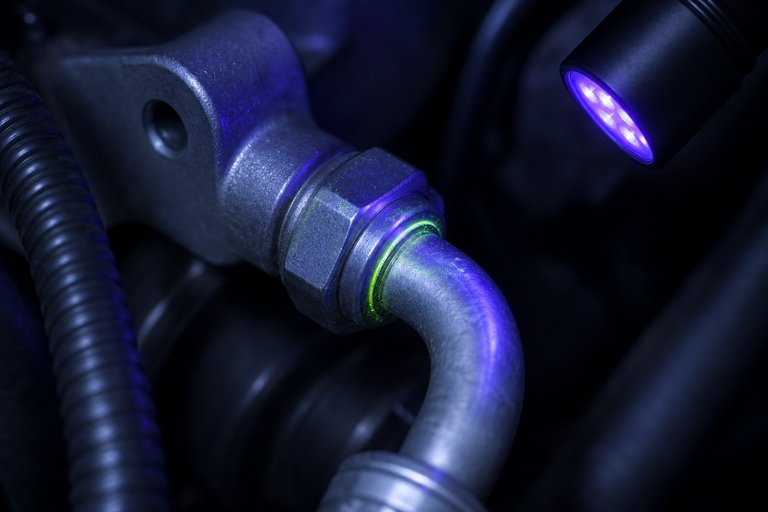
Leak dye travels with refrigerant oil and leaves a concentrated fluorescent trace where the system leaks. Condensation on a cold line is normal and does not by itself indicate refrigerant loss.
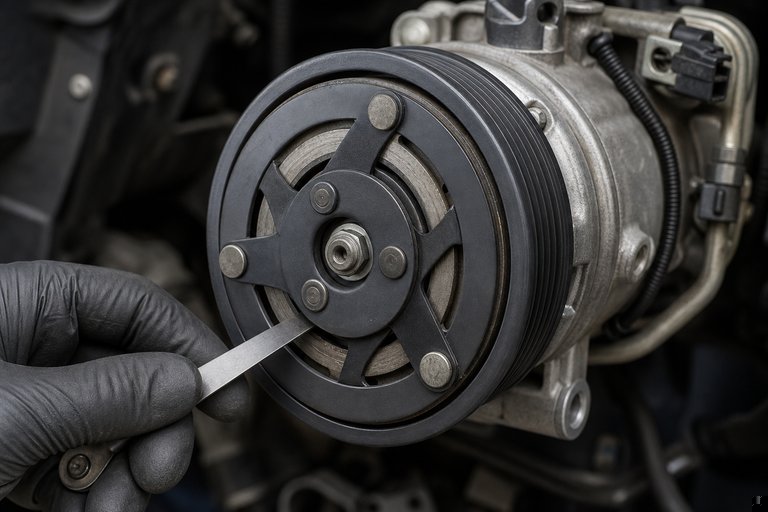
A feeler gauge placed between the clutch plate and pulley measures the clutch air gap. Excessive clearance can prevent reliable engagement, especially when the assembly becomes hot.
PAG oil is hygroscopic, meaning it readily absorbs atmospheric moisture. Contaminated oil can contribute to corrosion, acid formation, and reduced system reliability.

Different temperatures from opposite sides of a dual-zone system indicate unequal air mixing. A failed or incorrectly positioned blend door or actuator can keep one side routed through the heater core.
R-1234yf is classified as mildly flammable. Technicians must use compatible recovery and service equipment, prevent cross-contamination, and follow ventilation and ignition-control procedures.
Metal debris can quickly destroy a replacement compressor. Proper repair includes contamination inspection, replacement of affected non-flushable components and the drier, servicing the metering device, and flushing only components approved by the manufacturer.

Free CourseHow to Paint a Car at Home
5

(7)

24m

3 exercises
Free CourseVehicle Maintenance
5
(1)
12h03m
12 exercises

Free CourseHow to Paint a Car: Complete Step-by-Step Auto Painting Guide
5
(2)
2h12m
6 exercises

Free CourseToyota Car Repair
4.9
(9)
27h15m
29 exercises

Free CourseHow a Car works
4.8
(11)
55m
21 exercises

Free CourseDiesel Mechanic classes
4.8
(13)
4h10m
11 exercises

Free CourseDiesel Engines Motorz
4.7

(3)
3h54m
10 exercises

Free CourseCar maintenance lessons
4.6
(8)
10h10m
29 exercises
Thousands of online courses in video, ebooks and audiobooks.
To test your knowledge during online courses
Generated directly from your cell phone's photo gallery and sent to your email

Download our app via QR Code or the links below:.



Carry knowledge in your pocket.
Download the Cursa app.
There are hundreds of free courses available, with a free certificate of completion that is saved in your mobile image gallery.
Download the app to access the Course Completion Certificate for Free.


+ 10 million
students

Free and Valid
Certificate

60 thousand free
exercises

4.8/5 rating in
app stores

Free courses in
video and ebooks