
Exercises
Put your managerial accounting skills to the test with this quiz covering essential concepts used for internal business decision-making. Explore the primary purpose of managerial accounting, budget components, variable costs, product costing, and inventory valuation. Questions also assess your understanding of cost-volume-profit analysis, standard costing, break-even formulas, flexible budgets, process costing, and allocating indirect costs to cost objects. Ideal for accounting students, business learners, and professionals who want to review core managerial accounting principles.
Answer the questions below and check the explanation for each answer.
0/10 answered
Auto audio on: the next questions will be read aloud when you click Continue.
The primary focus of managerial accounting is providing information for internal decision-making. It involves generating reports and data analyses that aid managers in planning, controlling, and evaluating business operations to achieve organizational objectives. Unlike financial accounting, which targets external stakeholders, managerial accounting serves the internal management of an organization.
A budget is a financial plan that outlines expected revenues and expenditures. The Master Budget is a comprehensive financial planning document that includes various separate but interrelated budgets. It encompasses operating and financial budgets that help in forecasting income and expenditures, thus serving as a key component of effective budgeting.
A variable cost is a cost that changes in total directly in proportion to changes in the level of activity. Unlike fixed costs, which remain constant regardless of activity levels, variable costs fluctuate with production volume or sales. Therefore, as the level of activity increases or decreases, the total variable cost will increase or decrease correspondingly.
Absorption costing, also known as full costing, assigns all manufacturing costs, including fixed and variable overheads, to individual products. It provides a comprehensive inventory valuation by including all production costs. This method ensures that all costs are reflected in the inventory on the balance sheet, making it distinct from methods like throughput costing, which only considers direct costs.
The correct answer is 2. Cost-volume-profit (CVP) analysis is a tool used to understand how changes in costs and volume affect a company's operating income and net income. It helps businesses determine their break-even point and how different sales volumes will impact profitability.
Standard costing is primarily used for controlling costs and budgeting. It involves setting cost standards for production and measuring actual performance against those standards to manage expenses effectively and ensure financial discipline within an organization.
The formula for calculating the break-even point in units is: Fixed Costs / (Sales Price per Unit - Variable Cost per Unit). This formula determines the number of units that must be sold to cover all fixed and variable costs, ensuring that net profit is zero.
A flexible budget is designed to change in accordance with varying levels of activity or production. Unlike a static budget, which remains fixed regardless of changes in volume, a flexible budget adapts to the actual level of revenues or expenses, making it more useful for performance evaluation and cost control.
Process costing is utilized to accumulate costs for each department or process within a factory. It is suited for industries where production is continuous, and goods are indistinguishable from one another, such as chemicals or food production. This system contrasts with job order costing, which accumulates costs on a per-job basis for custom, distinct orders.
The correct option is 2. A cost driver is a factor that causes a change in the cost of an activity. It is used in activity-based costing to allocate and assign indirect costs to cost objects based on the activities that incur the costs.
Free CoursePrinciples of Managerial Accounting
5

(1)

4h13m

33 exercises
Free CourseFinancial Accounting management
4.9
(15)
7h04m
19 exercises
Free CourseIntroduction to accounting
4.9
(9)
1h30m
6 exercises
Free CourseAuditing in Accounting
4.8
(10)
6h06m
28 exercises
Free CourseAccounting basics tutorial
4.8

(4)
3h33m
6 exercises
Free CourseFinancial Accounting
4.7
(3)
18h59m
43 exercises
Free CourseAccounting quick course
4.6
(5)
4h50m
Free CourseFinancial Accounting
4.5
(118)
10h14m
31 exercises
Thousands of online courses in video, ebooks and audiobooks.
To test your knowledge during online courses
Generated directly from your cell phone's photo gallery and sent to your email

Download our app via QR Code or the links below:.


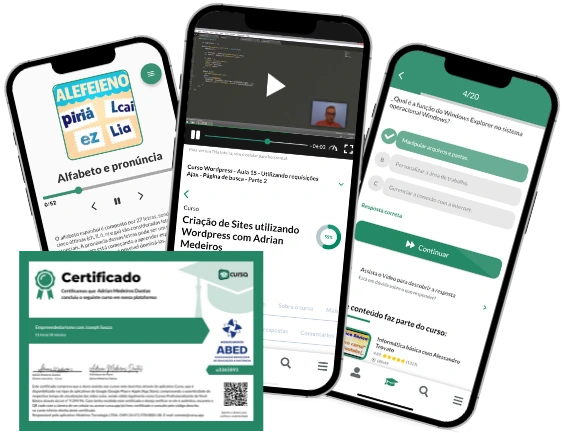
Carry knowledge in your pocket.
Download the Cursa app.
There are hundreds of free courses available, with a free certificate of completion that is saved in your mobile image gallery.
Download the app to access the Course Completion Certificate for Free.


+ 10 million
students

Free and Valid
Certificate

60 thousand free
exercises

4.8/5 rating in
app stores

Free courses in
video and ebooks